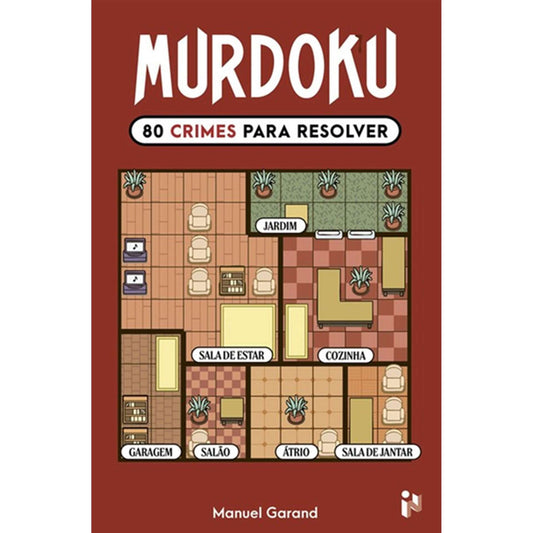
A puzzle book looks like a solitary activity. In practice, many Murdoku cases end with two or three people leaning over the same page, arguing about whether the cook could have been next to the stove. With 80 crimes and settings from all over the world, Murdoku 3 provides plenty of evenings like that. It is a Portuguese edition, so it works best in a group where everyone reads Portuguese.
Format 1: as a pair, sharing the work
The simplest. One person holds the pencil, the other reads the clues out loud. Swap with each case. Reading aloud forces you to pay attention to the exact wording of each clue, and catches a lot of reading mistakes. Works well for couples, siblings or parents and children.
Format 2: as a family, by level
In a household with different ages, cases can be shared out by difficulty. The first ones in the book are short and suit someone aged 12 or 13, or anyone who has never played. The middle and final cases go to the more experienced. Since the book runs from easy to expert, as explained in Is Murdoku 3 hard?, it is easy to pick the right case for each person. For children aged 8 and up, Murdle Júnior lets them join in with mysteries their size.
Format 3: same page, several copies
For a friendly competition, each person works on a copy of the scene drawn by hand on squared paper, or on a photo of the page, without writing in the book. Whoever finds the culprit first, and can explain why, wins. The explanation is compulsory: getting it right by guessing does not count.
Format 4: puzzle night with friends
For a different kind of dinner, pick three or four cases of rising difficulty and form teams of two or three. Some house rules that tend to work:
- An easy warm-up case, so first-timers can learn the rules.
- A maximum time per case, agreed at the start.
- Points for the right culprit and a bonus point for each suspect placed correctly.
- The solutions at the back of the book stay with the host, who acts as judge.
The cases with more than one grid, described in secret identities and multiple grids, are perfect for the final: they let a team split the work.
Why solving in a group helps
Two people see different things in the same illustration. One notices the animal hidden behind the sofa, the other the door that separates two rooms. And explaining a deduction to someone else forces you to make it clear, which is half the job. The benefits of logic puzzles add up with those of an evening spent around the table, screen-free.
For first-timers, the guide How to play Murdoku is good reading before the first evening.