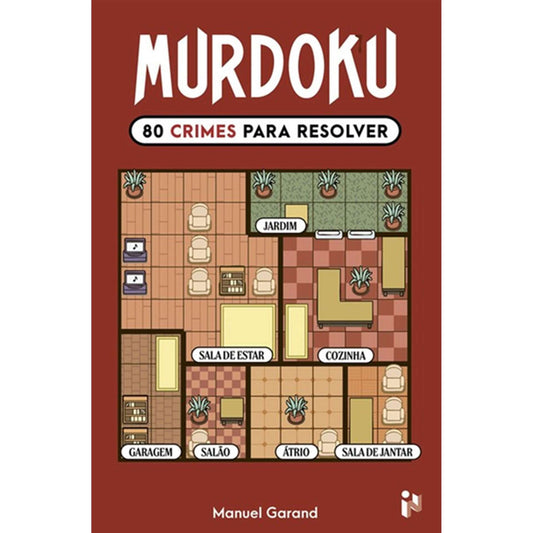
"Is it very hard?" is one of the most common questions about any puzzle book. For Murdoku 3, the honest answer is: at the start, no; at the end, yes. The book was designed like a staircase, and each step prepares you for the next.
A staircase of 80 steps
The cases are ordered by difficulty, from easy to expert. In practice, you feel this in three stages.
Stage one: learn or refresh
Small grids, few suspects, direct clues. A case like this takes a few minutes and helps the rules sink in: one person per row and per column, the victim in the last free square, the culprit alone with them in the same room. If you are coming from the earlier volumes, it is a quick warm-up.
Stage two: combine clues
The grids grow and clues stop working on their own. A clue no longer tells you where someone is; it only tells you where they are not. This is where you start needing notes, and where method makes the difference. The article How to play Murdoku describes that method step by step.
Stage three: expert
Large grids, many suspects and, in this volume, the features that set it apart from the earlier ones: secret identities and puzzles with more than one grid. The final cases can take a long time and sometimes more than one sitting. The article on secret identities and multiple grids will help you prepare.
Compared with the earlier volumes
The opening cases of all three books are similarly difficult, because each volume is designed so that a beginner can start straight away. The difference is at the top of the staircase. Volume 3 goes a little further in its final cases, mainly because of the new rules, and the settings from other continents call for closer attention to the illustration. The comparison of the three volumes sums up these differences.
How not to give up halfway
- Follow the order. Jumping straight to the last cases is the quickest way to find the book impossible.
- Stop when you are stuck. A case that will not budge at night often falls in ten minutes the next morning.
- Use a pencil and eraser. Noting impossible positions is as valuable as noting the right ones.
- Peek at just one suspect. If you really need help, cover the rest of the solution and look at a single position. Often that is enough to unlock everything.
- Solve with someone else. Two heads see different clues in the same scene.
Who it suits
The series is recommended for ages 12 and up. A teenager who likes logic will handle the first half of the book without trouble; the final part is a serious challenge at any age. If you have never solved any logic puzzle, you may prefer to start with volume 1, which has the most familiar settings, but volume 3 also works as a first book. Keep in mind that both are Portuguese editions. And the benefits of logic puzzles can be felt on every step of the staircase.