
Why the brain loves puzzles
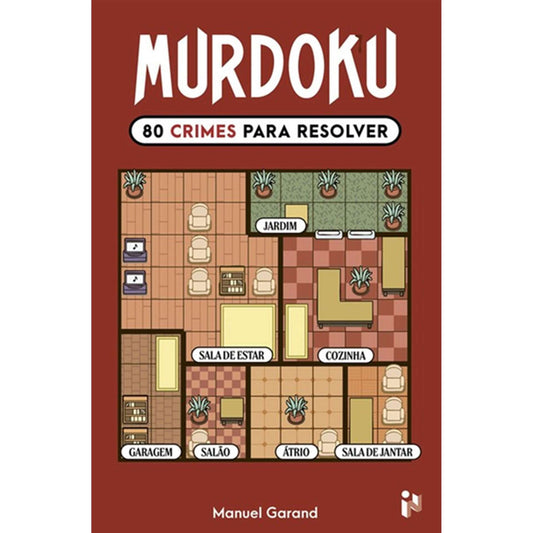
Solving a logic puzzle is one of the few leisure activities that demands your full attention and, at the same time, helps you unwind. It is no coincidence that sudoku, crosswords and deduction puzzles have kept so many people company for decades. Series like Murdoku, which combine placement logic with an illustrated crime scene, revive that habit in a more engaging format. This article sums up the most widely recognized benefits of logic puzzles and explains how Murdoku puts them into practice.
The benefits of logic puzzles
Attention and concentration
A logic puzzle cannot be solved with half your attention. Every rule has to be read carefully and every detail of the scene matters. Training this sustained concentration is useful beyond the puzzle: at work, while studying and in any task that requires focus for several minutes at a time.
Working memory
To cross-check several constraints at once, you need to keep what you already know in mind while evaluating a new hypothesis. This ability, called working memory, gets a workout in every case. Taking notes in pencil helps, but the chain of reasoning still happens in your head.
Deductive reasoning
Deduction is the core skill. Starting from general rules, eliminating the impossible and reaching a definite conclusion is exactly what you do in a sudoku, a Murdoku or a Murdle. It is also what you do when making decisions with incomplete information, which makes this kind of training especially useful in everyday life.
Spatial reasoning and observation
Visual puzzles like Murdoku add an element that text-based puzzles lack: understanding positional relationships within a scene. Where each room is, what is next to what, which animal is in which room. This type of spatial reading is the same one you use when reading a map or organizing a space.
Patience and tolerance for mistakes
Reaching a contradiction in a tough puzzle and backtracking without frustration is a small lesson in persistence. Puzzles teach that mistakes are part of the process and that the solution appears when you keep going with a method.
Relaxation and a break from screens
A paper puzzle book offers a different kind of attention than screens do: no notifications, no timer, at the solver's own pace. Many people use it as an end-of-day ritual or as a travel companion.
How Murdoku trains these skills
Every Murdoku puzzle combines, on a single page, the different types of training described above. The illustrated scene calls for observation and spatial reading. The placement rules call for deduction and working memory. The final rule, which reveals the murderer, provides a narrative goal that keeps you motivated. And the progression of volume 1, from easy to expert, lets you gradually raise the challenge without discouraging jumps in difficulty.
The variety of settings also helps. Moving from a bakery to a casino, or, in volume 2, from a medieval castle to an Egyptian temple, keeps the brain from slipping into autopilot. Each scene forces you to start observing from scratch.
For all ages from 12 up
The benefits of logic puzzles have no age limit. For teenagers, they support skills that are useful for studying. For adults, they are an enjoyable way to keep the mind active. For families, solving a case together combines cognitive training with quality time. For younger kids, ages 8 and up, Murdle Júnior from the Murdle collection is the gateway; from 12 and up, Murdoku. Those looking for more challenges will find them in our collection of puzzles for adults.
Frequently asked questions
How much time per day is recommended?
There is no rule. One puzzle a day, solved attentively, is already good exercise. Regularity matters more than duration.
Do logic puzzles replace other forms of mental training?
They do not replace them, they complement them. Reading, learning new skills, physical activity and social time remain essential. Puzzles are an enjoyable piece of that bigger picture.
Which puzzle should I start with?
If you like pictures and sudoku, Murdoku volume 1. If you prefer text-based clues, Murdle. Both let you start at easy levels and work your way up.
One puzzle a day is a great habit. Start with Murdoku, 80 Crimes Para Resolver (Portuguese edition) or explore the full Murdoku collection at Loja dos Puzzles.