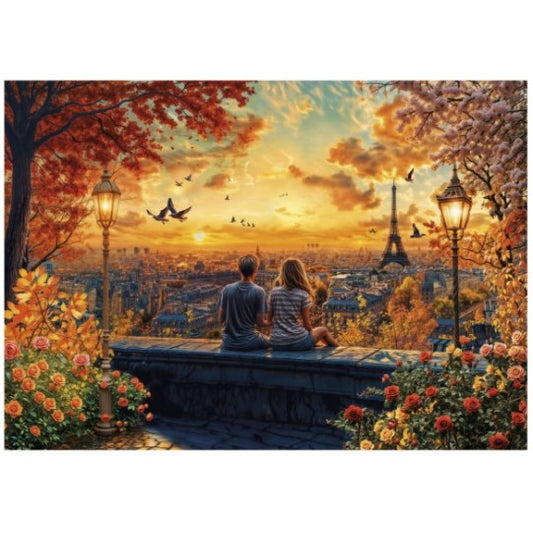
Storing puzzles in an organized way is a simple choice with a very visible effect: fewer lost pieces, fewer crushed boxes and a lot more desire to do them again. When storage is well planned, every puzzle stays accessible, protected and easy to identify, even months later.
Whether you own just a few puzzles or already have a large collection, you benefit in exactly the same way. The difference lies in the method. It is not just about stacking boxes in a cupboard, but about creating a practical, stable system adapted to the space you have.
Benefits of organizing and storing puzzles methodically
A poorly stored puzzle ages quickly. Boxes open, corners bend, pieces come loose and end up mixed with other sets. With a simple system, this wear and tear drops considerably. It also becomes easier to know which puzzles you have already completed, which are still unopened and which deserve another session.
There is also a very tangible everyday gain: time. When every puzzle has its place, you don't have to hunt for pieces in loose bags, recount contents or open several boxes until you find the right image. Good storage reduces visual clutter and turns your collection into a well-kept area of your home instead of a scattered pile of boxes.
And there is a motivating side to all of this.
Seeing your puzzles neatly stored, labeled and in good condition naturally invites you to pick them up more often.
Organization systems for unassembled puzzles
The first step is deciding how you want to group your puzzles. The best answer depends on the number of sets, the size of the boxes and how often they are used. For some people, it makes sense to sort by piece count. For others, the most useful criterion is theme, brand or difficulty level.
When space is limited, it is best to choose a very clear logic that is easy to maintain. The fewer decisions you need to make each time you put a puzzle away, the more likely the system is to last.
Some organization criteria work particularly well:
- number of pieces
- theme or illustration
- box format
- frequency of use
- difficulty level
If there are children at home, grouping by age range or complexity can be even more practical. The simplest puzzles stay within reach, while the larger and more delicate ones remain on higher shelves or in closed storage boxes.
Another important point is to keep complete puzzles separate from incomplete ones. Mixing the two creates confusion and frustration. A set with missing pieces can of course still be kept, but it should be labeled as such. That label avoids false expectations the next time you use it.
Materials for storing puzzles and accessories
You don't always need to buy specific solutions. Often, what you already have at home works well: plastic boxes, zip-lock bags, cardboard dividers and adhesive labels. What matters most is that the material protects the pieces, makes the contents easy to identify and does not deform the original packaging.
For unassembled puzzles, resealable bags are a very safe choice. Even if the box opens or tears over time, the pieces stay together. If the puzzle has sections sorted by color or edge pieces already separated, you can even use more than one bag inside the same box.
The following table helps you compare common storage options:
| Storage solution | Best for | Advantages | Things to watch |
|---|---|---|---|
| Resealable zip bag | Loose pieces inside the box | Prevents losses, takes up little space | Use a sturdy, well-sealed bag |
| Plastic box with lid | Large collections | Protects against moisture and dust | Best labeled on the outside |
| Folder or binder with sleeves | Small or flat puzzles | Good visibility and quick access | Not suitable for bulky boxes |
| Drawer with dividers | Frequently used puzzles | Instant organization | Requires a fixed space |
| Vertical shelf | Original boxes in good condition | Easy to browse at a glance | Requires intact boxes |
| Sliding tray | Puzzles in progress | Lets you pause without taking it apart | Needs a stable surface |
If you also want to keep your accessories organized, it is worth gathering everything in one place: puzzle mats, sorting trays, glue, spatulas, rigid boards and spare bags. Keeping it all together avoids buying duplicates and makes the whole process smoother.
How to store assembled puzzles without damaging the image
Storing a completed puzzle calls for a different approach. Here, the priority is no longer just avoiding lost pieces, but preserving the complete image. If you plan to take it apart again in the future, it is best not to glue it. If the idea is to display it or keep it as a decorative piece, then fixing it in place may make sense.
Before deciding anything, make sure the puzzle is completely clean and every piece is firmly in place. Dust, crumbs or small gaps between pieces make storage riskier. A rigid base, such as pressed cardboard or a thin board, makes it much easier to move the puzzle without warping it.
Some materials make a real difference in this process:
- Rigid base: keeps the completed puzzle stable while you move it.
- Tracing paper or protective sheet: reduces friction between the puzzle surface and other materials.
- Frame or panel: ideal for glued puzzles meant for display.
- Large flat sleeve: useful for storing assembled puzzles without folding them.
- Labels: show the date, piece count and image without you having to open anything.
If you choose to glue it, follow the product instructions and respect the drying time. Afterwards, the puzzle can be stored flat or framed. If you would rather not glue it, a practical solution is to place it between two rigid boards and secure them with wide elastic bands or fabric straps that won't mark the edges.
If you regularly assemble large puzzles, a roll-up mat can be handy while you work, but it is not the best solution for long-term storage. Repeated rolling can leave marks or cause small gaps between pieces, especially in older puzzles or those with a less precise cut.
Room conditions for storing puzzles at home
Where you store your puzzles affects both how long they last and the materials you need to protect them. Damp cupboards, poorly ventilated storerooms and areas with excessive heat speed up the wear of the boxes and can damage the cardboard of the pieces. Even well-packed puzzles suffer when they spend months in unstable conditions.
The ideal is a dry, clean space with a fairly constant temperature. Bedrooms, home offices, indoor bookcases and closed cupboards usually work well. Garages and attics can work in some cases, but they require more attention to humidity, dust and seasonal changes.
Direct sunlight deserves special care. Boxes fade easily, and assembled puzzles can lose their vibrancy over time. If your collection is on display on an open shelf, it makes sense to keep it away from windows with direct sun exposure or to use opaque doors.
It also pays to think about weight. Very large boxes stacked on top of each other end up deforming the ones at the bottom. Whenever possible, spread the boxes across several shelves instead of building tall towers. Vertical storage tends to be safer, as long as the boxes are stable and have enough support on the sides.
How to label puzzles for quick access
Labeling is not an over-the-top detail. It is a very practical way to gain clarity, especially once your collection starts to grow. A simple label with the piece count, theme and condition of the puzzle already answers most questions.
If you use opaque boxes or plastic containers, an outside label saves you time whenever you want to choose a puzzle. And if you keep puzzles in bags because the original packaging was lost, labeling becomes even more useful.
A functional system can include:
- Piece count: 500, 1000, 1500 or more.
- Condition: complete, to be checked, incomplete, glued.
- Category: landscape, art, city, kids, map.
- Frequency of use: regular, occasional, to give as a gift.
- Date: useful for recording when it was assembled or checked.
There is no need to turn this into a complex archive. Consistent criteria are enough. The secret is to always use the same format so the label can be read at a glance.
Common mistakes when storing puzzles and how to avoid them
A very common mistake is relying solely on the original box. Many boxes seem sturdy, but with use they open at the corners, lose their rigidity and let pieces slip out. Putting the pieces in a zip bag inside the box is a simple step that prevents several problems.
Another common mistake is mixing loose pieces from different puzzles in the same drawer or container. Even when it is meant to be temporary, sorting them out tends to get postponed, and the result is rarely good. Each puzzle should have its own clearly separated set.
It is also wise to avoid a few habits that seem helpful at the time but cause wear over the long run:
- Stacking too high: the bottom boxes deform and lose strength.
- Storing near moisture: the cardboard warps and picks up odors.
- Putting thin rubber bands directly around boxes: they leave marks and can tear them.
- Leaving assembled puzzles without a support base: any movement can break the puzzle apart.
- Skipping content checks: when pieces are missing, it is better to note it right away.
There is also a point that is often forgotten: regular checks. Puzzles stored for years deserve an occasional inspection. Simply check the condition of the boxes, make sure the bags are intact and look for any signs of moisture or excessive dust.
A simple routine to keep your puzzle collection tidy
Good organization does not depend on a complex system, but on small, consistent habits. Every time you finish a puzzle, take two or three minutes to decide the next step: take it apart, glue it, give it away, keep it to do again or set it aside because it is incomplete. Making that decision right away keeps disorganized piles from building up.
If you take the puzzle apart, do a quick visual count of the main pieces, seal them in a bag and add the label before putting it away. If it stays assembled, prepare the base or frame right away. Once this routine becomes automatic, tidying up no longer feels like an extra chore.
It is also worth setting up a small support area with the materials you use most. It doesn't need to take up much space. A box with bags, labels, a marker, paper tape and a dry cloth covers most of your maintenance and storage needs.
With this kind of method, even a modest collection gains structure. And a large collection no longer feels hard to manage. The results show on your shelves, in the condition of the pieces and in how easily each puzzle is ready for its next assembly.