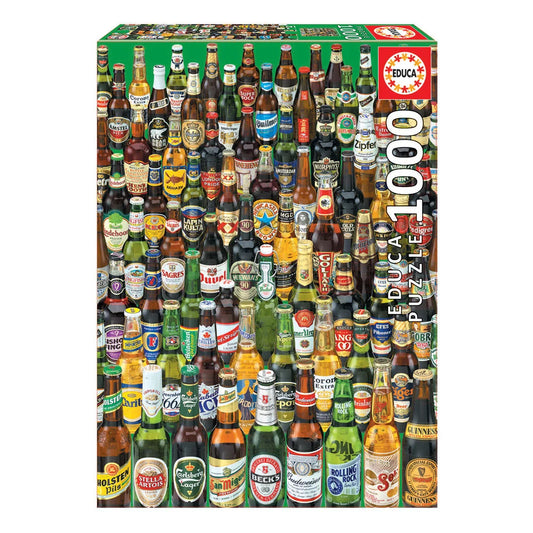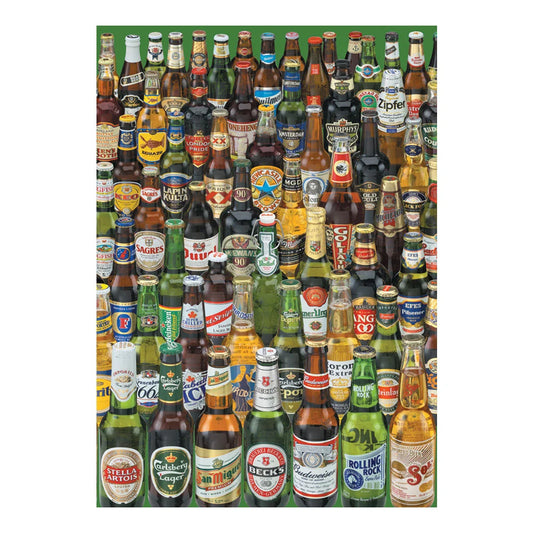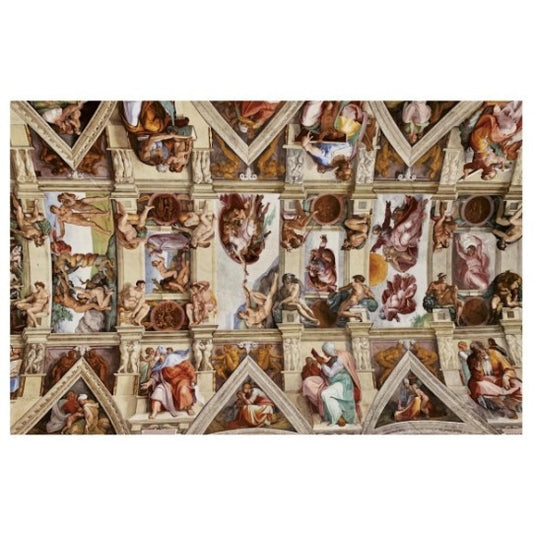
Some objects entertain, others decorate, and a few manage to do both at once. Famous art puzzles belong to that rare group: they call for attention, patience and a good eye, while bringing everyday life closer to works that shaped the history of painting, illustration and visual culture.
Assembling a painting from small pieces is something quite special. It's not just about “filling in gaps” until the image is complete. There's a silent dialogue with the composition, the color, the light and the original artistic gesture. An evening spent piecing together Van Gogh's blues or Klimt's golds can be as restful as it is stimulating.
Anyone looking for an intellectually demanding pastime will find an option with plenty of room to grow. So will anyone looking for beauty.
Why famous art puzzles spark so much interest
There's a clear difference between assembling a generic landscape and rebuilding a famous image piece by piece. When the puzzle reproduces a celebrated work, the pleasure of assembling it doesn't come only from the mechanical challenge. It also comes from familiarity with the image and the desire to watch it come to life, piece by piece, before your eyes.
This effect is powerful because it combines visual memory with anticipation. Even when the work is well known, many details go unnoticed until you look closely at each area. A puzzle turns a quick glance into methodical observation.
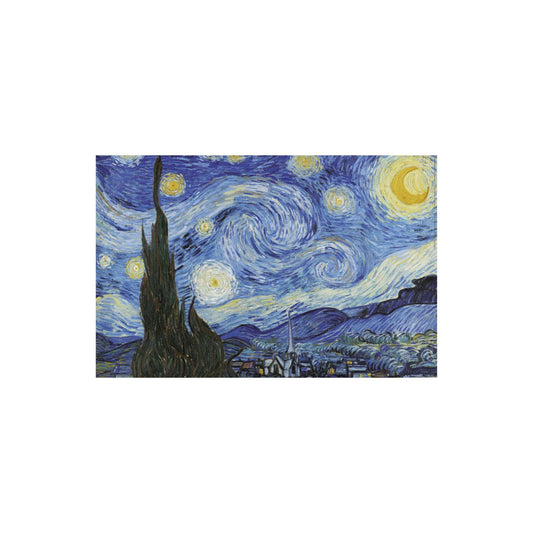
There's also a very appealing cultural side. When you work up close with a reproduction of “The Starry Night,” “The Kiss” or “Girl with a Pearl Earring,” you spend more time with the work than you would on a brief museum visit or looking at an image on your phone.
Among the most common reasons for the popularity of this type of puzzle are:
- close contact with iconic works
- a sophisticated visual challenge
- a relaxing activity
- decorative value once assembled
- a gift with cultural character
Cognitive benefits of famous art puzzles
Doing puzzles is a demanding activity on several mental levels. It requires you to identify patterns, compare very similar shades, recognize shapes and form hypotheses about where each piece probably goes. When the image is a famous work of art, the difficulty can increase considerably, especially in areas of sky, fabric, shadows or repetitive brushstrokes.
Sustained attention is one of the skills that gets the biggest workout. Over the course of a session, the mind learns to stay focused for longer periods without the restlessness typical of fast digital tasks. This can be especially appealing for anyone who wants to slow down without giving up consistent intellectual stimulation.
There's also a subtle but relevant benefit: your visual perception becomes sharper. Instead of seeing “blue,” you start to distinguish cool, warm, deep, grayish or luminous blues. Instead of seeing “a dark area,” you notice texture, direction, depth and repetition.
On a more emotional level, these puzzles also encourage a tangible sense of progress. In a day fragmented by commitments and screens, completing visible parts of an image offers a feeling of order and achievement that's hard to replicate with other activities.
How to choose famous art puzzles based on your experience
Not every work behaves the same way when it's turned into a puzzle. Some have large areas of uniform color and require a lot of persistence. Others offer strong contrasts, defined figures and sections that are easier to separate. Choosing well makes the difference between a stimulating experience and early frustration.
Beginners may benefit from works with a balanced composition, clear outlines and a variety of colors. An experienced puzzler, on the other hand, might be looking for exactly the opposite: complex surfaces, repeated patterns and subtle gradations. The number of pieces also matters, of course, but it isn't the only criterion.
The following table will help you make a smarter choice:
| Experience level | Number of pieces | Recommended type of artwork | Visual challenge level |
|---|---|---|---|
| Beginner | 500 to 750 | Portraits with a distinct background, art posters, high-contrast Impressionism | Moderate |
| Intermediate | 1000 pieces | Paintings with several color zones, scenes with architecture, decorative art | Medium to high |
| Advanced | 1500 to 2000 | Skies, floral patterns, repetitive surfaces, abstraction | High |
| Very experienced | 3000 or more | Works with few reference points, partial monochromes, large textured areas | Very high |
Other factors deserve attention before you buy:
- Print quality: a good reproduction avoids “washed-out” colors and makes details easier to read
- Piece cut: precise fits reduce mistakes and make assembly smoother
- Surface finish: too much gloss can strain your eyes under artificial light
- Final format: think about the space you have before choosing panoramic or very large formats
Artworks and art styles that work best as puzzles
Some styles have a special affinity with this format. Impressionism, for example, is very popular because it offers rich color and visual dynamism. At the same time, it can be demanding, since many areas are made up of similar brushstrokes. Monet and Renoir appeal to those who enjoy soft transitions and a luminous atmosphere.
Post-Impressionism tends to be even more captivating for this purpose. Van Gogh, with his intense color and visual rhythm, makes for visually rich and very satisfying puzzles. Every area seems to pulse, and that brings energy to the assembly process.
The decorative art of Klimt or Mucha also adapts very well. The golds, arabesques, fabrics and ornaments create fascinating areas, ideal for those who enjoy patterns and controlled repetition. Classic portraits by Vermeer or Leonardo da Vinci may offer less variety of color, but they have a unique elegance.
There's also a clearly growing niche: puzzles inspired by modern and contemporary movements. Cubism, geometric abstraction and Surrealism appeal to those who prefer less predictable shapes. These are less “linear” options and therefore very stimulating for minds that like to solve unconventional visual problems.
Practical strategies to enjoy assembling famous art puzzles even more
Assembly can be more efficient without losing the fun. The first step is still the classic one: separate the edges, identify blocks of color and set aside pieces with very distinctive patterns. With an art puzzle, this initial organization is even more valuable because the visual transitions can be subtle.
It's worth studying the image calmly before you start. Observing the direction of the light, the most textured areas, the changes in tone and the central elements helps you build a mental map of the work. That map speeds up decisions and avoids too many random attempts.
Many puzzlers also prefer to work by “visual families” rather than by exact location. In other words, they group pieces that share the same type of brushstroke, fabric, sky or ornament, even before they know where they'll go in the whole. This method is particularly useful with famous art, where the artistic texture matters as much as the drawing.
A few simple practices make the experience more enjoyable:
- Proper lighting: side or diffused lighting helps you distinguish similar tones
- Stable surface: a firm base prevents pieces from shifting and progress from being lost
- Short, regular sessions: 20 to 40 minutes can achieve more than long, tiring marathons
- Enlarged reference: viewing the box image enlarged on a tablet or a printed sheet makes details much easier to read
Famous art puzzles as a solo or shared activity
Some people prefer to assemble alone, as a concentration ritual. That makes sense. The activity encourages silence, your own pace and an intimate relationship with the image. On busier days, few tasks offer such an interesting balance between calm and mental challenge.
But famous art puzzles also work very well as a shared activity. Couples, families or groups of friends can divide up areas of the work, swap visual clues and chat about artistic details while assembling. The result is a low-pressure social activity, without the need for constant conversation or competition.
In a family setting, there's an added advantage: it creates a natural connection with art. Children and teenagers can discover landmark names and images in a hands-on way, without feeling like they're in a classroom. The painting stops being a distant reference and becomes something they've experienced.
It's also a great option for downtime on vacation, long weekends or quieter get-togethers at home.
The decorative value of turning art into a framed puzzle
Once you've finished, the puzzle doesn't have to go back in the box. Many people choose to glue it, frame it and give it pride of place at home or in the office. At that point, it's no longer just a completed pastime: it becomes part of the space as a visual piece with a story.
This is especially true of famous art puzzles. Unlike neutral images or generic compositions, a recognizable work has cultural presence. It adds character to a room and draws the eye. Anyone who sees it almost always realizes it isn't just a print bought on impulse.
The choice of frame has a big influence on the result. A discreet frame can enhance the work without competing with it. In contemporary spaces, smooth, neutral finishes usually work well. In more classic rooms, there may be space for a frame with more presence.
Before framing, it's worth considering:
- where it will be displayed
- exposure to direct light
- final size on the wall
- harmony with the existing decor
Where famous art puzzles stand out as a gift
Giving a puzzle like this is a smart choice when you want to avoid the predictable without sacrificing elegance. There's a sense of care in selecting the artwork, the style and the difficulty level. It's not a generic gift; it's thoughtful.
It works very well for people who enjoy visual culture, reading, design, museums or crafts. It can also be an excellent idea for someone who needs to slow down, reorganize their routine or rediscover a screen-free pastime. The gesture is simple, but the experience can last for days or weeks.
There are occasions when this gift makes even more sense:
- birthdays of art lovers
- holidays with a personal touch
- gifts for couples
- housewarmings
- times of rest or recovery
Between intellectual challenge and aesthetic pleasure, famous art puzzles occupy a place all their own. They're slow in the best sense of the word. They ask for time, but they give back focus. They demand attention, but they offer serenity. And when the last piece clicks into place, you're left with more than a complete image: you're left with the feeling of having spent some time in good company, alongside a great work of art.