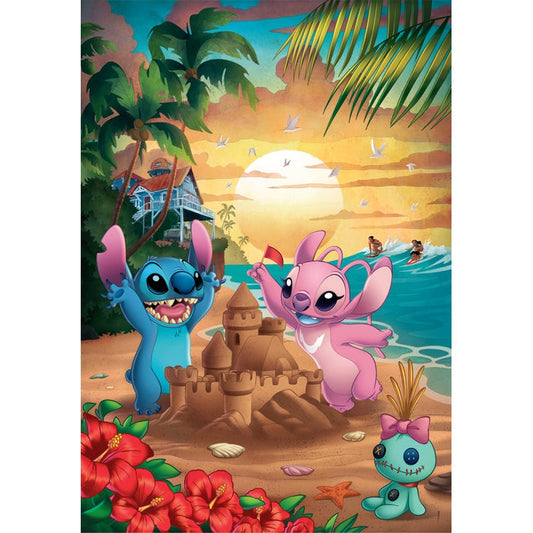
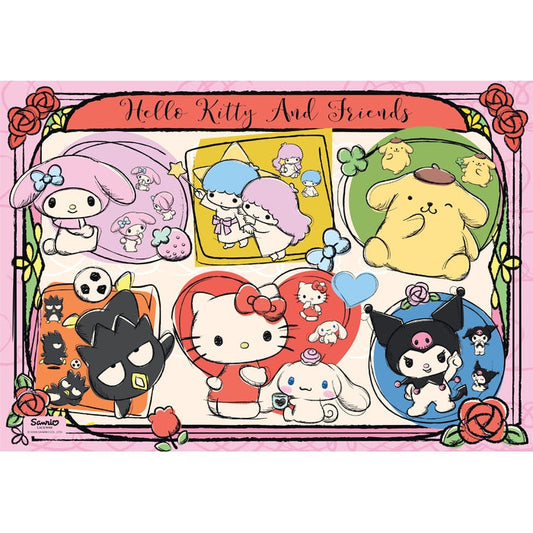
Three hundred blue pieces still loose and the box back in the cupboard after two evenings: that is how many first adult puzzles end. The picture was chosen with the heart, nearly always a sunset over the sea or a mountain with half a sky of blue. It is rarely a lack of skill. That kind of image needs practice you do not have yet, and it is the first thing to keep in mind when you buy jigsaw puzzles for adults.
This is for anyone who has never done a proper jigsaw, and also for those who did lots as children and want to come back to it. A first puzzle has one job: to get finished.
500 or 1000 pieces for your first adult jigsaw?
It depends more on how much time you have in the evening than on skill. Our product pages work on roughly one hour per 125 pieces. A 500 piece puzzle takes around four hours; a 1000 piece one, around eight. With an hour a night, a 500 is done in a week. A 1000 takes two, and the second week is where many people lose heart.
Space matters too. An Educa 500 finishes at 48 x 34 cm and fits at one end of the dining table. A 1000 from the same brand is about 68 x 48 cm, plus the area you need to spread out loose pieces: in practice, it takes the whole table for days.
If you are coming back after many years, a word of warning: memory plays tricks. Childhood puzzles had a hundred or two hundred big pieces. In an adult 1000, each piece is a little under 2 cm across.
Our advice: if you have never done one, start with our puzzles up to 500 pieces. If you did them as a child and enjoyed it, you can go straight to a 1000, as long as the image helps. The image matters more than the piece count.
Images that forgive beginner mistakes
A good starter image has clearly separate areas: different colours, objects with outlines, lettering, windows, things you can recognise on a single piece. When you pick up a piece and can say "that is part of the red lantern", the puzzle moves. When every piece looks the same, it stops.
Illustrations full of things
These are the friendliest for a first go. Educa's Ice Cream Shop, at 500 pieces, is a gelato parlour packed with colour and detail, and each area almost closes itself. The Fairy House, from the same range and the same size, suits anyone who prefers a fantasy theme.
At 1000 pieces, Educa's Sushi Kawaii is one we often suggest to beginners: a sushi bar with a wooden counter, red lanterns and dozens of dishes drawn with smiling faces. Lots of small elements, all different, which is exactly what helps.
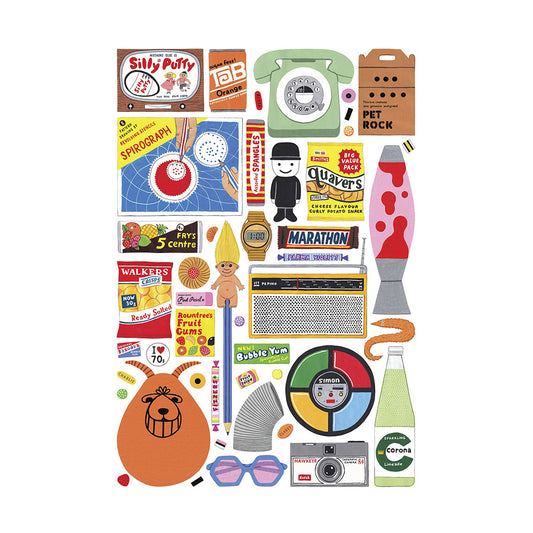
If you grew up in the eighties, Happily's In the 80's is a puzzle where spotting every object from the decade is half the fun.
Cities and façades
Building fronts are a beginner's friend, because every window is a reference point. Boat Trip through Amsterdam has narrow houses in different colours, bridges and bikes; the water is left for last and, since it reflects the houses, it gives you clues too. In Olivo's Yellow Façade, the sash windows, iron balconies and flower pots work like a map.
If you would rather stay at 500 pieces, Clementoni's New York finishes at 49 x 36 cm and has enough buildings that you never run out of places to start.
What to save for your second or third
Some excellent puzzles are not for a first attempt. Travel Collages is a table covered in tickets, postcards and stamps with no focal point, and Educa itself rates it expert level. The Starry Night Miniature squeezes 1000 pieces into 46 x 30 cm, with tiny pieces. Keep them in mind for when the first one is framed.
For now, also steer clear of clear skies, flat seas, snow and fields of a single colour. Those are the spots where a beginner spends an hour without placing a thing.
Everything for this age group is in our adult puzzles, and if you have already settled on 1000 pieces there is more choice in puzzles up to 1000 pieces.
Your first evening at the table
You need very little: a table where the puzzle can stay for a few days, good light from above and a handful of lids or plates to sort pieces into. If it is also the table you eat at, the Clementoni puzzle mat (105 x 78 cm) lets you roll up the work halfway and put it away without undoing anything.
- Turn every piece picture side up. It takes a while, but it saves time later.
- Pull out the edge pieces and close the border first. It shows you the real size of the puzzle and calms things down.
- Group the rest by colour or by object, each group on its own plate.
- Start with the easiest part of the image, even if it sits in the middle.
- Stop when you stop finding pieces. The next day, with fresh eyes, three will slot in one after another.
There are more tricks like these in our article on techniques for doing puzzles more easily.
When you finish, make a note of how many evenings it took. If a 500 was done in under a week, the next step is a 1000 with a similar kind of image, not a blue sky.