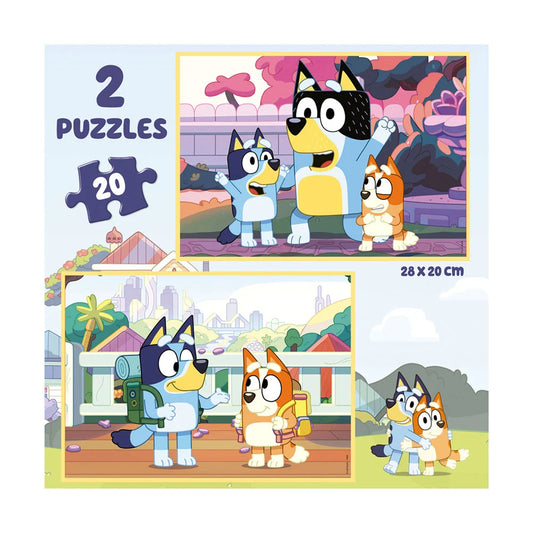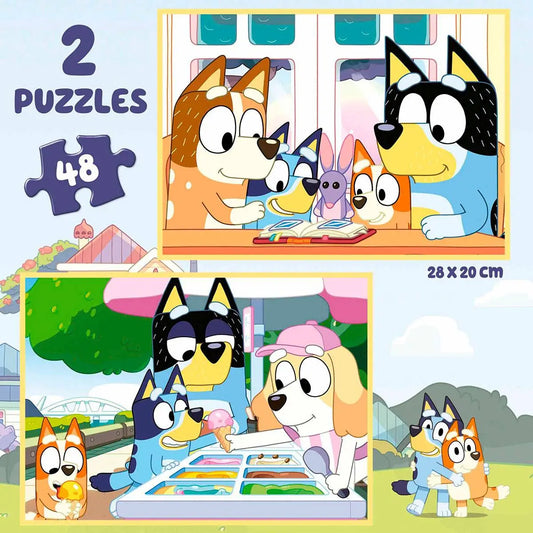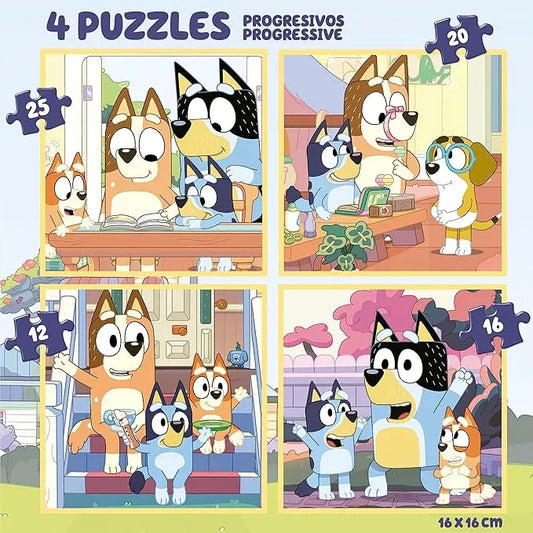
It started with curiosity. The colorful box caught our eye right away, the characters leapt off the cardboard and the promise of four progressive puzzles sounded like the perfect balance between challenge and play. I have to admit: I was just as excited as the child I gave it to.
The 3-6-9-12 pieces format has something special about it. It is a ladder of small successes that invites you to climb one step at a time. And you can feel it from the very first touch.
Why I chose a progressive set
The main reason was confidence. I wanted something that would allow quick wins at the start and, little by little, challenge both the mind and the hands. The Clementoni set themed around Gabby's Dollhouse does exactly that.
There is another important factor: quality. Thick, sturdy pieces with a clean cut and joints that “tell you” when they are in place. The colors are bright without annoying glare, the print is sharp and the outlines of the characters help with visual orientation. In an activity that involves repetition, durability matters.
This type of puzzle also lends itself to short sessions. You do not need to set aside a whole afternoon. Five to seven minutes are enough to assemble the 3-piece puzzle, a few more minutes for the 6-piece one, and so on. Perfect to fit in between snack time and bath time.
First contact: Gabby's Dollhouse on the table
The reaction was immediate: “It's Gabby!” The characters are familiar and that creates extra motivation. When I opened the box, I sorted the four puzzles by the colors on the back, something Clementoni does very well to avoid annoying mix-ups. It is a simple detail that prevents frustration before the fun begins.
I made sure to present only the 3-piece puzzle. No rushing. One challenge, one clear picture, two joins to complete. From start to finish, a minute and a half. And a smile.
A little quiet helps too. With no TV in the background and the box serving as a visual reference, everything flows more smoothly.
What changes from 3 to 12 pieces
From the child's point of view, the feeling is this: “I've got the logic, now I'm going to sharpen my eye and my hand.” With each step up, there is a small change of strategy. In the 3-piece puzzle, the picture guides everything. In the 6-piece one, the idea of edges and searching for specific colors appears. In the 9 and 12-piece puzzles, systematic rotation of the pieces and reading patterns come into play.
It is a short, effective exercise in patience. Success in the previous puzzle fuels the next one.
After the third assembly, I started to notice small spontaneous comments: “This piece has the cat's ear.” This is where we realize the brain is breaking the image down into useful clues.
After this stage, it is worth naming the skills without insisting.
- Visual attention: finding repeated details, colors and outlines
- Fine motor skills: pincer grip, rotation and the right pressure when fitting pieces
- Spatial reasoning: orienting the pieces and understanding edge and center
- Planning: deciding where to start and what to try next
- Frustration tolerance: dealing with failed attempts and persisting methodically
How I organized the first session
I prepared a neutral surface with good light and placed the box lid in view, tilted, to serve as a guide. I tipped out only the pieces of the simplest puzzle and let the child take the initiative. It worked.
Whenever a doubt came up, I asked questions instead of giving immediate answers. “Which piece has part of the dress?” “Where do you see a similar line?” This light conversation nudges the child toward active observation.
With the 6-piece puzzle, I introduced a simple rule: edges first. It is a gentle rule, not a strict one. It served as a starting point, not to impose a single technique. And it resulted in a steady assembly time, with a little “wow” at the end.
With the 9-piece puzzle came the first real hesitation. We stopped for a minute, took a breath, moved around a bit and came back. Three tries and the last piece clicked into place.
Sometimes a short break is all it takes to come back with fresh eyes.
Practical tips for parents and educators
Keeping the experience enjoyable makes all the difference. A clear routine and a few tricks work wonders.
- Less is more: present one puzzle at a time
- Visible reference: the box lid or a printed picture at hand
- Language of clues: short questions that draw attention to details
- Time management: short sessions of 10 to 15 minutes
- Organized storage: zip bags for each puzzle, labeled by the color on the back
- Specific praise: praise the process, not just the result
- Smooth transition: repeat the same puzzle before increasing the number of pieces
Progression and timing table
Below is how it went in our setting, with approximate average times and the skills in focus. Naturally, every child has their own pace.
| Puzzle | No. of pieces | Approximate size | Piece size | Perceived difficulty | Average time | Focus skills | Useful tip |
|---|---|---|---|---|---|---|---|
| 1 | 3 | 20 x 20 cm | Very large | Very low | 1-2 min | Attention to the picture, pincer grip | Turn the pieces picture side up before starting |
| 2 | 6 | 20 x 20 cm | Large | Low | 3-5 min | Edges, colors, light rotation | Start with the pieces that have a visible corner |
| 3 | 9 | 20 x 20 cm | Medium | Medium | 6-9 min | Patterns, patience | Group by dominant colors |
| 4 | 12 | 20 x 20 cm | Medium | Medium-high | 8-12 min | Planning, persistence | Build the frame and fill in from bottom to top |
The piece size is friendly for small hands and the consistent cut avoids false fits, something I really appreciate when energy starts to dip.
When to move on to the next puzzle
There are simple signs. If the child completes the current puzzle without help, in consistent times and with a smile, it is time to move up. If they do it with some hesitation but recover on their own, it is also worth a try.
If long blocks appear, or frustration that does not fade with a micro break, it is better to consolidate with one or two more rounds at the current level. There is no rush. The goal is to keep the desire to do it again.
Another useful indicator is the conversation during assembly. When the child starts to verbalize relevant clues, such as “this is Pandy's ear” or “here's the pink edge”, they are ready for more pieces.
What if the child gets frustrated?
I turned to the three-options technique. Instead of saying “it doesn't go there”, I offered choices: “Do you want to look for corners, compare colors or turn the pieces one by one?” Giving control reduces the weight of frustration.
I also helped create micro wins. Two pieces that fit together deserve a “great, your idea worked”. The brain records this feedback and tries again.
When things got heated, we took a piece and hid it under a hand. Guessing which piece it was brought laughter. We got back to focusing without loading the experience with pressure.
Why the Gabby's Dollhouse theme helps so much
Motivation and familiarity. Beloved characters work as emotional cues. The child wants to see Gabby complete and looks for clues more attentively. The bond with a story they already know makes the puzzle more than a mechanical challenge.
The color palette is also useful. Lots of bright tones with clear contrasts between areas make segmentation easier. In the 12-piece puzzle, for example, there are areas where the colors form “islands” that serve as mini goals.
Hygiene, durability and storage
The pieces survived hands with cookie crumbs and wiping with a damp cloth. They did not warp, did not lose their shine and did not develop rough edges. The quality of the materials shows after a few weeks.
I kept each set in a labeled zip bag. When we open them, we tip out just one. No treasure hunt inside the box, which saves time and patience.
Keeping the lid always at hand solves half the questions that come up during assembly.
Educational value without losing the fun
Some games feel like exercises in disguise. Not this one. The activity stays playful and, at the same time, builds skills that later translate into reading context, organization and sustained attention. It is training, but it feels like play.
It does not need complex instructions. It needs space, calm and adults who trust the process.
Small variations to keep it fresh
After a few sessions, it is normal to want to shake up the routine. Small variations are enough to renew interest without making it too hard.
- A cooperative race against the clock
- Silent assembly using gesture clues
- Taking turns piece by piece
- Telling stories as the characters appear
When the child invents their own rules, motivation doubles. Let's listen to their ideas and try out the best ones.
Questions people ask me about this set
What ages is it suitable for? In general, from 2 and a half years for 3 pieces, 3-4 years for 6, and 4-5 years for 9 and 12. But maturity varies. Watch the behavior, not just the age.
How many repetitions per level? Three to five assemblies usually consolidate things well. When the time stabilizes and attention holds, that is a good sign.
Can I mix pieces from two puzzles to increase the challenge? Only when the child has mastered both separately. And ideally with different colors on the back to avoid frustration when tidying up.
Should I help actively or just watch? Indirect help works best: guiding questions, discreet gestures and the reference picture always in view. Step in directly only when there is a persistent block.
What I would change next time
I would introduce a short planning phase: “What do you want to do first?” This question builds a mental habit that carries over to future tasks. I would also let the child choose the order of the puzzles. Autonomy fuels persistence.
I'm tempted to use a felt mat. It adds grip, stops pieces from sliding and invites calmer movements. Nothing essential, just a little extra comfort.
I would take the 12-piece puzzle to the kitchen table on a rainy day. Tea for the adults, chocolate milk for the little one, and Gabby taking shape to the rhythm of short conversations. That is what memories are made of.
Ideas to keep the interest going over the weeks
Creating small rituals keeps the spark alive. An opening song, a “puzzle handshake”, a box that only opens late in the afternoon. The brain loves consistent signals.
I also like to take a photo of the finished result, print it on a small sheet and use it as a reference card the next time. The child understands that what they built is worth remembering. And, without realizing it, they train their visual memory.
When the urge to move on to 24-piece puzzles comes, that is a good sign. It means the foundation is solid. Until then, there is plenty of Gabby's Dollhouse to build, take apart and build again. One piece at a time. One win at a time.