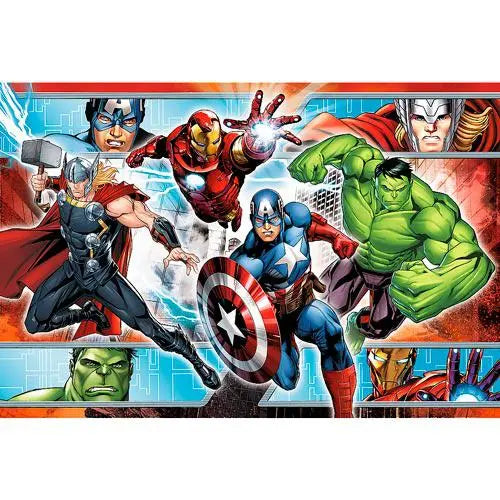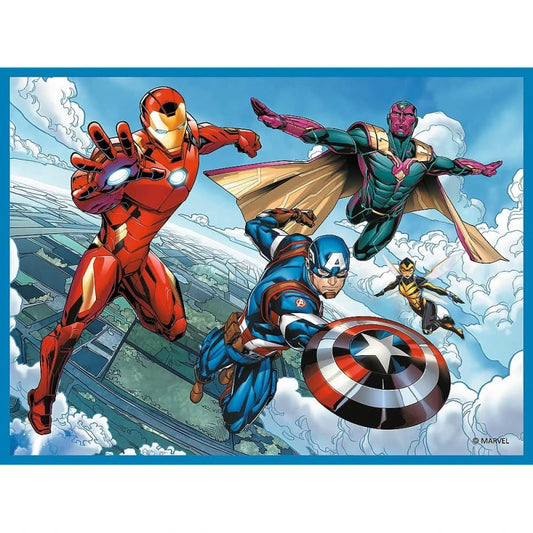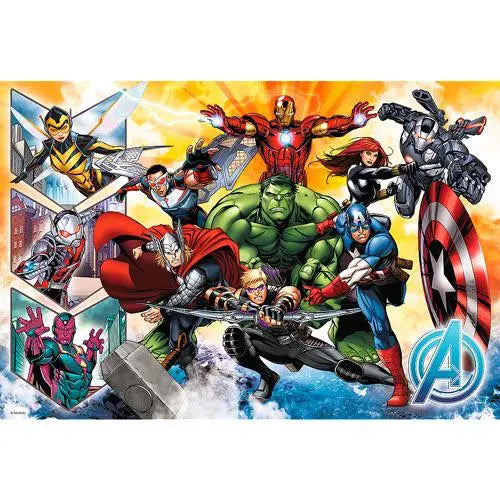
A good puzzle can turn a late afternoon with the family into a small ritual of concentration, conversation and good cheer. When it brings together superheroes, vibrant colors and sturdy pieces, even better. That's where this 180-piece Clementoni puzzle, inspired by the Fantastic Four, earns a place of honor on the shelf and on the table.
For anyone who enjoys a moderate challenge with a quick reward and an image full of movement, it's a safe choice. You can assemble it without rushing, but also without unnecessary frustration, staying motivated from the first piece to the last.
What makes this puzzle so special
Clementoni has a tradition of quality: clean cuts, pieces that fit precisely and sharp printing. With 180 pieces, the level of complexity is very comfortable. Enough to call for attention and strategy, but short enough to fit into an evening.
The Fantastic Four artwork gives it energy. There's contrast, well-defined areas of color and iconic character elements that help guide the assembly. For Marvel fans, the satisfaction is twofold. For those less into comics, it's a dynamic, colorful image that looks great framed.
After a first look at the box lid, you can tell it's not a random sky-and-sea puzzle. There are bold outlines, logos, blue uniforms, light effects and distinctive details that make it easier to identify groups of pieces.
- Large pieces: a comfortable size for children's hands and for less tiring sessions.
- Matte print: less glare, better color readability in different lighting.
- High-density cardboard: stands up to repeated use, with a cut that doesn't chip.
- Firm fit: a satisfying feeling every time a piece clicks into the right spot.
- Official Marvel licence: faithful artwork, consistent colors and recognizable characters.
Which ages it works best for
At 180 pieces, this product is an excellent bridge between simple kids' puzzles and longer challenges. For children aged 7 to 8 and up, it stimulates visual attention, memory and organization. For tweens and adults, it's a relaxing break, with no need to set aside an entire afternoon.
There's something interesting about this format: it's compact enough to be done on a small table, yet it leaves room for teamwork. Two or three people around the table can share tasks and make quick progress while catching up. And when the image is familiar, involvement grows.
Adult superhero fans will find a fun piece here to assemble, photograph and, if they like, frame. It looks great in an office, a teenager's bedroom or a corner of the living room with pop culture references.
Puzzling with rhythm: tips that work
Avoiding getting stuck starts before the first piece goes in: organization and strategy. A few small habits are all it takes to save time and frustration.
- Separate the edge pieces
- Sort by dominant color areas
- Work in islands and join them later
- Use small trays or boxes
- Take short breaks
The Fantastic Four artwork helps a lot. The blue of the suits, the logos and the energy effects mark out clear areas. Assembling the main figures first gives you that sense of progress that pulls the rest along.
If you're sharing the puzzle with children, divide the image into mini goals. Who takes the edges? Who handles the logo? Small victories keep everyone involved.
Dimensions and materials: what's in the box
For those who like precise information, here's a technical summary. It helps you see whether it fits on your table, whether it suits the age and what quality to expect from the finished product.
| Specification | Detail |
|---|---|
| Brand | Clementoni |
| Line | 180-piece puzzle |
| Number of pieces | 180 |
| Assembled size | 48.5 x 33.5 cm |
| Image finish | Anti-glare matte |
| Difficulty | Low to medium |
| Recommended age | Ages 7 and up |
| Material | High-density recycled cardboard |
| Inks | Water-based |
| Safety standards | CE, EN71 |
| Cut type | Precision cut with defined corners |
| Packaging | Rigid box, reference image on the lid |
The combination of solid cardboard and water-based inks results in a sturdy object that feels pleasant to the touch. The matte finish helps avoid glare, especially at night under direct lamps.
The charm of the Fantastic Four on your table
Characters with a strong visual personality work well in puzzles. Reed Richards with stretches that create lines and curves, Sue with translucent effects, Johnny, the Human Torch, bringing out the reds and yellows, Ben Grimm with his orange, rocky texture. Each hero creates an obvious visual island.
This richness is useful for anyone learning to recognize patterns. It trains the eye to spot subtle color variations, textures and outlines. The progression of pieces feels natural, almost guided by the image.
In the end, the assembled scene has real presence. It doesn't need a frame to impress, but it looks great in one if you want to keep your work.
From the living room to the classroom
Educators use puzzles as a discreet tool for cognitive training. The 180-piece format is short enough to fit into a small-group activity, with shared tasks and a focus on communication.
In therapy or learning support settings, repeated assembly reinforces planning, patience and frustration tolerance. The appealing image helps overcome resistance. The student wants to see the characters completed and stays engaged.
For families, it's a similar story. In 30 to 60 minutes, you get a shared experience with a beginning, a middle and an end. No screens. No complications.
Sustainability and durability
Clementoni has been strengthening more responsible practices in the production of its puzzles. Using recycled cardboard and water-based inks is a sensible choice to reduce impact while maintaining safety.
In practical terms, you can feel the durability right away: rigid pieces, not flimsy, that don't wear easily at the tips. The cut stays snug over several assemblies, so you can lend, swap or donate the puzzle, extending its life.
Storing the pieces in zip bags or compartment folders helps preserve them. A simple solution is to stick a small note inside the lid with the checked piece count. It gives peace of mind when the puzzle passes through many hands.
How to gauge the level of challenge
Not all 180-piece puzzles behave the same way. The difficulty depends on the artwork, the finish and the cut. Here, the strongly defined color areas and distinct characters lower the difficulty, which is great for keeping the flow going.
If you're taking your first steps at this size, start with images that have contrast and clearly defined elements. As you gain confidence, move on to landscapes with wide skies or scenes with repeated patterns.
The sense of rhythm is key. When the puzzle gives quick feedback with frequent fits, your brain is satisfied and wants to keep going.
Quick questions
How long does it take to assemble? For one person, between 40 and 90 minutes, depending on experience. With two people, the time drops considerably.
Can it be glued and framed? Yes. Use special puzzle glue applied from the center outward to the edges. A 50 x 35 cm frame with a discreet mat shows off the image beautifully.
Is it suitable for younger children? With help, yes. From the age of 6 to 7, some children can already make progress, especially in areas with strong colors. Without help, it's best to follow the manufacturer's recommendation.
Are the pieces compatible with other puzzles? No. Each brand and range has its own cuts, so pieces aren't compatible between different boxes.
Care and storage tips
A good surface makes a difference. Tables with an uneven texture can cause slight warping and affect the fit. A puzzle mat or a large sheet of poster board solves the problem and makes it easy to move the puzzle if you need to clear the table.
Avoid prolonged direct sunlight so the colors don't fade. If you like to keep finished puzzles out for a few days, a clear plastic cover or tracing paper protects them from dust without hiding the image.
If you plan to do it many times, it's worth cataloging. A photo of the finished puzzle, a number on the side of the box and, if you like, the percentage of edge pieces. It makes coming back to it much more organized.
Where to buy and what to check
Leading toy stores, stationery shops with a hobby section and many online stores almost always have this format in stock. The price is usually affordable, with variations during seasonal sales.
When it arrives, check that the inner bag is sealed and that the box isn't torn. Take a look at the print: vivid colors, sharp lines, no smudges. Keep the invoice or digital receipt just in case.
Some stores offer points or perks for repeat purchases. If you're thinking of building a small puzzle collection, it can pay off.
When the puzzle becomes a decorative piece
Some people assemble, photograph and put it away again. Others glue it and hang it up. Both options are valid. The Fantastic Four image works well in a teen's bedroom, a creative office or a game room. It's a statement of taste and a physical reminder of an hour well spent.
If you choose to glue it, look for a lightweight frame. A narrow profile in black or matte aluminum puts the artwork center stage. Avoid very glossy glass. The goal is to keep the same visual comfort as the matte finish.
Why a 180-piece puzzle is worth having in your collection
Some days you feel like a long challenge. On others, you just want a project that starts and finishes without taking up the whole weekend. That's where the 180-piece puzzle has its charm. It offers focus, reduces mental noise and produces an eye-catching result with controlled effort.
For those who like to switch between tasks, it's also the format that lets you assemble it over two or three short sessions without losing track. Assemble half, leave it on the mat and come back when it suits you.
- Balanced size
- Iconic image
- Consistent quality
- Great for sharing
- Friendly price
In the end, what stays with you is the experience. The initial anticipation, organizing the pieces, the small victories, the conversation around the table. And that last piece that completes the image and brings a smile. Puzzle lovers know: moments like these are worth it.