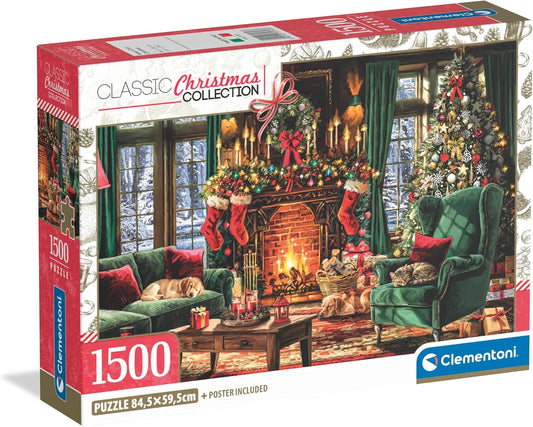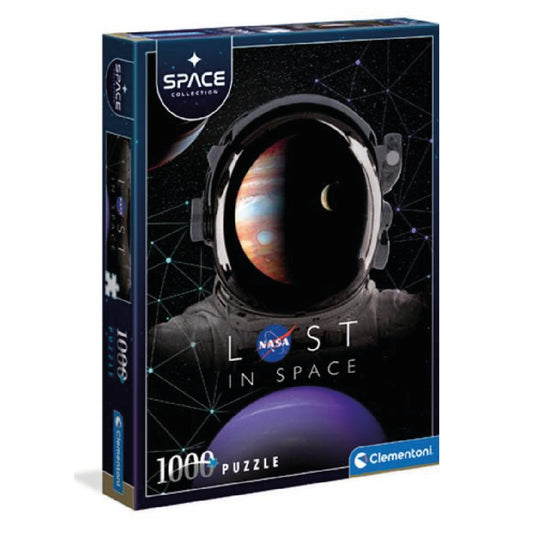
Some puzzles stay in our memory because of the image, the tactile feel or the focused silence they create around a table. The Clementoni Joys 1000-piece puzzle brings all of that together and adds a color palette that draws in the eye and engages visual reasoning.
It's one of those challenges that fills an evening, maybe two, and calls for a good cup of tea, the right light and the calm of someone who enjoys trying and retrying until the piece fits with a soft click.
Why this 1000-piece puzzle deserves your attention
The name says a lot: Joys is a picture full of color and detail. It's not just a photograph printed on cardboard; it's a composition designed to keep curiosity alive, with distinct textured areas and subtle transitions that test your patience without breaking it.
Some areas are more immediate, almost begging to be assembled first, while in others the repeated colors challenge your eye. That mix is what gives the puzzle its rhythm. You make confident progress in one corner, get stuck in the center, then pick up speed again when you find a pattern that suddenly makes sense.
For anyone worried that 1000 pieces might be too much, this model is a good middle ground. Its difficulty is medium to high, depending on experience, but the visual richness helps you stay focused and motivated.
Materials and cut: the Clementoni signature
Clementoni has spent years refining its cut and finish, and it shows. The pieces have a comfortable thickness, don't bend easily and fit without any play. The cut helps avoid false matches, which saves time and frustration.
The finish is light to the touch with an anti-glare treatment, which is useful when working under desk lamps. The cardboard comes from controlled sources, and the brand has a track record of including recycled material in its main ranges, which appeals to anyone who wants quality without an unnecessary environmental footprint.
The print is sharp, with balanced colors. In a puzzle like Joys, where shades are key to guiding the assembly, that color accuracy makes the difference between fumbling in the dark and progressing methodically.
Size, time and level of challenge
If you've already done a 1000-piece puzzle from this brand, you know what to expect in terms of format. The finished puzzle needs a medium-sized table, room to sort the pieces by color and pattern, and space for a board or a roll-up mat if you need to clear the room before you finish.
Below is some useful information to help you plan your space and time.
| Feature | Detail |
|---|---|
| Brand | Clementoni |
| Collection | High-Quality Collection |
| Title/Artwork | Joys |
| Number of pieces | 1000 |
| Assembled dimensions | approx. 69 x 50 cm |
| Finish | anti-glare, sharp print |
| Piece thickness | rigid cardboard, precise cut |
| Difficulty level | medium to high |
| Average assembly time | 6 to 12 hours, depending on experience |
| Recommended age | ages 14 and up |
The time range is a guide. Those who puzzle in pairs, with good sorting and a system, can finish in a weekend. On your own and in no hurry, it happily stretches over several evenings.
A smart assembly strategy
Start with the obvious: separate the edges, pick out the dominant colors and identify unique textures. Joys rewards a methodical start and a more experimental second phase.
- Edges and corners: they provide the physical and mental frame and clarify the scale of your workspace
- Sorting by color: small groups by recurring palettes; helpful in areas with gradients
- Patterns and textures: spots, lines, unique elements; special pieces that speed up progress
- Frequent testing: try pieces without forcing them; the Clementoni cut guides you to the right fit
- Rotating the board: changing the angle reveals solutions that didn't stand out before
If method is the engine, the environment is the fuel. A tidy table and the right light reduce mistakes and are easier on your eyes.
- Neutral white light
- Non-slip board or mat
- Bowls for sorting
- Regular breaks
- Background music
A family evening well spent
Doing puzzles is an excuse to talk without hurrying. Joys works well for two or three people because you can divide the work into areas with distinct visual identities. One person takes the edges, another chases a set of colors, and another picks out pieces that seem out of place but end up making all the difference.
It's also a practice that builds tolerance for mistakes. The piece doesn't fit? Back to the pile. No drama. This little exercise in letting go improves concentration and lowers anxiety. After an hour, your head feels lighter.
For teenagers, it has special appeal: it's visually captivating and challenging enough to keep phone distractions away for a good while. Younger children can help with sorting and the edges, always with supervision.
From tabletop to wall: storing and framing
If the image wins you over, you may want to turn it into a decorative piece. Glue it with special puzzle glue or white glue diluted with water, applied with a soft brush. A thin layer on top holds the pieces together and adds a protective film. It's a good idea to put tracing paper underneath so it doesn't stick to the table.
As for the frame, the standard 70 x 50 cm size usually fits the 69 x 50 cm puzzle well when there's a mat. If you prefer it without a mat, look for a frame with a removable back and mount the puzzle on foam board to prevent waves. Anti-glare glass keeps the colors vivid and the image easy to see in very bright rooms.
Other options from the brand and the difficulty ladder
If this 1000-piece puzzle feels like the right level, great. If you're looking for something to do first, Clementoni has 500-piece puzzles with the same cut and finish, a useful step for building confidence and rhythm. Moving up to 1500 pieces comes naturally once your process is fine-tuned and you have the space.
Within the brand, there are more photographic collections and more illustrated ones. Images with large plain areas or repeated patterns call for more patience and careful sorting. Compositions full of distinct objects make things easier. Joys sits in the middle, with an interesting balance between accessible areas and sections that test your persistence.
Frequently asked questions
Questions in italics, with clear and direct answers.
Does the puzzle come with a reference poster?
Some editions include a poster, while others have a high-definition image on the back of the box. It's worth checking with the seller. If there isn't one, a sharp photo of the lid does the job.
Are the pieces unique or do shapes repeat?
There's enough variety to avoid confusion. In 1000 pieces, you'll find similar shapes, but the cut is precise and you'll rarely force a wrong fit without noticing.
Can I do it on a roll-up mat?
Yes. The cardboard handles rolling and unrolling well, as long as the mat is good quality and you avoid excessive pressure. Ideal if you can't take over the table for many days.
What should I do if a piece is missing?
Keep the box and proof of purchase. Clementoni customer service usually helps, asking for the edition reference and photos. They can't always replace individual pieces, but it's worth getting in touch.
Is it eco-friendly?
The brand states that it pays attention to materials and processes. Many models use recycled cardboard and low-toxicity inks. If this criterion matters to your decision, check the specific labeling of the edition.
Where to buy and signs of quality
Specialist toy stores, stationery shops with a puzzle section and online platforms are the obvious places. What matters is making sure the edition is original and that the box hasn't taken any knocks that could have deformed the pieces.
- Intact seal: film properly applied; no tears or suspicious resealing
- Box corners: no dents; a sign of good storage
- Print: vivid colors on the lid; sharp text and visible collection reference
If you have the space, consider also buying a set of sorting bowls and a roll-up mat. Joys comes to life when the assembly process flows, and these accessories reduce clutter and speed up every session.