Some puzzles connect us to a work of art in an intimate way, piece by piece. When the image is by Edvard Munch, the experience becomes more intense. The brushwork, the color, the visual noise that seems to vibrate on the paper: everything invites a long look and a building pace all of its own.
Some people make it a weekend ritual, others set aside an hour after dinner. Either way, the promise is clear: creating beauty with your own hands.
The fascination of Munch on your living room table
Munch painted emotions. That's what we feel in “The Scream”, and that's what a 1000-piece puzzle can bring into our space. The blazing horizon, the lines of the pier, the central figure that makes time stand still. It's not just an image taking shape, it's a state of mind that settles in as we search for shades that hover between orange and red, between blue and green.
The Norwegian artist's visual language pairs well with the puzzler's challenge. The color variations help with sorting, but the swirling brushstrokes demand attention. One step at a time, and suddenly that piece with a curved dark blue stroke makes sense in the bottom right corner. The satisfaction is instant.
What Clementoni does differently
Clementoni has fine-tuned its “Museum Collection” puzzles so the image shines without dazzling. The matte finish reduces glare, and the printing is sharp, with smooth gradients. You can see the clean outlines, with no ink fringes, which makes it easier to read where colors begin and end.
The cut is tight and gives that crisp, confident “click” when pieces fit together. Sturdy pieces with consistent thickness prevent warping. There's no excess dust in the box, which also helps keep your work surface clean. The result is a smoother build and a cohesive final look.
The brand's formats follow familiar proportions, which makes it easier to choose a standard frame if you want to display the puzzle.
Puzzle specifications
| Feature | Detail |
|---|---|
| Brand | Clementoni |
| Series | Museum Collection |
| Artwork | Edvard Munch, often “The Scream” |
| Number of pieces | 1000 |
| Finished size | Approximately 69 x 50 cm |
| Piece thickness | Medium, rigid good-density cardboard |
| Finish | Matte, anti-glare |
| Cut | Traditional, with a variety of shapes and interlocking tabs |
| Recommended age | 14+ |
| Challenge level | Intermediate to high |
| Extras included | In some editions, a poster of the image |
These measurements and extras may vary slightly depending on the edition and the market. It's worth checking the box when you buy.
Difficulty, pace and strategy
A thousand pieces is a sweet spot. Enough time to feel progress, without dragging on for endless weeks. With Munch, the difficulty goes up a notch in areas where the brushwork creates repeated patterns. The secret is turning the apparent chaos into small goals.
It's a good idea to set up a work area with good light and light-colored surfaces so the colors can show. Sorting by color and by piece type increases your speed. And resting your eyes works better than sticking with the same area for too long.
- Edges first: the frame guides the eye and sets the proportions
- Color segments: burning sky, bridge, water, central figure
- Read the texture: follow the direction of the swirling brushstrokes
- Interlocking tabs: check for the “click” and the continuity of the image
- Rotate often: turn the pieces to catch highlights and tiny differences
- Islands of progress: build small sections and join them later
If you prefer a freer method, you can start with the central figure and the outline of the bridge, which have strong lines and contrasting colors. Taking a photo of the table between sessions also helps you pick up where you left off faster.
Who this puzzle is for
Art lovers will feel right at home with the Museum series. The image carries emotional weight, and that keeps motivation up during the slow phases. For those starting out with 1000 pieces, it's a challenge that trains patience and observation without letting frustration take over.
Families with teenagers will make the most of the size: it fits on a medium table, and you can work together, each person on a block of color. For experienced puzzlers, there are subtleties of tone and texture that add real excitement, especially in the sky and the water.
Collectors value the consistent size across editions, which helps anyone planning to frame several artworks side by side.
A touch of sustainability
The Italian brand uses recycled cardboard and paper from controlled sources. It's a detail that matters to anyone who wants a hobby with a smaller environmental footprint. Besides being easy on the eyes, the matte finish avoids excessive glossy varnishes.
The boxes have been reducing empty space, which means less material and better logistics. Small gestures added to a product that lasts for years, whether you build it again or give it away.
Color, texture and fit
Munch's work lives in layers, and you can see this in the print. The color transitions are smooth, with no abrupt banding. The pieces have a slight texture that gives your fingertips some grip, which is useful when the room is quiet and the sound of a piece clicking into place makes you smile.
The repeated curves in the sky can be deceiving. The trick is to look for tiny variations: a more burnt orange, a thinner stroke of blue, an edge where the red fades. Over time, your eye becomes sensitive to these visual crumbs.
From mat to wall: how to frame it
Once it's finished, you'll want to preserve the artwork. The safest method is to use a glue made for puzzles, applied with a spatula or a piece of card in a thin, even layer. Let it dry completely, turn it over carefully and reinforce the back if needed. The surface is sealed and the colors are protected.
For a frame, many stores carry 70 x 50 cm as a standard size, with a mat board to adjust. A white or black mat board creates visual distance and enhances the image. Anti-glare glass is an investment that pays off, especially in rooms with direct natural light.
Before storing or displaying it, a little maintenance avoids surprises:
- Clean, dry surface
- Interleaved sheets for transport
- Well-closed boxes away from moisture
- Avoid prolonged direct sunlight
If you prefer not to glue it, there are frames designed for “loose” puzzles, with pressure and a back support. They let you take it apart in the future if you want to build it again.
Quick questions
How long does it take to build? It depends on your pace and how many hands are at the table. Many people finish a 1000-piece puzzle in 8 to 15 hours spread over several days. With experience and a method, that can drop by half.
Do I need a puzzle mat? It's not essential, but it's practical if you share the dining table. Felt or neoprene mats let you roll it up and come back to where you left off.
Are replacement pieces available? If something is missing, customer service usually responds, as long as you have the puzzle reference and proof of purchase. It's worth checking the procedure on the brand's website.
Is the image glossy? The matte finish reduces glare and keeps the colors readable under different lighting. Great for evening sessions by lamplight.
Where to buy in Portugal and typical prices
At Loja dos Puzzles you'll find the Clementoni Munch, The Scream 1000-piece puzzle, alongside other artworks in the art puzzles collection. Demand peaks around Christmas, so it's worth not leaving your purchase until the last minute.
The most common price range for 1000-piece puzzles in this series is between 12 and 20 euros, depending on promotions, special editions and shipping costs. The print quality and consistent cut more than justify the difference compared with cheaper options that end up with duplicate pieces or washed-out colors.
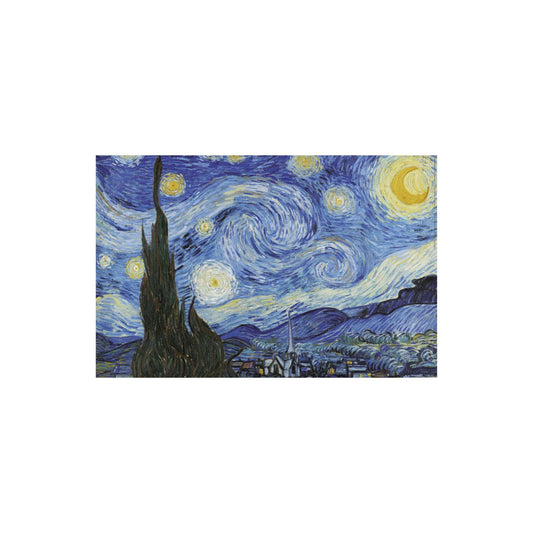
If you like to alternate challenges, the line includes other museum artworks, which keeps a consistent format on your shelf. A shelf with Munch, Van Gogh and Klimt in 1000 pieces creates a common thread between building sessions and walls that tell stories.