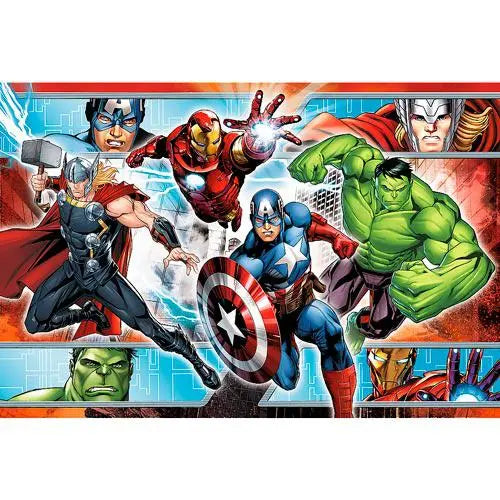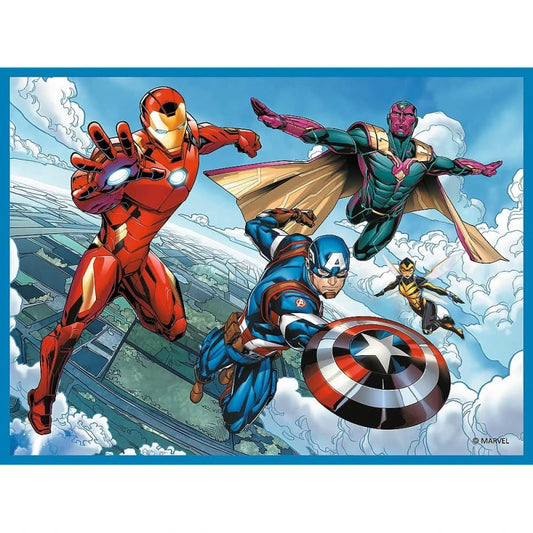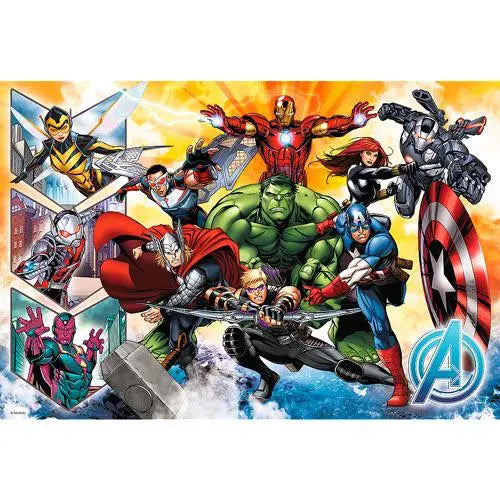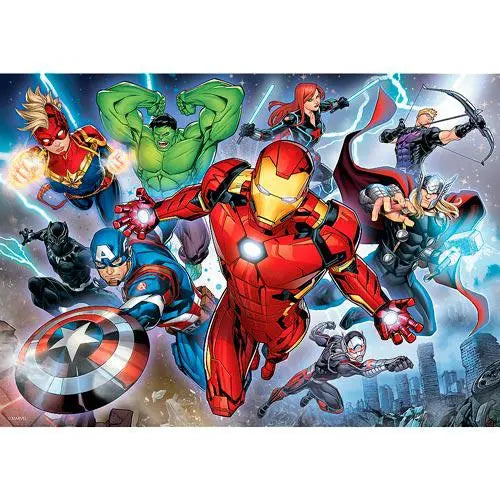
There's something special about putting together a puzzle featuring heroes who left their mark on film and comics. The finished picture has visual impact, but it's the process itself that wins you over: observing, sorting, testing, failing, trying again. At some point, the right click starts repeating and a rhythm sets in. And when the image is an Avengers scene, every piece seems to carry a little epic energy.
The choice of 1000 pieces isn't random. It's a scale that demands attention but fits on a living room table and into a busy week. It calls for a method without becoming an endless project.
It's a challenge that rewards a trained eye and, at the same time, welcomes those taking their first more serious steps into puzzles. Yes, it really is for every fan who likes to test their patience without losing their smile.
The appeal of a 1000-piece superhero puzzle
The Avengers bring together intense colors and striking shapes: Iron Man's red and gold, Captain America's blue, the Hulk's green, the gleam of Thor's hammer, Black Widow's contrast, Hawkeye's arched silhouette. This variety helps you sort by area and creates small victories throughout the build.
The implicit story that an Avengers illustration usually tells is also motivating. It isn't just a pretty composition. It's a call to action. Instead of a calm landscape, you find armor textures, metallic reflections, dramatic skies and explosions contained in gradients.
And yes, there are tricky areas. Backgrounds with smoke, shadows or particles may force you to sharpen your observation. But the whole image makes up for it with well-defined lines and blocks of color that act as anchors.
Clementoni quality in service of detail
Anyone who has done Clementoni puzzles will recognize the care taken over print detail and the consistency of the cut. The feel of the pieces matters a lot. The cardboard is solid, the surface isn't overly shiny and the edges are crisp enough to reduce confusion.
The connection between pieces has just the right balance: firm when it fits, loose when it isn't meant to be. The precise fit creates an almost seamless surface, which makes gluing or framing easier at the end.
A useful reference for planning your space: 1000-piece puzzles in this line tend to measure around 69 x 50 cm when assembled. Set aside a table with some room around it so you're not constantly pushing pieces off the edge.
| Aspect | Detail |
|---|---|
| Number of pieces | 1000 |
| Assembled size | Approximately 69 x 50 cm |
| Theme | Avengers, official Marvel license |
| Finish | Mostly matte, easy to read |
| Cut | Precise, with well-defined pieces |
| Material | Sturdy cardboard |
| Recommended age | Teens and adults; ideal for fans and families |
| Average time | 6 to 12 hours spread over several sessions |
It isn't just about looks. A good cut saves frustration. A good color palette helps with sorting. And a finish that avoids glare makes a difference when the light isn't perfect.
Practical tips for a smoother build
Assembly takes on a different pace with a few simple habits. These aren't rules, but shortcuts that make the most of the image and the cut.
- Build the border first
- Sort by dominant colors and patterns
- Create small groups by character
- Work from easy to hard
- Take a break before you get tired
- Take reference photos
Avengers fans can take advantage of the iconic colors. Iron Man's gauntlet, Captain America's shield, the gleam of Mjolnir, the Hulk's skin. Dividing the board by these patches of color speeds things up right from the start. Small containers or trays help a lot with organization and avoid the confusion of always digging through the same pile.
When you reach the more challenging backgrounds, look at the direction of the print grain, tiny dots and small variations in light. Sometimes the clue lies in an almost imperceptible shadow or a tiny outline. And when nothing works, switch areas. Surprisingly, coming back with fresh eyes solves in minutes what seemed impossible.
How to manage time and space while you build
A 1000-piece puzzle is rarely done in one go. What works well is treating it as a project of several mini sprints of 30 to 60 minutes, with a clear goal for each session.
A dedicated puzzle mat lets you put the work away without losing progress. A thick towel under the mat reduces slipping and noise and protects the table. Neutral overhead light combined with a side lamp cuts shadows and makes the pieces easier to read.
It seems like a small detail, but good lighting saves hours.
Music helps too. An album you love, a light conversational podcast, a radio show for company. Your mind slips into a relaxed focus and your hand finds solutions more naturally.
A gift that creates moments
Giving this puzzle to an Avengers fan is more than giving an object. It's giving quality time. Whether for a rainy afternoon, a weekend break or evenings spread across the month, it's an activity that brings people together around the same table.
As a family, each person can adopt a hero and take charge of that area. As a pair, taking turns helps avoid fatigue and keeps motivation high. In a group, the jokes and the competitive spirit bring the process to life. A piece that lands in the right spot draws applause. Literally.
There's also an educational side. Observation, patience, method, persistence. For older kids, it's a way to train focus without screens. For adults, it's an active break that clears the mind.
Preserving and framing: from pastime to wall art
When you finish, the question comes up: take it apart and put it back in the box, or turn it into a piece of wall art? Both options make sense. If the build was enjoyable and the image deserves to stand out, framing it adds a heroic touch to your decor.
Gluing doesn't have to be a drama. There are glues and adhesive sheets made specifically for puzzles. A custom frame with a simple mat enhances the result and protects against dust and humidity. If you'd rather avoid glue, there are floating frames and clip mounts that hold the puzzle without fixing it permanently.
- Preparation: clean the surface, gently vacuum the pieces to remove dust and check the final alignment.
- Glue: apply a thin layer with a spatula, from the center to the edges, keeping it even.
- Drying: allow the time indicated by the product; don't rush it with direct heat.
- Frame: choose anti-glare glass and a neutral backing to keep the colors easy to read.
- Mounting: make sure the puzzle is well supported, without warping, before hanging it.
If you decide to put it back in the box, remember that redoing a puzzle months later brings back part of the challenge, especially in the more uniform areas. You can also lend it to friends, creating a small swap circle among fans.
Frequently asked questions from would-be buyers
Do you need prior experience? No. The Avengers image, with strong blocks of color and clearly defined characters, really helps those who are growing in the hobby. Working by area gets you halfway there.
How many hours does it take? It depends on your pace and the number of people. A realistic estimate is between 6 and 12 hours, split into short sessions. Those who like marathons can finish the puzzle in a single day, but there's no need to.
What if pieces are missing? Before suspecting a defect, check the table, the floor and the trays. Pieces fall and slip away easily. If you still find one missing, keep your proof of purchase and contact the seller's customer service. Many retailers will help sort it out.
Is it suitable for children? For young children, 1000 pieces is usually too many. For preteens and teenagers who have already mastered 500-piece puzzles, it's a natural next step, especially if they share the build with adults.
Are the pieces shiny? In general, puzzles in this range aim for a moderate matte finish that reduces glare and preserves contrast. In practice, a well-placed light solves almost everything.
Where to buy and what to check first
Choose stores with a good track record and officially licensed stock. Check the real photos of the box, the Marvel license seal and the stated dimensions. If it's a gift, confirm delivery times and return policies to avoid surprises.
When it arrives, check the condition of the box and the sealed bag of pieces. A slight crease in the packaging doesn't usually affect the contents, but deep tears may justify an exchange. If you plan to frame it, get a quote in advance from your trusted framer, discussing sizes and finishes.
One last practical tip: photograph your progress at the end of each session. It helps you pick up where you left off, creates a record of the process and might even make a fun sequence to share with friends who also want to see the Avengers come together piece by piece.