Few animated characters inspire such instant affection as this little blue creature who fell from the sky and learned to live on an island in the Pacific. His origin blends science fiction, comedy, Hawaiian culture and a question that never gets old: what does it mean to belong to someone and to a place? The story began as a modest sketch in an artist's notebook and became a global phenomenon that keeps finding new interpretations.
From Experiment 626 to the heart of a family
Within the story, everything starts in a laboratory. An eccentric scientist, obsessed with creating the toughest and most mischievous creature in the universe, presents Experiment 626. Strong, almost indestructible, programmed for chaos and with a laugh that gets under your skin, this creation is born without any moral compass. It is a test of any civilization's patience.
The intergalactic authorities try to solve the problem in a simple way. Exile. But the transport pod veers off course and crashes on an island in Hawaii, far from spaceships and courtrooms. From here on, the science fiction slows down and everyday life takes the lead. A curious, stubborn Hawaiian girl, lonely and well aware of it, crosses paths with the newcomer. She sees a dog where others see a problem. And she decides to take him home.
The adoption changes the game. The toughest alien in the cosmos has to learn human rules. Sleeping in a room that was not made for claws, eating peanut butter sandwiches, getting told off, listening to music and, above all, dealing with the idea of family as something more than genetic code. The culture clash creates moments of comedy and tenderness, without ever forgetting that his intergalactic past keeps knocking on the door.
Behind the scenes: how the idea was born
Before the laboratory, there was a pencil. Artist Chris Sanders had drawn a rounded creature with big eyes and the air of a “lovable troublemaker”. The drawing sat in a drawer for years until it found its context in a story about difference meeting belonging. Dean DeBlois joined the project and, together, they shaped a script that mixed family intimacy with physical humor and a touch of controlled chaos.
The decision to set the story in Hawaii was crucial. The tropical setting, the local culture and the sense of community changed the tone of the film. The island offers a human scale, short distances, direct consequences. An intergalactic chase on Kauai has two or three streets, beaches, a house with a tin roof and a clothesline. That tunes the story into everyday details that bring the audience closer.
Some choices that shaped the process:
- A return to traditional 2D animation, with warm lines and watercolors that breathe.
- A soundtrack that blends local rhythms with the energy of Elvis Presley.
- Physical humor without cynicism, built on visual timing and body language.
- Supporting characters with depth of their own, not just there as decoration.
The industry context also mattered. In the early 2000s, Disney was looking for stories with a voice of their own. Instead of a grand epic with dozens of kingdoms and battles, it bet on a story that was small in scale and big in heart. That choice gave the freedom to experiment with silence, pauses and a pace that at times feels like a carefully choreographed home movie.
The psychology of a protagonist in transformation
Stitch works as a mirror of a universal theme: nobody is born with a manual for affection. It is learned. Through mistakes, tantrums, falls and two steps back whenever the temptation to run away kicks in.
Traits that help explain his dramatic power:
- Unfiltered curiosity. He touches, pushes and takes things apart to understand how they work.
- Extreme agility combined with a certain childishness, creating a comic contrast.
- Fragmented, half-guttural language that forces him to communicate with gestures, looks and rhythm.
- An internal survival code that gradually makes room for empathy.
This evolution is not a straight arc. His past keeps calling him back, and old habits seem easier than learning to say sorry. The script knows this and gives him time. There are no moralizing speeches. There are small victories. Sharing a toy. Helping to tidy up. Coming back home after messing up.
Hawaii as an active character
Many films use their setting as a postcard. Here, the place shapes the choices. The island sets the rhythm of the day. Rain arrives without warning. Surfing is not decoration, it is routine. Hula is not a show, it is cultural expression. And music is not background, it is identity.
The creative team invested in research and local consultation. The way people talk, cook, welcome and scold made it into the film with respect for the community's codes. The language, with its own expressions, appears naturally, and that gives credibility to every scene.
There is another relevant detail: Kauai's geography allows for physical humor that is never gratuitous. Narrow streets, wooden houses, vegetation that hides and reveals. The space has texture and the story knows how to make the most of it.
Timeline of films and series
The success of the original film opened the door to sequels, series and reinventions in different markets. Below is a simple map to place events and parallel paths.
| Year | Title | Format | Key point |
|---|---|---|---|
| 2002 | Lilo & Stitch | Feature film | Introduction of Experiment 626, arrival on Kauai, adoption and learning about family |
| 2003 | Stitch! The Movie | TV/video feature film | Setup for the series, introduction of other experiments created by Jumba |
| 2003-2006 | Lilo & Stitch: The Series | TV series | Hunting down and rehabilitating experiments, each episode focusing on one of Stitch's “cousins” |
| 2005 | Lilo & Stitch 2: Stitch Has a Glitch | Direct-to-video feature film | Stitch's inner conflicts, fragility and guilt in a family context |
| 2006 | Leroy & Stitch | TV/video feature film | Conclusion of the series' story, confrontation with a mirror-image antagonist |
| 2008-2011 | Stitch! (Japan) | TV series (anime) | Move to a Japanese setting, new bonds and different cultural codes |
| 2017 | Stitch & Ai (China) | TV series | Chinese setting, a new human friend and challenges adapted to another country |
This variety shows that the concept is flexible. In each adaptation, the central idea remains: a creature out of place who finds somewhere to call home, even if it means learning new rules the hard way.
What hooks kids and adults at the same time
There is physical humor for the little ones, of course. Falls, facial expressions, broken objects and the eternal temptation to press every button. But there is also an emotional layer that speaks to anyone who has lost someone, who is trying to hold down a job, who is dealing with paperwork that seems bigger than the house they are trying to pay for.
The film presents characters with real flaws. The older sister acting as a mother has tiredness in her eyes and courage in her heart. The social worker is not a villain, but a professional looking out for a child. The galactic police are not monolithic; they have rules and doubts. This honesty gives depth to the whole and creates empathy across the board.
For adults, there are musical references, gentle irony and a tender look at the chaos of everyday life. For children, there is an unlikely friendship that offers security, even when the plates are flying.
Design that sticks in your memory
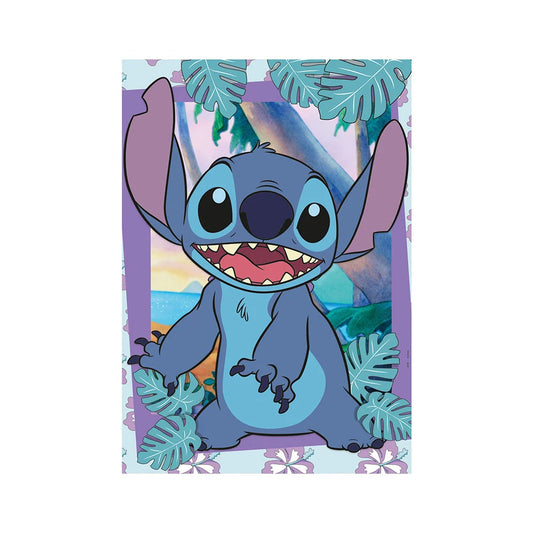
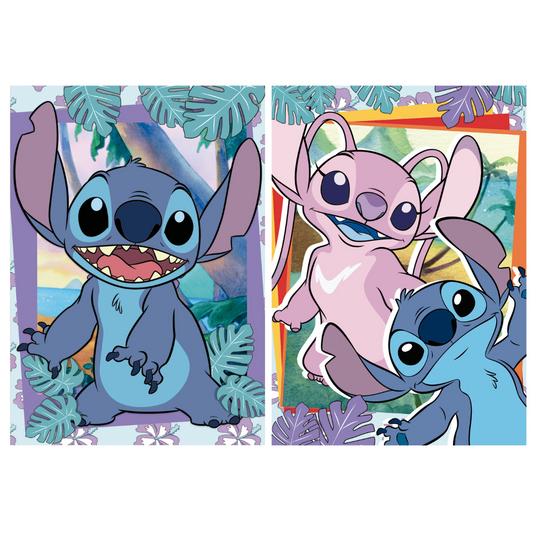
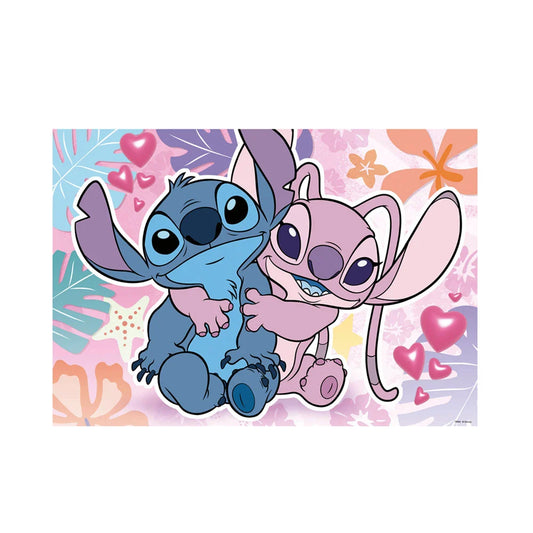
The character and set design was conceived to be readable at the size of a sticker without losing richness up close. Stitch has an instantly recognizable silhouette: a big head, ears that change position and reveal his mood, shining eyes that take up half his face. The blue helps him stand out against the green of the island and the yellow of the interiors.
Some key visual elements:
- Rounded shapes that invite touch.
- Subtle transformations that reveal his alien origin: extra arms and antennae when needed.
- Exaggerated but consistent body reactions that replace long dialogue.
The clever simplicity of the drawing allowed for a life beyond the screen. Plush toys, pins, notebooks, T-shirts. The character lends expressiveness to everyday objects while staying true to who he is in the film.
Music as a driver of energy and emotion
The soundtrack combines three dimensions. There are Elvis songs, which fit like a glove with the attitude of someone who has swagger and never apologizes for it. There are instrumental compositions that breathe the rhythm of the Pacific. And there is diegetic music coming from the kitchen radio, from barbecues, from small moments when the house sounds alive.
This mix gives rhythm to the comedy and builds an emotional grammar. When the action speeds up, the guitar speeds up. When there is silence between the sisters, the music steps back. It is a choreography that trusts the audience and lets a scene with two lines carry as much weight as a high-stakes chase.
Voices that create texture
The choice of voices had a direct impact on the cast's personalities. Stitch vocalizes more than he speaks. Breathing, laughter, clipped syllables. This forces the other actors to react physically, to work with pauses and to use their eyes to complete sentences. Lilo, in turn, sounds like a real child, someone who asks big questions without asking for permission.
In the Portuguese dub, the original intention was preserved: keeping the musicality of the voices and the natural informality of the dialogue. The humor holds up because it does not depend on untranslatable puns, but on behavior and rhythm.
A case study in 2D animation
From a technical point of view, the film showed that traditional animation still had room to surprise in the 21st century. The watercolors give an organic texture to backgrounds that seem to breathe the island's humid air. The character lines avoid excessive detail, which keeps action scenes clear and facial acting precise.
There is discipline in the staging. The camera rarely takes elaborate positions. It prefers framings that highlight the dynamics between characters. This leaves room for micro-expressions and keeps the focus on the relationship between a family rebuilding itself and a visitor from another planet.
Impact beyond the cinema
The little blue alien has made his way into theme parks, international series and brand collaborations. He has become an emblem of gentle irreverence. His ears appear on caps, his expressions fuel chat stickers and his figure shows up in tattoos that combine humor with tenderness.
Pop culture adopts him easily because the archetype is clear: the outsider who finds his place. It is a story that fits travel photos, migration stories, career changes and fresh starts after loss. The character works as a portable metaphor for “I am different, but I belong here”.
The storytelling lab: practical lessons
For anyone who writes, animates or directs, this case offers useful clues:
- A human scale increases emotional intensity. A well-defined neighborhood can be worth more than an entire planet.
- Design with a strong silhouette simplifies reading and multiplies impact across different media.
- Physical humor requires clear world rules. Define the physics of your story and stay consistent.
- Music with a narrative function is more effective than a playlist stuck on in a hurry.
- Supporting characters with their own goals elevate the main story.
These points are not recipes but tools. The film succeeds because every decision serves the same idea: showing how love can reprogram learned behavior.
Between chaos and care: an ethic of relationships
The film's ethics are not preached, they are practiced. The older sister, exhausted and yet firm. The child, honest and demanding. The visitor, frightening and charming, sometimes in the same scene. Instead of polarizing, the script looks for bridges. The social worker and the space police, even when they get in the way, are doing their jobs. This perspective takes the weight off easy antagonisms and creates room for solutions based on shared responsibility.
The humor comes from who these people are, not from a desire to get laughs at any cost. That is why the laughter never breaks the emotion. On the contrary, it paves the way for moments of vulnerability that leave a deeper mark than any speech.
A classic that reinvents itself without losing its way
With each new adaptation, the stage changes and customs are adjusted. The core remains. A creature programmed for mayhem learns to care and to let himself be cared for. What was a lab experiment becomes someone. And that shift from “being made for” to “choosing to be” is what sustains the myth's longevity.
There is room for more interpretations, new places, other accents. As long as there are people who feel out of place, there will be reasons to return to this story. The little blue alien reminds us that identity is not a sentence, it is a process. And that, even with falls and noise, it is worth persisting with the home we are building with others.