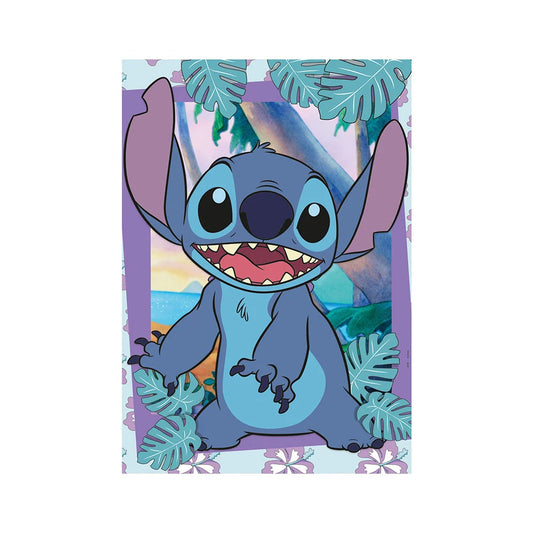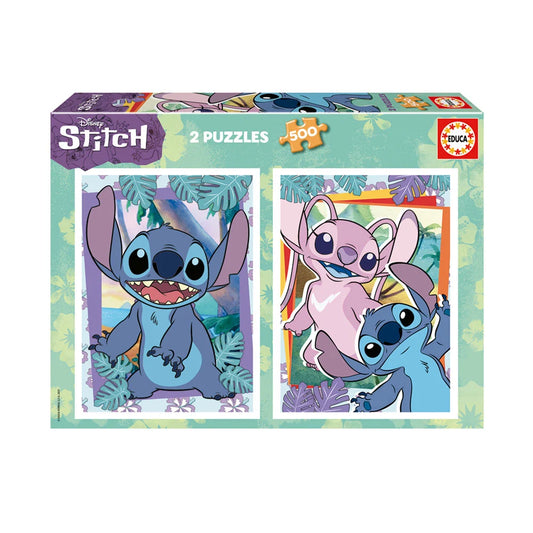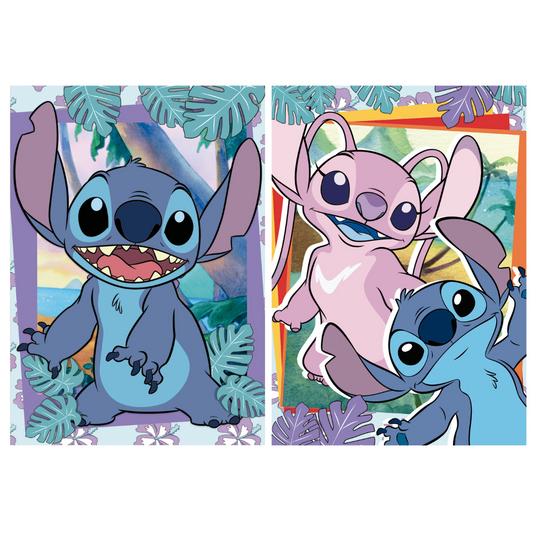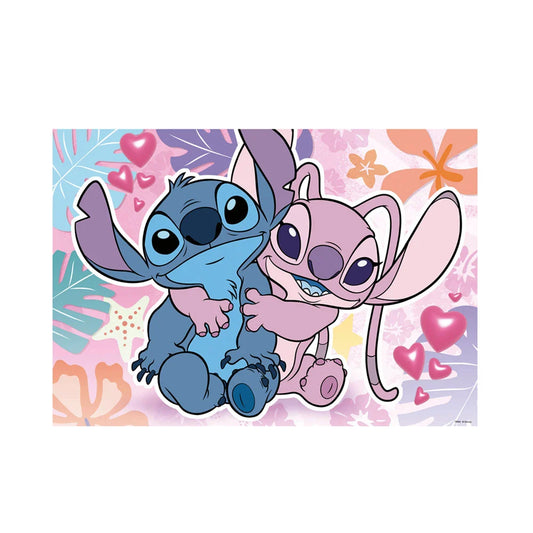
Some toys win children over at first sight. Stitch puzzles have that instant effect: vibrant colors, funny expressions and little details that spark the imagination. And then there's the hidden side parents value: the concentration that grows piece by piece, the calm of a focused moment, the confidence that builds as the picture takes shape. The combination is irresistible.
The good news is that there's a puzzle for every age and every personality. The challenge is finding the right balance between charm, difficulty and safety. That's what we'll fine-tune throughout this article, with practical ideas, buying criteria and tips for turning every puzzle into a memorable experience.
Why choose Stitch puzzles for kids
Stitch is a character who grabs attention effortlessly. He mixes mischievous traits with affectionate gestures, a reminder that we can all be a little different and still be part of a family. That story draws children toward the challenge and makes the puzzle more appealing.
Beyond their affection for the character, there are clear educational reasons:
- Training sustained attention in short, repeated blocks
- Hand-eye coordination, essential for writing and drawing
- Pattern recognition and visual discrimination
- Self-control and tolerance for frustration
The right theme also helps start conversations. A surfing scene opens the door to talking about the sea and beach safety. A spaceship sparks questions about planets. Small topics that stretch curiosity without feeling like a lesson.
The right age, piece count and formats
Choosing the piece count is the first filter. Going too hard tends to discourage, going too easy can be boring. A quick guide helps you fine-tune:
- Ages 2 to 3: very large pieces and only a few, 6 to 12, with rounded corners
- Ages 3 to 4: 12 to 24 large pieces, bold colors
- Ages 4 to 5: 24 to 48 pieces, images with strong contrasts
- Ages 5 to 6: 48 to 100 pieces, medium-sized pieces, clear edges
- Ages 7 to 9: 150 to 300 pieces, finer details
- Ages 10 and up: 300 to 500 pieces, already independent, with occasional help
It's also worth looking at the format. Progressive puzzles with 3 or 4 images at different levels are a safe bet for families with siblings of different ages. Floor puzzles, which are bigger and made of foam, have visual impact and stand up well to heavy use. There are also 3D and spherical versions, ideal for children who are already asking for something new.
Quick reference table
| Age | No. of pieces | Suggested format | Main benefit | Average assembly time |
|---|---|---|---|---|
| Ages 2 to 3 | 6 to 12 | Maxi, EVA foam | Motor skills and short attention | 5 to 10 minutes |
| Ages 3 to 4 | 12 to 24 | Thick cardboard, progressive | Shape recognition | 10 to 15 minutes |
| Ages 4 to 5 | 24 to 48 | Cardboard, clearly defined edges | Simple strategy | 15 to 25 minutes |
| Ages 5 to 6 | 48 to 100 | Premium cardboard | Perseverance | 20 to 40 minutes |
| Ages 7 to 9 | 150 to 300 | Premium cardboard, introductory 3D | Sharper spatial perception | 40 to 90 minutes |
| 10+ | 300 to 500 | Detailed 2D, 3D | Planning and longer focus | 60 to 120 minutes |
These times are approximate. Different children move at different speeds, and that's perfectly fine.
Materials and safety that make a difference
Safety should come before the wow factor. Look for brands with the CE mark and compliance with the EN71 standard. These labels indicate testing of materials, durability, small parts and chemicals. For ages 2 to 4, there are details worth checking closely:
- Water-based inks, without harsh solvents
- Rounded edges, with no splinters or rough bits
- Thick cardboard that doesn't bend easily
- In foam puzzles, high-density EVA with no strong smell
- FSC certification when the cardboard comes from responsibly managed forests
A simple trick: rub a piece with a white tissue. If pigment comes off on the tissue, it may not be ideal for curious little hands that go from the table to the mouth in seconds.
The impact on development goes beyond the table
Many people associate puzzles with visual skills and reasoning. That's true, but there are more layers.
- Fine motor skills: that pincer grip between thumb and index finger that will later hold a pencil firmly
- Language: talking about colors, shapes and parts of the picture, describing what's done and what's missing
- Working memory: keeping in mind what has been tried and what worked
- Emotional regulation: learning to take breaks, ask for help and try another strategy without giving up
And then there's the sparkle in their eyes when the last piece clicks into place. That moment builds self-esteem. It's a big little triumph.
Leading brands and types on the market
Within official Disney licensing, there are puzzle publishers with a solid presence in Portugal. You don't need to chase one particular name, but it's useful to know what each one tends to offer:
- Clementoni: kids' ranges with thick cardboard, progressive puzzles, maxi floor puzzles, very sharp printing
- Educa: good value for money, sturdy boxes, kids' lines with large pieces
- Trefl: colorful options, themed series with characters in a variety of settings
The key is to confirm official licensing so you know the artwork is sharp and quality control has been carried out rigorously. At Loja dos Puzzles, officially licensed Stitch puzzles from these brands are gathered in the Stitch Puzzles collection.
How to choose the right design
The theme is what draws a child to the table. A few practical criteria help:
- Contrast and colors: plain backgrounds make first experiences easier; starry skies or beaches with light blue skies increase the difficulty
- Number of characters: Stitch alone keeps it simple, Stitch with Lilo, Nani and Jumba adds details that can raise the bar
- Helpful elements: frames, logos and lettering help when building the edges
- Special effects: glitter, spot varnish and fluorescent pieces are enchanting, but they don't always make the puzzle easier
A good idea is to invite your child to choose between two or three age-appropriate options. Being involved in the decision increases their commitment to the challenge.
Simple strategies that multiply success
Even a well-chosen puzzle may call for a little strategy, especially on the first attempts. Three or four habits work wonders:
- Prepare the work area
- A table with room to spread out the pieces without them falling on the floor
- A felt mat or poster board to stop them sliding
- A small box to collect the pieces when the session ends
- Start with the edges
- Separating the straight-edged pieces builds the frame quickly
- Once the structure is in place, the middle seems less intimidating
- Colors and patterns first
- Group the blues of the sky, the greens of the leaves, Stitch's characteristic markings
- Working in mini areas gives a frequent sense of progress
- Rotation and alignment
- Teach them to rotate pieces before setting them aside
- Show them that the orientation of the image on the back helps identify the direction
Short, enjoyable sessions work better than marathons. Between 10 and 20 minutes, then a break and back again later.
Turning the puzzle into a family ritual
Creating a small ritual makes all the difference. Calm music, the same table in the late afternoon, a mug of milk or tea on the side. Repetition brings a sense of calm.
Some families record each puzzle with a photo of the last piece. Others stick small stickers inside the box lid to mark how many times it has been completed. Small gestures that reinforce discipline and joy.
Organization, care and lost pieces
Anyone who has ever searched for a piece on the rug knows that logistics matter. A few tips that save time:
- Keep the pieces in a resealable bag inside the original box
- Reinforce the corners of the box with clear tape if it gets heavy use
- Use a smaller tray for color groups, especially with children aged 4 to 6
- Label the side of the box with the age and number of pieces for quick selection
As for cleaning, wipe it with a slightly damp cloth and let it air-dry. Avoid too much water, which can warp the cardboard.
Lost a piece? Take a deep breath. Many publishers offer a replacement service, although it varies by collection. Another option is to turn the puzzle into a poster even with the gap visible. Children handle this better than we imagine, and it can become a funny story at home.
Gluing and framing: yes or no?
When a puzzle becomes a favorite, the urge to keep it assembled appears. Puzzle glue spread with a thin spatula does the job without staining, as long as the layer is even. Then a simple wooden frame gives the bedroom a fresh look.
If you want to reuse it, there are roll-up mats that let you roll it up without ruining your progress. They're practical if you plan to stop and resume throughout the week.
Travel puzzles and options for the backpack
It's easy to keep the magic going away from home. Three practical formats:
- Magnetic puzzles in a metal tin, small pieces but safe for ages 4 and up
- Puzzle books with thick board pages and 12 to 24 pieces per image
- Mini puzzles of 24 to 54 pieces with their own pouch
In the car, avoid loose pieces. The best option is a rigid tray with a raised edge or magnetic versions. In cafés, the table provides the perfect space for a quick puzzle while waiting for the food.
Extra activities to add some fun
The puzzle doesn't have to stand alone. A few ideas to stretch the theme:
- Detail hunt: before starting, look at the poster and list 5 details to find later while assembling
- A story in three acts: once it's finished, ask your child to invent a beginning, middle and end inspired by the picture
- Shadow and outline: place tracing paper on top and draw the main silhouettes
- Fun stopwatch: record assembly times without turning it into a race, valuing calm and method
For creative days, it's worth making a homemade mini puzzle. Draw Stitch by hand, glue it onto cardboard and cut it into 12 large pieces with round-tipped scissors. The result doesn't replace a licensed puzzle, but it creates a sense of pride in their own work.
Sustainability and responsible consumption
The joy of puzzles goes hand in hand with conscious choices. Certified recycled cardboard, eco-friendly inks and compact packaging reduce the impact. Swapping with friends or donating to toy libraries gives new life to games that have already been completed many times.
Reusing boxes to store art supplies is another simple idea. It teaches organization and respect for belongings.
When the difficulty seems to rise too fast
If your child shows frustration, it's worth taking half a step back. Instead of drastically cutting the number of pieces, try:
- Choosing images with very high-contrast areas
- Offering a board with the frame drawn by hand as a guide
- Dividing the pieces and handing over small batches by color
- Setting micro goals, finishing the main character before the rest
Praising the process, not just the result, keeps motivation up. Phrases like “I like how you sorted the blue pieces” or “I noticed you turned it three times until it worked” have a real effect.
Signs it's time to level up
There are clear signs the challenge can be increased:
- Your child finishes without asking for help and without breaks
- They complete similar puzzles more quickly
- They take an interest in the tiniest details of the picture
- They talk about wanting more pieces
The transition can be gradual with progressive sets. Two images of 24 and 48 pieces in the same product create a gentle ramp.
Quick FAQs
-
What should I do if the box shows an older age and my child really wants that puzzle?
Check the number of pieces and their size. If the image is simple and the pieces are large, it can work with support and short sessions. -
Is it worth buying 3D puzzles for a 6-year-old?
Only if your child is asking for variety and shows the patience to follow step-by-step instructions. Start with a small 3D puzzle. -
What if the puzzle has very shiny pieces?
Too much shine can make things harder under direct light. Choose matte finishes when the focus is on the novelty rather than the visual effect. -
How many puzzles should we have at home?
Two or three per difficulty level are enough. Swapping with friends creates novelty without piling things up. -
Can you mix pieces from different collections?
Avoid it. Cutting patterns vary by brand and series. It gets confusing and can be discouraging.
Checklist before you buy
- Official licensing and CE mark clearly visible
- Number of pieces suited to your child's age and temperament
- Thick cardboard or quality EVA foam, water-based inks
- An image with good contrast and themes your child enjoys
- A format designed for how it will be used: floor, table, travel
- A sturdy box and, if possible, a poster included
- Space at home to assemble and store it without rushing
- A willingness to do it as a family, at least the first few times
When all these boxes are ticked, the puzzle is no longer just a pretty toy. It becomes an everyday ally for creating calm moments, building focus habits and celebrating small victories. And with Stitch peeking out from every piece, the smiles come even faster.