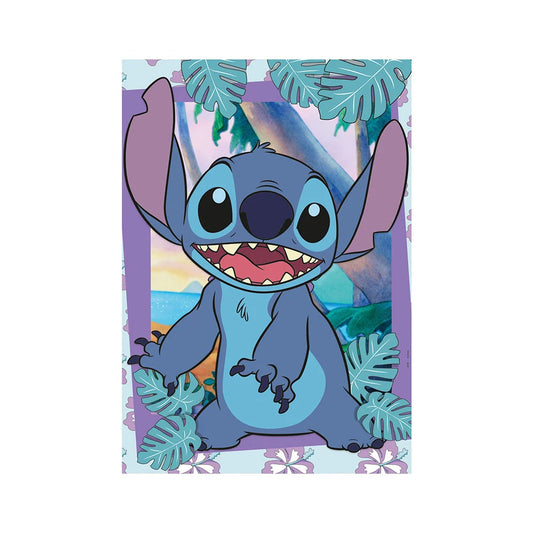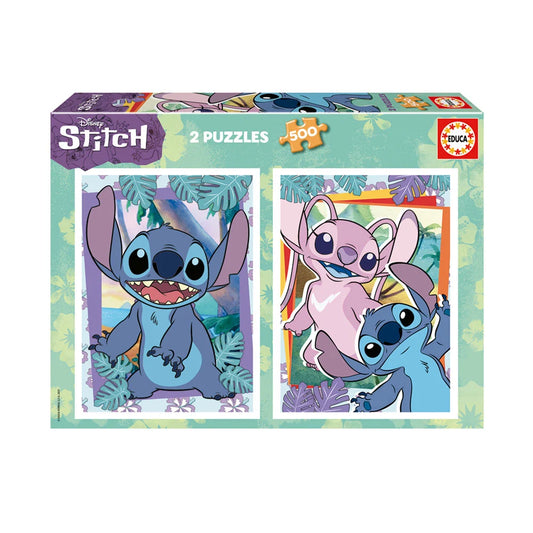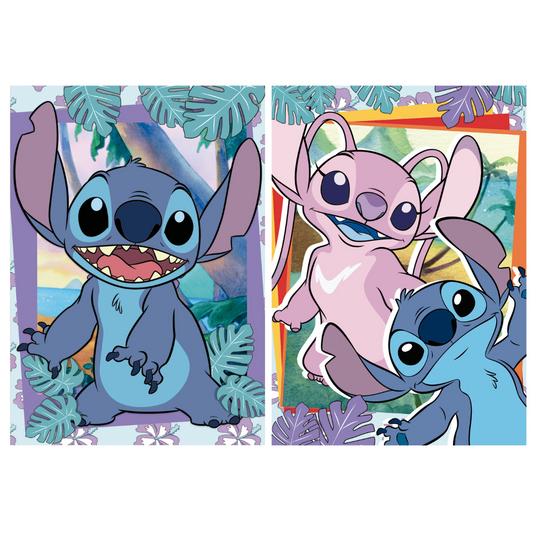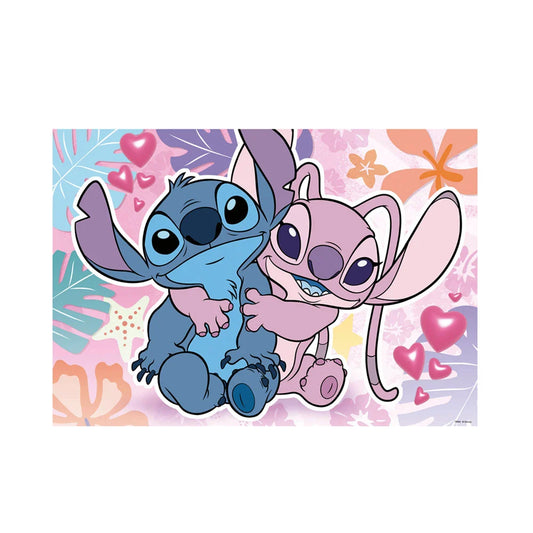
Some kids get lost in dinosaurs, others in princesses. And then there are those who fall head over heels for Stitch, the blue alien with huge eyes who seems to have been designed to make you laugh and want to hug him. When their favorite hero lands on the living room table as a puzzle, motivation soars, time flies and concentration happens almost effortlessly. That's why Stitch puzzles have been earning a place on the shelves of families who want quality time, cognitive development and a memory that ends up on the wall.
Why Stitch works so well in kids' puzzles
Stitch's design is full of saturated colors and clear outlines, which makes it easy for children to read visually. The color areas are recognizable, the eyes and ears create reference points, and the island elements add variety to the backgrounds.
There's an emotional factor too. Stitch mixes mischief with tenderness, which draws children into the task. When the final picture has a familiar smile, every piece placed feels like a mini victory.
- Instant recognition of shapes and colors
- Official illustrations with consistent graphic quality
- A fun story that keeps kids focused without feeling pressured
How to choose the right level by age
The rule of thumb on piece count by age helps, but it's important to consider the child's temperament, previous experience and patience on that particular day. Use this guide as a starting point.
- Ages 2 to 3: 6 to 12 large pieces, preferably wooden with knobs. Simple images with Stitch in the foreground.
- Ages 3 to 4: 12 to 24 pieces, thick cardboard, large cut. Well-defined edges and few distracting elements.
- Ages 4 to 5: 24 to 48 pieces. Small details such as flowers and surfboards start to appear.
- Ages 5 to 6: 60 to 100 pieces. Patterns in the sky or the sea make the task more challenging and more rewarding.
- Ages 6 to 8: 100 to 200 pieces. Multiple characters and more complex backgrounds.
- Ages 8 to 10: 200 to 300 pieces, for children who want a rich image and longer periods of concentration.
Two useful clues:
- If your child gives up halfway out of frustration, the jump in difficulty was too big.
- If they finish the puzzle in under 10 minutes and ask for another, they can move up a level.
Types of Stitch puzzles worth a look
Not all puzzles serve the same purpose. Some are for very small hands, others call for fine dexterity and sharp visual planning.
- Wooden knob puzzles: ideal for first experiences. Thick pieces that make gripping and hand-eye coordination easier.
- Classic cardboard: the universal format, easy to store and with the widest variety of images.
- 4-in-1 progressive: sets with four puzzles at different levels, useful for seeing progress over the weeks.
- XXL floor puzzles: giant pieces to assemble on the rug. Excellent for teamwork between siblings.
- Magnetic: great for trips and restaurants. The pieces don't fly away and frustration goes down.
- 3D spherical puzzles and figures: for curious kids with patience and a love of building. Stitch as a sphere or mini figure looks great on a desk.
Quick table to compare formats
| Type | Recommended age | Typical no. of pieces | Material | Strength | Watch out for |
|---|---|---|---|---|---|
| Wooden knob puzzle | Ages 2 to 3 | 6 to 12 | Wood | Sturdy pieces that are easy to grab | Paint and edges |
| Classic cardboard | Ages 3 to 8 | 24 to 200 | Cardboard | Variety of images and prices | Loose fit |
| 4-in-1 progressive | Ages 3 to 6 | 12 to 48 | Cardboard | Gradual progression | Pieces getting mixed up in the box |
| XXL floor puzzle | Ages 3 to 6 | 24 to 60 | Cardboard | Active play | Takes up space |
| Magnetic | Ages 4 to 8 | 20 to 100 | Cardboard | Ideal for travel | Weak magnet |
| 3D sphere or figure | Ages 7 to 10 | 54 to 108 | Plastic | Looks great on display in the bedroom | Learning curve |
What to look for in quality
You can feel the difference between a puzzle that lasts for years and one that warps in the first week.
- Cardboard weight: the thicker it is, the less it warps and the firmer the fit.
- Anti-glare finish: reduces eye strain, especially under bright lights.
- Clean cut: sharp corners that don't crumble after the first few uses.
- Water-based inks and CE/EN71 certification: safety above all.
- A firm fit with a gentle click: gives tactile feedback and stops children from forcing pieces in.
Well-known brands such as Clementoni, Educa and Trefl have official Disney lines featuring Stitch and maintain a consistent standard. For wooden puzzles, some manufacturers use smooth plywood with large knobs and non-toxic paints, a safe bet for the youngest hands.
Models and ideas that usually work well
You don't have to choose by piece count alone. The theme within the theme makes a difference.
- Progressive puzzle of Stitch surfing: four levels in the same set, from the simplest to the most complete. Good for following progress without having to buy a new one right away.
- XXL floor puzzle with Stitch and Lilo at the beach: assembled on the rug, it invites the whole family to join in. Great for weekend afternoons.
- Wooden knob puzzle with cut-out shapes of Stitch, Lilo, a guitar and a surfboard: works on vocabulary and object-image association for little ones.
- Magnetic travel puzzle with an island background: a lifesaver when waiting in the car or at restaurants.
- 3D Stitch sphere with a stand: visually striking and motivating for those who have mastered 2D. Afterwards it sits on the shelf like a trophy.
If possible, choose illustrations with well-separated areas of color. Blue sky, turquoise sea, light sand and Stitch's blue-violet help children apply simple strategies for sorting by shade.
Benefits that go far beyond the table
Putting a puzzle together engages several areas of child development. And when the image is of Stitch, tolerance for frustration tends to be higher, which maximizes the benefit.
- Visual and spatial perception: mentally rotating pieces, reading outlines, segmenting by color.
- Sustained attention: long focus on a concrete goal.
- Planning and strategy: edges first, then color areas, and finally the details.
- Fine motor skills: pincer grip, controlled rotation and the right amount of pressure.
- Language: naming objects in the picture, making up stories with the finished scene.
- Independence and self-esteem: watching the picture grow through their own effort is powerful.
There's a social side too. Puzzles invite conversation. “Where's the ear?” “Who's doing the sky?” Cooperation grows out of a shared task.
Assembly strategies that make life easier
Small tweaks to the routine turn the puzzle from an occasional task into an enjoyable habit.
- Sort the pieces: edges on one side, bold colors on another, patterns separately.
- Puzzle board or mat: lets you move the puzzle without taking it apart and protects the table.
- Even lighting: makes it easier to tell similar shades apart.
- Short sessions: 10 to 20 minutes are more productive than a tiring marathon.
- Calm music: a soundtrack helps keep the rhythm going.
- Roles for children: one is the “edge keeper”, another is the “Stitch ear hunter”.
For younger kids, using small bags with subsets of pieces reduces the initial complexity and avoids distraction.
How to turn the puzzle into a creative project
Once it's assembled, the puzzle still has more to give. The picture isn't the end, it's a starting point.
- Frame it and hang it: use puzzle glue and a lightweight frame, and create a gallery of achievements.
- Storytime: make up a story about the Stitch scene, record it as audio and build a playlist of stories.
- Detail hunt: a list of little things to find in the finished picture. It guarantees more time spent observing.
- Photographic memory game: take it apart, wait three minutes and rebuild the main areas from memory alone.
- Mini 3D exhibition: if you chose a spherical puzzle or figure, add cards with the date and the age of whoever built it.
Safety and durability without compromise
Beyond CE certification and EN71 standards, there are simple habits that protect both the pieces and the children.
- Keep drinks and food away from the puzzle.
- Wash hands before starting, especially after using hand cream.
- Store the pieces in resealable bags or rigid boxes, labeled with the age and number of pieces.
- If there are babies or pets at home, use a roll-up puzzle mat so you can quickly move it out of sight and reach.
Chewed pieces, bent corners and peeling ink are signs it's time to replace the puzzle. It's better to have fewer puzzles in great condition than lots of worn-out ones.
Organization that saves time and stress
A good storage strategy gives you the freedom to do a puzzle whenever you like without turning the house into a construction site.
- Stackable clear boxes with large labels: theme name, number of pieces and a small picture stuck on the front.
- Individual bags for each puzzle inside the original box, so the pieces don't get mixed up.
- Achievement folder: photos of finished puzzles with the date and your child's comments. Treasured memories guaranteed.
For families with several siblings, a color code by age group reduces arguments and unwanted piece swaps.
Where to buy and what to expect on price
Loja dos Puzzles brings its Stitch puzzles together in the Stitch Puzzles collection, with options for different ages, from progressive and cube puzzles to 500- and 1000-piece models. For more kids' options, the Kids' Puzzles collection is a great place to start. Prices vary with format and brand:
- Wooden knob puzzles: usually priced above classic puzzles; you're paying for the material and durability.
- Cardboard, 24 to 60 pieces: an affordable range with frequent deals.
- 100 to 200 pieces from a premium brand: a slightly higher price that pays off in durability.
- 3D: more expensive per piece, but it becomes a decorative object.
Look for customer reviews on the quality of the cut and color accuracy. Real photos help confirm whether the image matches your expectations.
Gift ideas that rarely miss
If you want to give something that gets opened, used and remembered, Stitch puzzles have everything going for them.
- A progressive kit with four levels and a roll-up puzzle mat.
- An XXL floor set for family sessions on the weekend.
- A 3D puzzle with a stand and a simple shelf to display it in the bedroom.
- A travel pack with a magnetic puzzle and a compact case.
Add a card with a fun challenge: “Can you put Stitch's ears together in under 5 minutes?” It sparks laughter and makes them want to get started.
Small hurdles and how to get around them
Even with their favorite picture, there are moments when kids get stuck. The secret is not to force it and to adjust the strategy.
- Sky and sea in similar shades: work by texture and the shape of the cut, not just by color.
- Almost identical pieces: test the fit without insisting; a good puzzle lets you know when it's not the right spot.
- Losing motivation halfway: take a short break, change the music, pick it up again from a different area.
When the puzzle seems too big, physically divide the work area into quadrants with painter's tape. Each quadrant is a mini goal.
Quick questions
- What's the best first option for a 3-year-old? A wooden knob puzzle with 8 to 12 pieces or a 12-piece thick cardboard puzzle with very clear edges.
- Is a puzzle mat worth it? Yes, especially in homes where the table is shared. It gives you the freedom to stop and put it away without taking it apart.
- Are 3D puzzles difficult? They require calm and method, but they're doable for children aged 7 and up with a little help from an adult.
- What should I do if I lose a piece? Some brands offer a replacement piece service. If not, use it to practice resilience and turn the missing piece into a family joke.
Buying checklist before you pay
- Your child's age and patience match the number of pieces
- An image with separate colors and clear outlines
- Thick cardboard and an anti-glare finish
- CE certification and water-based inks
- A firm fit that doesn't tear when taken apart
- A box with an inner bag for the pieces
- Space at home to assemble and store it
Ideas to connect the puzzle to everyday life
Consistency comes from small rituals. When puzzling becomes a habit, the benefits are huge.
- Monday to Friday: 10 minutes of puzzling after snack time, with a favorite song.
- Saturday: a longer family session, with everyone taking on a role.
- Sunday: a photo of the finished puzzle, stuck in the achievement folder.
- Vacations: a magnetic version in the car and a 3D puzzle as the special project of the week.
Stitch puzzles bring color and humor to the task of thinking with your hands. It's a meeting of patience and laughter that's worth every minute. When the last piece clicks into place and Stitch smiles up from the table, the sparkle in your child's eyes says it all. And the urge to start another one is already growing.