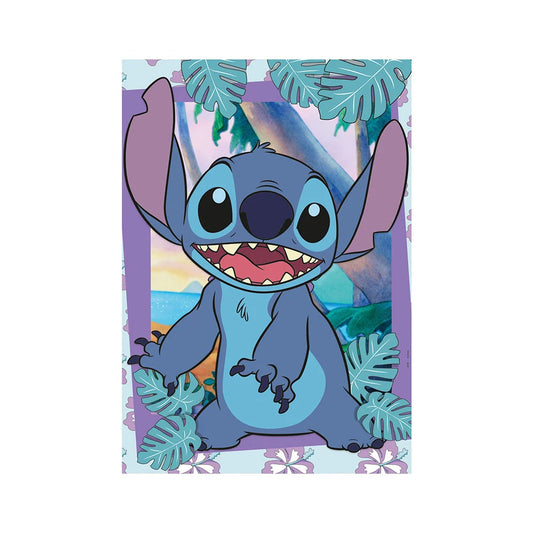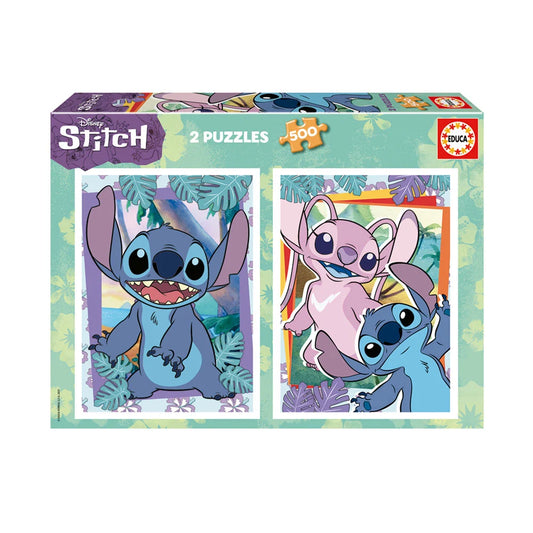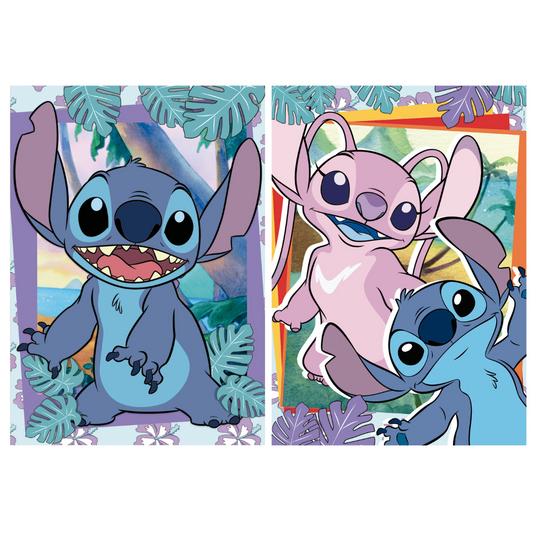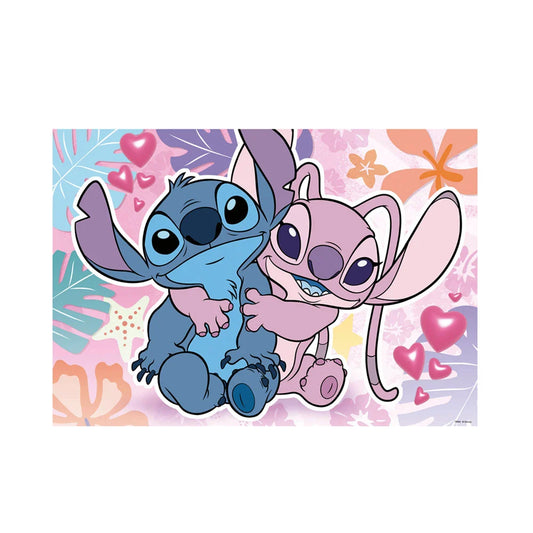
Puzzles have become part of many adults' routines as a creative refuge, a way to train focus and a hobby that fits somewhere between morning coffee and late afternoon. When the theme is the charismatic Stitch, the conversation gains color and a touch of humor. The trick is to choose designs and formats that steer clear of the obvious kids' look and speak to those who want challenge, beauty and collector-grade quality.
What makes a puzzle truly adult
- Piece count: 1000 to 3000 pieces is the comfort zone for anyone looking for hours of immersion.
- Piece cut: varied shapes, “trick” pieces and cuts that don't repeat across the whole grid.
- Sophisticated art: textured compositions, subtle palettes, well-crafted shadows and repetitive elements that demand technique.
- Materials and finishes: dense, double-laminated board, a linen texture that reduces glare, inks with good color accuracy and a firm fit.
- Final format: panoramic, large square or layouts that require you to plan your table.
Adult doesn't mean serious. Rather, it means the puzzle respects your time and your desire to master gradients, light and shadow, repeated patterns and background details.
Stitch aesthetics that appeal to grown-up eyes
There is a clear difference between a colorful poster designed for children and a design that looks great framed in a living room. Some directions that have been gaining ground:
- Stitch in watercolor, with a textured background and a reduced palette.
- Minimalist compositions, a central figure and clean negative space.
- Vintage style, deliberate grain and discreet typography inspired by classic movie posters.
- Crossovers with Japanese art, fine lines, stylized waves and clouds.
- Street art with stencils, spray paint and restrained metallic touches.
This balance between character and composition is what turns the theme into a decorative piece, not just a nostalgia product.
Types of puzzles to raise the challenge
- Premium cardboard classics: from 1000 to 3000 pieces, ideal for anyone who wants hours of assembly and a sturdy result for framing.
- Micro pieces: 1500 to 2000 micro pieces can take up less space and multiply the precision required.
- Double-sided: two images, sometimes with the same palette, force you to read the paper texture and the cut.
- Irregular cuts and figurative pieces: handcrafted wooden puzzles with themed piece shapes add a touch of surprise and call for a different kind of organization.
- 3D and crystal: translucent sculptures that represent Stitch in volume, great for anyone who prefers short sessions and a focus on manual dexterity.
- Special effects: subtle metallics, spot varnish and glow-in-the-dark ink for nighttime editions.
Each type changes the time, the method and the sense of progress. It's worth trying different formats throughout the year.
Quick comparison of formats and challenges
| Type | No. of pieces | Visual style | Main challenge | Average assembly time | Ideal for |
|---|---|---|---|---|---|
| Classic cardboard | 1000 to 2000 | Detailed illustration | Gradients and shadows | 8 to 20 hours | Weekend sessions |
| Micro pieces | 1500 to 2000 micro | Sharp, compact image | Precision and telling shapes apart | 10 to 25 hours | Small tables and total focus |
| Double-sided | 500 to 1000 | Two images | Identifying side and cut | 6 to 15 hours | Fans of tricks and twists |
| Wood with artistic pieces | 300 to 800 | Premium art | Non-standard pieces | 4 to 12 hours | A special gift and tactile feel |
| 3D crystal | 40 to 100 | Translucent sculpture | Assembly by volume | 1 to 3 hours | Quick breaks and a desk piece |
| Panoramic | 1000 to 1500 | Wide scene, landscape | Handling long horizons | 8 to 18 hours | Social puzzling and long spaces |
Times depend on experience, lighting and the quality of the cut. A good glare-free lamp and a puzzle board already cut the frustration in half.
How to choose your next design
- Palette and contrast: large areas of blue, purple and black are charismatic but demanding. Look for high-contrast areas to keep your motivation up.
- Visual rhythm: lots of tiny characters in a mosaic? Beautiful, but tiring. A strong central figure with a textured background can balance enjoyment and challenge.
- Table size: a 1000-piece puzzle usually measures about 70 x 50 cm. Check you have room for sorting trays.
- Time available: busy weeks call for 500 to 1000 pieces with clear artwork. Vacations can handle 2000 or more.
- Fitting into your home: some designs are made for framing, with discreet signatures and visual margins that give the image room to breathe.
If your motivation comes from Stitch's humor, include a detail with a strong expression or a background element that tells a little story.
Brands and editions to keep on your radar
- Clementoni: High Quality Collection with good definition and elegant packaging. Faithful palettes and a matte finish.
- Educa: classics from 1000 to 3000 pieces, a good price-quality balance and frequent offers that include glue for mounting.
- 3D lenticular editions: Educa has Stitch puzzles with a depth effect that changes with your viewing angle, an original alternative to classic editions.
- Trefl: a Polish brand with a wide range of licensed puzzles, great for varying styles and difficulty levels.
Always choose licensed editions. You can feel the difference in printing and materials as soon as you open the box.
Where to find official editions
- At Loja dos Puzzles, the Stitch puzzle collection brings together official licensed editions from Clementoni and Educa.
- The Disney puzzles collection pairs Stitch with other classic characters and settings.
- For bigger challenges, there is the puzzles for adults collection.
- New arrivals 2026 shows the latest editions as soon as they reach the store.
Look out for authenticity seals, holograms and sharp printing on the box art. Avoid creased packaging, signs of moisture and back covers without clear licensing information.
Assembly techniques for scenes with lots of blue and neon
- Sort by texture before color: tell water reflections, sky, fabric and metal apart by the printed grain pattern.
- Group pieces by shape: thin tabs, rounded corners, four-knob pieces, islands. In dense scenes, shape is as useful as color.
- Anchor elements with strong outlines: eyes, ears, flowers, lettering. These points become “islands” that grow.
- Work in micro zones: 10 x 10 cm quadrants on sorting trays. This avoids visual overload and makes breaks easier.
- Cool, glare-free light: 4000 to 5000K bulbs with a diffuser. The paper texture determines how efficiently you can read the pieces.
- Double-check method: before forcing a piece, align image, shape and the direction of the paper fibers. The right fit never needs force.
Small routines prevent mistakes that cost minutes and patience. Listening to instrumental music and keeping water nearby helps more than you might think.
Materials, finishes and the feel of assembly
- Texture: a linen finish breaks up glare and gives the pieces better grip.
- Board thickness: 1.9 to 2.2 mm resists bending and gives a better feel when pieces click into place.
- Inks and calibration: watch out for washed-out blacks or blues without depth. Premium editions keep saturation under control without blowing out the highlights.
- Cut: pieces with clean edges and little cardboard dust are a sign of a good blade and less wear.
- Packaging: resealable bags or two numbered bags help with organization and starting over.
The tactile experience is half the reason you'll want to come back to the table every day.
Shaping your puzzling routine
- Short 25-minute sessions with a 5-minute break. Your brain will thank you.
- One tray per dominant color. Dark blue, medium blue, splashes of pink and skin tones, for example.
- Daily checkpoint: a goal of 3 percent more. It sounds like little, but it adds up.
- Progress photos. They're motivating and useful for reviewing problem areas.
This is a hobby built in layers. It's not a marathon, it's a series of calm sprints.
Gluing, framing and display
- Puzzle glue applied with a spatula, starting from the center and working toward the edges. Protect the table with plastic film.
- A rigid base in foam board or thin MDF to carry it to the frame.
- UV-protective, anti-glare glass when the piece has lots of dark tones.
- A frame with 2 to 3 mm of clearance, and a neutral mat if the design runs to the edge and needs breathing room.
- Walls out of direct sunlight. The color lasts longer and the paper doesn't warp.
If you'd rather store it and do it again in the future, use felt sheets between layers and an archive box.
Customizing a Stitch-themed puzzle responsibly
Creating a custom puzzle gives your collection a different flavor. Some safe options:
- Your own photos with official Stitch products, flat lay compositions with objects and controlled lighting.
- Original art by an illustrator with a license for use. Many artists sell rights for limited editions.
- Print-on-demand services that confirm where the art comes from and offer quality cuts.
Respecting copyright keeps the community healthy and avoids unpleasant surprises.
Community, sharing and rituals
- Swaps between friends. Each person assembles it, takes a photo and passes it on. The puzzle travels from home to home and collects stories.
- Weekend marathons with simple rules, such as no looking at the lid for the first 20 minutes.
- Themed playlists, tea or coffee and a gentle timer on your phone. Details that draw the right kind of focus.
- A puzzle journal: date, hours, satisfaction level, little tricks you learned.
Sharing the hobby multiplies the urge to try new editions and challenge your own technique.
Frequently asked questions
- How much space do I need for 1000 pieces? A 120 x 80 cm table fits the puzzle, the trays and your arms working comfortably.
- How long does a 1500-piece puzzle with lots of blue take? Between 12 and 25 hours, depending on experience and the cut.
- How do I clean a finished puzzle before framing? A dry microfiber cloth, light movements, no liquids. Then the appropriate glue.
- Can I mix different brands on the same sorting tray? Yes, but keep labels or dividers so you don't confuse cuts and textures.
- Are roll-up mats worth buying? If you need your table free, yes. Check that the felt is consistent so it doesn't bend the pieces.
Small logistical decisions save you from wasting time on problems that aren't part of the challenge.
Design series ideas to collect
- Cosmos and night: Stitch gazing at constellations, stylized nebulas, deep blue with discreet stars.
- Beach and surf: surfboards, sea foam, textured sand. A light palette and a summer feel.
- Pop minimal: a plain background, one Stitch expression and elegant typography. It looks flawless in a black frame.
- Festivals and seasons: Halloween with violet shadows, Christmas with warm bokeh lights, spring with big flowers and green fields.
- Editorial collage: stamps, old tickets, fabric patterns and a cut-out Stitch silhouette. Dynamic, and it demands patient sorting.
Creating a curved line on the wall, alternating formats, adds movement to the eye and invites conversation.
A short checklist for anyone who wants to start today
- Decide on a piece count that fits your time over the next few weeks.
- Choose a design that looks good from 2 meters away.
- Confirm the official license and the quality of the cut.
- Set up your lighting, board and trays.
- Create a simple ritual: 25 minutes a day, a calm playlist and water nearby.
When the theme is Stitch, the smile appears without asking permission. With artwork that lives up to it, materials that invite you to touch them and a method that respects your pace, every puzzle becomes a moment you'll want to repeat. And before you know it, your home will start telling stories on walls that shine in a subtle way.