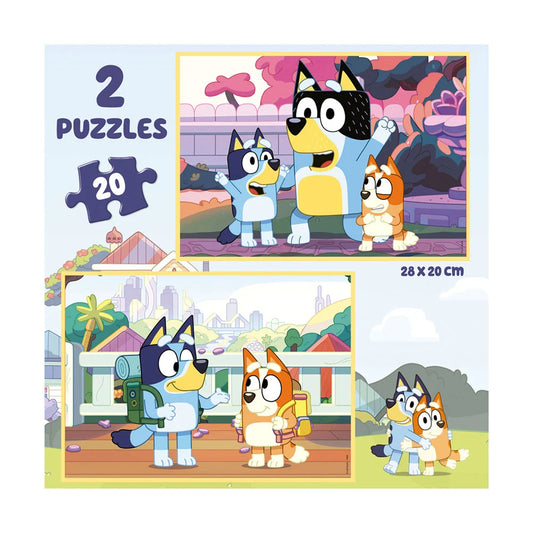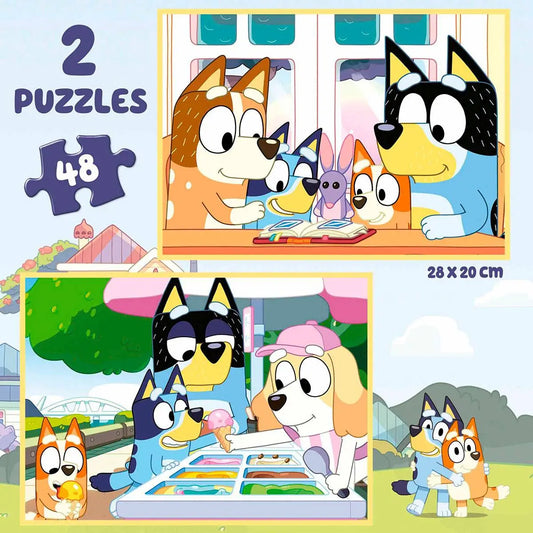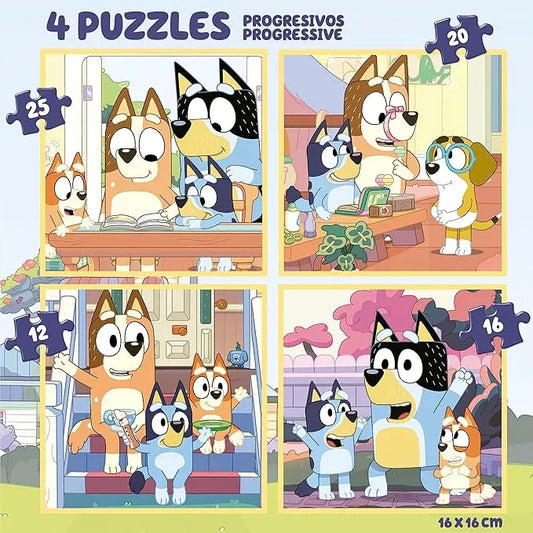
Choosing a puzzle for a child seems simple until the right question comes up: which puzzle suits this stage of development? Between boxes with eye-catching illustrations, widely varying piece counts and different materials, the decision can easily shift from impulse to doubt.
A good choice does more than entertain. A puzzle matched to the child's age, motor skills and interests creates a rewarding experience, builds persistence and turns a calm pastime into an activity with real value. When the challenge is just right, the child feels capable, wants to do it again and gains confidence.
Why the right puzzle helps child development
A well-chosen puzzle works on several skills at once. The child observes shapes, compares colors, tests ideas, corrects mistakes and learns to stay focused for longer. All of this happens naturally, without the feeling of “training.”
There is also an emotional side that deserves attention. When the difficulty is right, the child feels progress with every piece placed. This reduces frustration and increases the desire to keep going. If the puzzle is too easy, the child loses interest quickly. If it is too hard, they give up early.
At a time when so many activities compete for instant attention, the puzzle has a rare quality: it invites calm. It makes you stop, observe and keep trying. This combination is valuable both for more impulsive children and for those who need to gain confidence when facing new challenges.
How to choose a puzzle by the child's age
The age shown on the box is a useful starting point, but it shouldn't be treated as a strict rule. Some children have better fine motor coordination, others more patience, and others a strong interest in specific themes, which greatly changes how they approach a puzzle.
Rather than relying only on the age range, it's worth combining three criteria: previous experience, attention span and interest in the theme. A 4-year-old who does puzzles often may be ready for a level above the one indicated. Another child of the same age may benefit from larger pieces and simpler images.
The following table helps guide your initial choice.
| Age range | Recommended number of pieces | Piece type | Visual features | Main goal |
|---|---|---|---|---|
| 1-2 years | 2 to 6 | Very large, with knobs or simple inset fit | Single images, high contrast | Linking shape and image |
| 2-3 years | 4 to 12 | Large and thick | Familiar figures, few elements | Coordination and recognition |
| 3-4 years | 12 to 24 | Large, easy to fit | Simple scenes and bold colors | Attention and sequencing |
| 4-5 years | 24 to 48 | Medium, basic cut | Illustrations with more detail | Persistence and visual logic |
| 5-6 years | 48 to 100 | Medium, more demanding fit | Complete scenes, more elements | Planning and independence |
| 6+ years | 100 or more | Varied | Greater visual detail | Strategy and sustained concentration |
Signs that the puzzle suits the child's age
A good puzzle challenges without blocking. The child can start with a little guidance and, after a few minutes, begins finding patterns on their own. They stay engaged and ask for help now and then, not constantly.
If you want to confirm the choice makes sense, watch for these signs after the first attempts:
- Interest sustained for several minutes
- Ability to find corner or edge pieces
- Occasional, not constant, requests for help
- Satisfaction when completing small sections
- Wanting to do it again another day
Number of pieces and puzzle difficulty
The number of pieces is usually the first thing adults look at, but it doesn't tell the whole story. Two 24-piece puzzles can have very different levels. One with a clean image, simple backgrounds and well-defined color areas will be much more accessible than one with lots of detail and little visual contrast.
The cut matters too. Pieces that are very similar to each other make the puzzle harder. For young children, a more intuitive cut is better, with distinguishable shapes and clear connections. As they gain practice, puzzles can include more similar pieces and less obvious visual patterns.
Another key point is the puzzle's finished size. A large puzzle with few pieces can be great for young children because it offers sturdy pieces that are easy to handle. A small puzzle with compact pieces, on the other hand, can be harder than the piece count suggests.
When you're torn between two options, it usually works better to choose the simpler one and leave room for progression. The feeling of success in the first experience carries enormous weight. A child who has fun tends to ask for a bigger challenge next time.
Materials and safety in a kids' puzzle
The material affects durability, ease of use and safety. For younger children, the priority should be clear: sturdy, thick pieces that are easy to grab and won't get damaged in the first few uses.
Wooden puzzles are very popular in the early years because they are hard-wearing, easy to grip and stand up to frequent use. Thick cardboard puzzles can also be an excellent choice, as long as they are well finished and don't bend easily. In any case, check that the print is sharp, the cut is clean and the pieces don't splinter or shed paint.
Before buying, it's worth going through a short checklist:
- Piece thickness: makes pieces easier to grip and more durable
- Material finish: avoids rough edges and rapid wear
- Piece size: reduces the risk of swallowing at younger ages
- Print quality: helps the child tell shapes and colors apart
- Safety certification: gives more confidence in the materials used
What to check on the puzzle box
The packaging says a lot about the product. It doesn't always answer every question, but it usually shows the recommended age, number of pieces, finished size and the completed image. That last one is especially important, because it serves as a reference during the activity.
If the puzzle will be used regularly at home, the box should also be easy to store and able to withstand being opened again and again. It may seem like a minor detail, but it makes a difference day to day. Good organization helps the child take part in looking after their things.
Themes and illustrations that spark a child's interest
The right theme can completely change a child's relationship with a puzzle. A pretty picture isn't always enough. Ideally, the image should spark instant recognition: animals, vehicles, dinosaurs, princesses, nature, characters, jobs, oceans. When there's an emotional connection to the theme, the child is more willing to put in the effort.
There's also a cognitive advantage. If the child knows the theme well, they can anticipate elements of the image. They know where the car's wheel, the animal's head or the house's window might be. This makes assembly easier and strengthens their visual understanding of the whole and its parts.
Even so, it's best to avoid images that are too busy. Illustrations full of tiny details, repeated patterns or very cluttered backgrounds may look beautiful to an adult, but they can be tiring for a child who is still developing observation strategies.
A good balance usually includes:
- a familiar theme
- contrast between elements
- well-defined color areas
- a clear visual style
- a composition that's easy to “read”
Puzzle format, size and play space
Not all puzzles are designed for the same setting. Some work better on a table, others on the floor, others when traveling. Choosing without thinking about where it will be used can seriously limit the experience.
For young children, the available space is part of the success. If the puzzle is cramped, pieces pile up and get lost, and the child struggles to see the full image. A floor puzzle with large pieces can work really well at home or in a sheltered garden. For trips, compact and magnetic formats may be more practical.
The piece format also deserves attention. Large pieces invite broad movements and tactile exploration. Medium pieces call for more precision. Neither option is better in absolute terms: it depends on the moment and the goal.
When to choose inset, silhouette or traditional picture puzzles
In the early years, simple inset puzzles are an excellent starting point. They work on the relationship between shape and available space, with moderate cognitive effort. They're ideal for introducing the logic of “where does this go?”
Next come silhouette puzzles, where each piece or group of pieces forms a recognizable figure. This format is very appealing because the child quickly recognizes the result. It works well between the basic inset stage and the traditional puzzle with several interlocking pieces.
The traditional picture puzzle, where a complete scene is built from many pieces, tends to require more strategy. The child starts looking for edges, grouping colors, separating elements and building by sections. This transition is very positive when it happens gradually.
Common mistakes when choosing a puzzle for kids
Many poor choices come from good intentions: wanting to “stimulate more” or to give something that will last a long time. The problem arises when this reasoning ignores the child's actual experience. A puzzle that is too advanced can sit on the shelf for weeks.
It's also common to buy based on how the box looks, without considering the type of cut, the sharpness of the image or the quality of the material. The result is a product that's suitable in theory, but not very practical in reality.
There are a few mistakes worth avoiding right from the start:
- Choosing only by the age on the box: previous experience counts a lot
- Focusing only on the number of pieces: the image and the cut change everything
- Ignoring the child's interests: the theme affects motivation
- Buying pieces that are too small: they're hard to handle
- Going for confusing images: this increases frustration unnecessarily
How to create a great first experience with a new puzzle
Even a good puzzle can get off to a poor start if it's introduced in a rush. The first experience benefits from a simple setting: a clear table, few distractions and enough time for the child to try things without pressure.
Showing the completed image, setting aside the edge pieces or starting with an easier area doesn't take anything away from the process. On the contrary, it teaches strategy. Independence develops best with the right amount of support, not when the child is left alone with a task that's too demanding.
It's also worth repeating the same puzzle on different days. Repetition doesn't mean a lack of challenge. It means consolidation. By the second or third time, the child recognizes patterns, gets faster and realizes they can improve. That feeling is one of the greatest benefits of this kind of activity.
If the choice respects the child's age, interests and pace, the puzzle becomes more than just a gift or an occasional pastime. It becomes a simple and highly effective tool for nurturing attention, confidence and the joy of learning with hands and eyes.