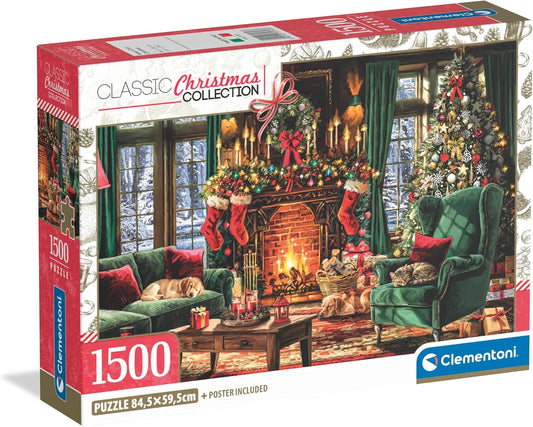

Few experiences offer as much calm these days as putting together a quality puzzle while admiring the masterpieces of great artists. The Clementoni Museum Collection puzzle range is an invitation to dive into the world of art, piece by piece, recreating iconic images that have crossed centuries and borders. Anyone who thinks puzzles are just a pastime for kids may be surprised by the sophistication, the meticulous detail and the sense of achievement that every Clementoni box delivers.
The appeal of this collection lies not only in the faithful reproduction of paintings, but in the chance to spend a few hours in close contact with works we usually only see on a screen or during an occasional museum visit. Names like Leonardo da Vinci, Vincent van Gogh and Gustav Klimt feature in this appealing catalog, always with a careful and inspiring presentation.
The Clementoni brand and its dedication to art
Since the company was founded in Italy in 1963, Clementoni has become a global benchmark for educational games and high-quality puzzles. The Museum Collection reflects the brand's commitment to excellence, with top-notch printing and sturdy pieces that fit together precisely.
Attention to detail is present at every stage. The images are selected in collaboration with renowned museums and foundations, respecting the colors, details and even the small original imperfections of the works. The goal is to make sure every piece fits not only physically but also visually, so the finished puzzle is an authentic replica worth displaying.
A catalog for art lovers
Unlike other puzzle lines, this is not just about assembling a pretty picture. Every box is a doorway to a cultural journey. Here are some of the iconic paintings in the collection:
- “The Starry Night” by Vincent van Gogh
- “The Birth of Venus” by Sandro Botticelli
- “The Kiss” by Gustav Klimt
- “Mona Lisa” by Leonardo da Vinci
- “The Garden of Earthly Delights” by Hieronymus Bosch
We are talking about thousands of pieces (the most popular versions reach 1000, 1500 and even 3000 pieces) that challenge us to look at the finest details: the texture of the brushstrokes, the play of light and shadow, the almost silent expressions of the figures.
Why are art puzzles so engaging?
Putting together an art puzzle is more than sorting pieces of similar colors. It is an almost meditative process, where visual interpretation and patience go hand in hand. Many people feel a striking difference between spending hours on a generic landscape puzzle and working on a historic piece of world art.
The reasons go beyond pure entertainment:
- The intellectual challenge of decoding nuances of color and shape
- Learning the techniques of the master painters without even trying
- A feeling of closeness to our artistic heritage
- The end result is decorative and worth framing
- It can spark curiosity about the history of the works
What's more, when we do these puzzles as a group or with family, conversations arise about the context of the paintings, the artists' lives and the symbolic meaning behind each choice of color.
Clementoni Museum Collection puzzles - Difficulty levels and available formats
The Museum Collection caters to different audiences. There are 500-piece versions that are ideal for beginners, but the range is dominated by larger models designed for experienced puzzlers. The 1000 to 3000-piece options are especially popular, as they strike the right balance between challenge and enjoyment.
The formats are usually rectangular, with balanced proportions so the finished puzzle can easily be framed. The table below shows examples of formats and dimensions for some of the classic paintings in the collection.
| Artwork | Pieces | Approximate dimensions |
|---|---|---|
| The Starry Night | 1000 | 69 x 50 cm |
| Mona Lisa | 1500 | 84.3 x 59.2 cm |
| The Kiss | 1000 | 69 x 50 cm |
| The Birth of Venus | 2000 | 98 x 68 cm |
Depending on the artwork, the level of complexity can vary: paintings with large areas of uniform color pose different challenges from those full of detail, patterns and intricate textures.
Technical details and premium materials
Environmental commitment has become a priority for Clementoni, which uses recycled cardboard and non-toxic inks. The anti-glare surface makes assembly easier, reducing eye strain and letting you admire the artwork from different angles.
Each piece has a solid thickness, carefully designed interlocks to avoid frustration, and a distinctively colored back to prevent mix-ups during the process. Laser cutting provides precision, ensuring no piece can be mistaken for another.
This attention to quality translates into a premium experience, valued by collectors and beginners alike.
More than a pastime
A puzzle from this collection is not just a hobby: it can be an excuse to rethink the decor of a room, give a sophisticated gift or even get children and teens interested in the world of art. History and art teachers often draw inspiration from these puzzles for class projects.
In some schools and art studios, professionals use puzzles as a tool for concentration, fine motor skills training and even as a boost to creativity. At the end of the process, many people choose to glue and frame the puzzle, turning it into a picture ready to hang.
Tips to get the most out of a Museum Collection puzzle
Doing a puzzle takes space, light and a clear mind. When working on a replica of a classic, consider these tips for an even more rewarding experience:
- Set aside a clean, flat surface large enough for the whole puzzle and for sorting the pieces into groups (sky, faces, background, etc.)
- Use trays or bags to sort by colors and details
- Invest in a roll-up puzzle mat: it makes it easy to store your work if you need to take a break
- Research the artwork before you start: the better you know the painting, the easier it is to anticipate patterns, details and the most difficult areas
- Take photos of your progress and share them with friends or family: it is a great way to stay motivated and celebrate small wins along the way
Sometimes, when doing “The Kiss”, for example, it is easier to start with the golden areas and only then move on to the small floral details.
The emotional value of finishing an art puzzle
Completing 1000, 2000 or 3000 pieces through your own dedication can be surprisingly rewarding. As we watch the artwork take shape, a deep sense of respect grows, not only for our own work but for the genius of the original artist.
The reward is not just a beautiful image, but the awareness of having invested quality time, away from screens, in something positive and culturally meaningful. Adding the final touch and placing the last piece can even be emotional, especially after days or weeks of effort.
Involving friends, family and even children in the assembly can create shared memories. Every time we look at the finished puzzle, we are taken back to that period of focus and peace. It is a way of building connections not only with art but with the people around us.
Where to find them and why they are worth it
Clementoni Museum Collection puzzles are available in toy stores and stationery shops, but also online, with a much wider selection. Prices tend to be affordable, given the quality of the materials and the artistic value of the image.
People looking for distinctive gifts will find these puzzles a meaningful option. Not only do they offer lasting entertainment, they also nurture a love of art and can inspire visits to museums to see the originals in person.
In a market saturated with quick, disposable options, these cardboard boxes become an accessible gateway to the world of the great masters. It is not just about passing the time, but about enriching both your space and your spirit.