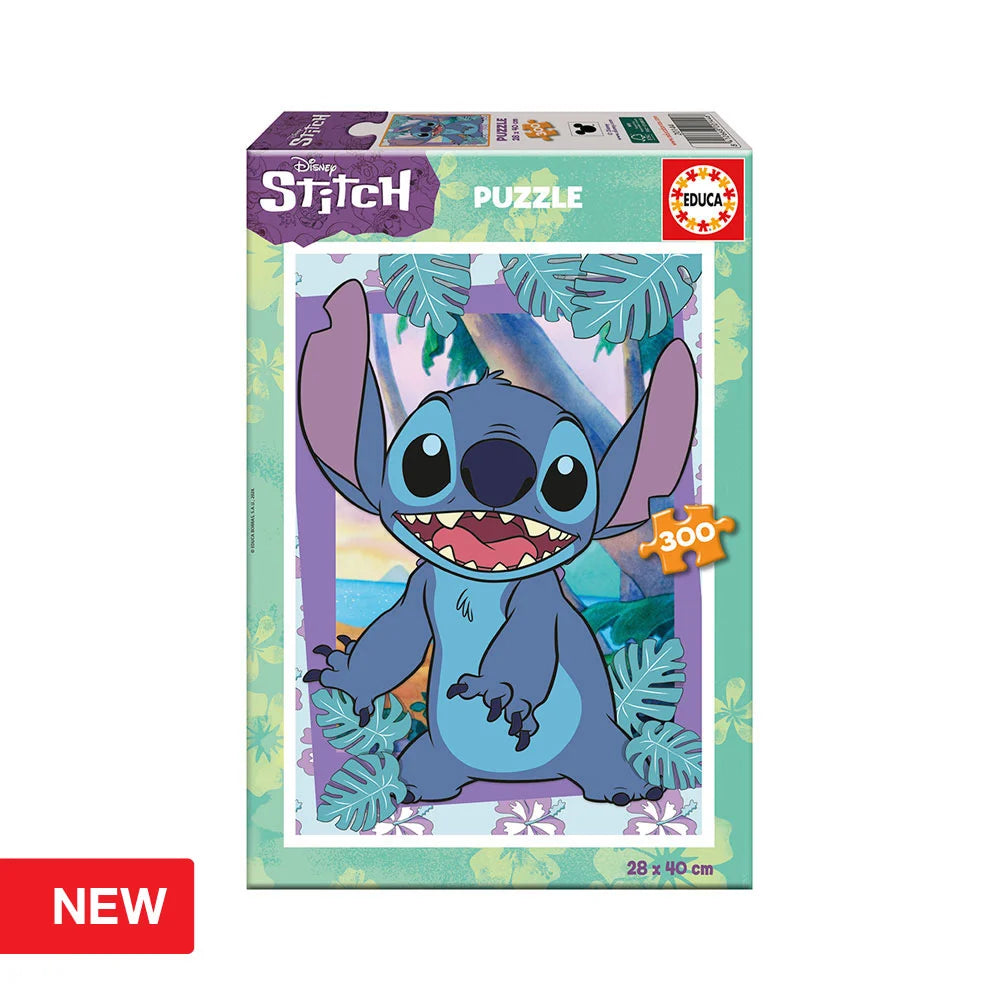
You've probably heard the phrase a thousand times, and yet it remains powerful: there are words that seem to stitch people together. Among them, "ohana" has earned a special place, and it's no coincidence that it's linked to a little blue creature who transformed chaos into affection. The name "Stitch" and the idea that family is more than blood ties have created a chain of meaning that spans generations, languages, and lifestyles. It's worth taking a closer look at what all this means and how it can change the way we experience friendship, belonging, and responsibility.
What is ohana, anyway?
Ohana is a Hawaiian word that translates simply as family. Except it's not just the nuclear family. It encompasses distant relatives, close neighbors, people welcomed into the community, and friends who become part of the inner circle. The etymological root is linked to the taro, a plant central to Hawaiian culture, where the sprout that grows from the tuber evokes the idea of branches that continue the same life. Kinship isn't limited to documents or inheritances; it extends into the realm of care.
This is reflected in practice: in Hawaii, there is the concept of hānai, the fostering of a child by another family without erasing the connection with their birth parents. The word ohana denotes living bonds, with commitment and presence. And that's why so many people have adopted it to describe their own support networks.
And “Stitch”, what does the name mean
In English, stitch means sewing point. It can also refer to that little pain in your side when you run or a laugh so strong it "stitches." In the context of cinema, Stitch is the name of an unusual experiment, created for chaos, that finds a new way to exist through the connection with a child and a sister who work hard to keep the house afloat.
The name wasn't chosen at random. There's a clever irony here: a being made to tear becomes a symbol of those who sew. In Portuguese, the image works immediately. A stitch is what joins fabrics, repairs tears, and strengthens folds. The character may have come into the world as an unthinkable assembly, but he ends up doing what his name suggests, uniting people who, without him, might have lost their way.
The phrase that was recorded
"'Ohana' means family. Family means no one is left behind, no one is forgotten." Few lines of dialogue have gained such life off-screen. In European Portuguese, the idea circulates with slight variations: "no one is left behind" or "no one gets left behind." In either version, the core is the same. It's a promise of presence.
Promising presence is a serious matter. It doesn't mean saying yes to everything. It means listening, caring, confronting when necessary, insisting when you feel like giving up. And, perhaps above all, showing up again.
Culture, respect and context
When a word crosses borders, it can lose some of its meaning or be used merely as an ornament. Ohana is not an exotic adornment. It arose from a cultural reality, with its own practices, stories, and values. Using it respectfully implies acknowledging this origin.
This doesn't prevent it from being part of our lives in Lisbon, Porto, Faro, or anywhere else. It just requires two simple things:
- Avoid reducing ohana to a decorative slogan.
- Learn something about the culture that generated it, even if it is a symbolic gesture of respect.
This care makes the term richer and prevents hasty appropriations.
Friendship growing into family
There are friendships that span decades and survive city moves, new jobs, and incompatible paces of life. Ohana gives language to this experience. Friendship ceases to be just socializing and becomes a commitment. There are now routines of care, shared goals, and a way of being that endures difficult times.
The interesting thing is that two dimensions coexist here:
- The lightness of private jokes, improvised coffees, last-minute birthdays.
- The gravity of joint decisions, of sharing a home, of providing support during illness, of getting up at six in the morning to pick someone up from the airport or the hospital.
It is in this tension between lightness and gravity that the word takes shape.
From the screen to inside the home
Want to put this idea into practice? Small gestures move worlds.
- Schedule a monthly dinner where each person brings something simple, and the most important thing is attendance.
- Create a support calendar for those going through a challenging period, with specific tasks and scheduled dates.
- Define a “hotline” that anyone can use at any time, and clarify who answers on which days.
- Note birthdays and milestones, and commit to sending a message that isn't automated. Ten heartfelt lines are worth more than a hundred emojis.
It works because it's visible, repeatable, and helps create memory.
Applications for work teams
Companies and teams can benefit from this spirit without falling into banality. It's not about calling everything family. It's about incorporating responsibility and professional care.
Practical ideas:
- Check-in meetings that discuss work and energy. Three minutes of honesty helps avoid misunderstandings.
- Rotate less glamorous tasks. When everyone participates in the invisible work, trust grows.
- Cross-mentoring where each person supports another during a specific quarter, with clear objectives.
- A living document of principles, cohesion, and healthy disagreement. Easy to read, hard to ignore.
When the day goes badly, the team holds on without dramatizing. When things go well, they celebrate without exaggeration. And then they return to focus.
Table of meanings and uses
A quick overview helps clarify nuances.
| Term | Literal translation | Cultural and symbolic layer | When to use |
|---|---|---|---|
| Ohana | Extended family | Belonging that embraces beyond blood, with mutual responsibility | When talking about care and commitment networks |
| Family | Immediate kinship | It varies according to legal and emotional contexts | In documents, formal conversations or ties of origin |
| Community | Group with common interests | Proximity effect and shared goals | Projects, neighborhood, associations |
| Stitch | Stitch, sewing | Unite, repair, give shape to what was loose | Metaphors of connection, creativity, recomposition |
This table does not replace nuance, but it helps to avoid mixing up terms.
Pop symbol, tattoos and visual choices
Many people use ohana or the image of Stitch in tattoos, paintings, and phone cases. It makes sense to want a symbol that evokes commitment. It's worth considering the details to ensure the gesture truly feels like yours:
- Add the word to a date that marks a new beginning.
- Use the typography of the person who wrote it by hand, someone in your network, to connect the line to the story.
- Integrate discreet elements linked to the sea or the island, without falling into caricature.
And it's worth taking two steps before inking: reflecting on the context, long-term meaning, and how this symbol interacts with other cultures.
Learning for children and young people
Children understand ohana with surprising speed. When the rules are clear, the house feels lighter. Some helpful habits:
- One household chore per week, chosen by the child, which changes every Sunday.
- A gratitude jar where everyone puts a piece of paper with something good that the other person did.
- An “I need time” card for those who want peace and quiet without being interrupted, valid for 30 minutes.
Clear rules provide security. Flexibility prevents rigidity. And repetition creates habit.
The challenging side that no one romanticizes
Ohana calls for honest confrontations. It doesn't always go well. There will be days with harsh words, failed expectations, doors that close prematurely. The difference lies in how you respond.
Some warning signs:
- Important conversations postponed for weeks.
- An element that always takes care of and another that rarely appears.
- Constant sarcasm replacing clear requests.
Making amends isn't an immediate process. It starts by naming the problem, apologizing without hesitation, and creating a concrete plan to act differently. Time will do the rest.
Technologies that can help
Simple tools are already a step forward. A digital arsenal isn't necessary.
- One messaging group for logistics, and another just for good stuff.
- A shared calendar with three types of events: support, socializing, deadlines.
- A document with emergency contacts and preferences for each person.
The secret is not the tool, it's the agreement on how to use it.
Rhythms, rituals and memory
Rhythms provide structure, rituals provide meaning, memory provides continuity. Three elements every ohana needs.
Examples of rituals that work:
- Sunday night soup with whoever is around.
- A common playlist for road trips.
- The tradition of sending a postcard to someone who lives far away twice a year.
Rituals don't require much effort, they just require regularity. And they become anchors on busy days.
Ethics of care: three simple questions
Before making decisions that affect your network, try asking these questions:
- Does this action protect someone vulnerable?
- Am I communicating clearly enough to reduce anxiety?
- Am I taking my share of responsibility without trying to solve everything myself?
If the answer is right for all three, you're on the right track.
The value of difference
Ohana doesn't imply uniformity. People with different political convictions, different cultural references, and opposing aesthetics can walk together. The secret is a minimal pact:
- Respect without condescension.
- Curiosity without invasion.
- Humor that doesn't humiliate.
This doesn't dilute opinions. It allows us to live with them without tearing the common fabric.
When you need to step away
There are times when protecting your network involves setting firm boundaries. Sometimes the best way to protect yourself is to step away for a while, or in extreme cases, indefinitely. It's not about giving up on someone. It's about recognizing that without boundaries, everyone loses.
The rule of thumb is simple: distance with clear communication and, if possible, with the support of third parties who help keep the door ajar for a responsible return.
Readings, cinema and songs that dialogue with this idea
There are stories that fuel the desire to care. A brief list for various ages:
- Books about chosen family and loyal friendship.
- Animated films that talk about belonging without moralism.
- Songs that became anthems for new beginnings among friends.
The goal isn't to create a bibliography. It's to have references in your pocket that remind you, on less clear days, why it's worth persisting.
What changes when we take the promise seriously
When people around you know they won't be forgotten, they open up. They risk new ideas, admit mistakes, and learn more quickly. Fear fades, creativity soars, and life gains texture. And the promise drives reciprocity: those who have been cared for, care. Those who have received a stitch pass the thread on.
In practical terms, a visible sequence appears:
- First, presence. Someone answers.
- Then, consistency. Someone answers again.
- Finally, trust. You don't even need to check anymore, you know it's there.
This is where the word ceases to be a concept and becomes a living practice.
A short guide to difficult situations
If someone in your ohana falls into a pattern that concerns you, try a straightforward script:
- Schedule a conversation with a clear time, duration, and location.
- Say what you observed, without labels. A behavior, an impact, a request.
- Proposes a minimal step of change: small, measurable, with a date.
- It combines light follow-up. One message in three days, another in seven.
It doesn't promise miracles. It provides a clue, rhythm, and measure.
The invisible seam of everyday life
Perhaps the most beautiful thing here is realizing that much of what keeps a network alive doesn't show up in photographs. These are the discreet details: the confirmation of an appointment, the subway ticket someone left behind, the soup in the freezer, the message at 11 p.m. that says "did you get there safely?" None of these are grandiose, but they all provide support.
Stitch, a name that sounds like a stitch, is a ready-made metaphor for this kind of action. It doesn't solve the problem all at once. It keeps bringing things together. And by joining, it gives shape to what could otherwise fall apart.
A clear invitation
If all this seems ambitious to you, start small. Choose three people and make a promise you can keep for three months. Then evaluate. Adjust. And start again. What starts small gains strength with repetition.
The word ohana doesn't need to be on the living room wall. It needs to be in your gestures. And the name Stitch doesn't need to be tattooed to be remembered. It's enough that, when you look back at your week, you find two or three stitches that no one else saw, but that held the fabric together.
From then on, the rest stops being theory. It's life happening, with room for mistakes, new beginnings, and shared joy.