

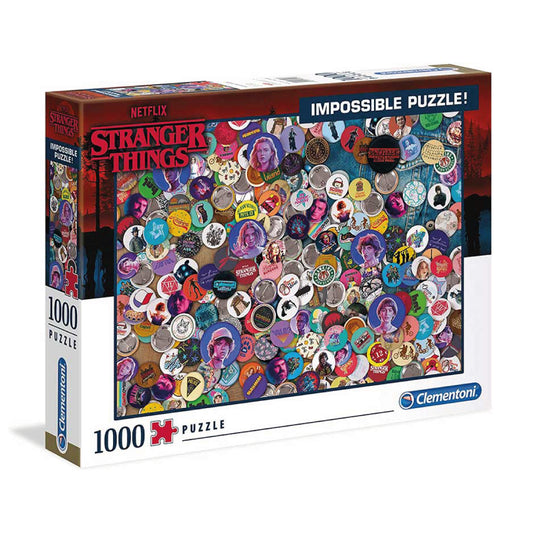
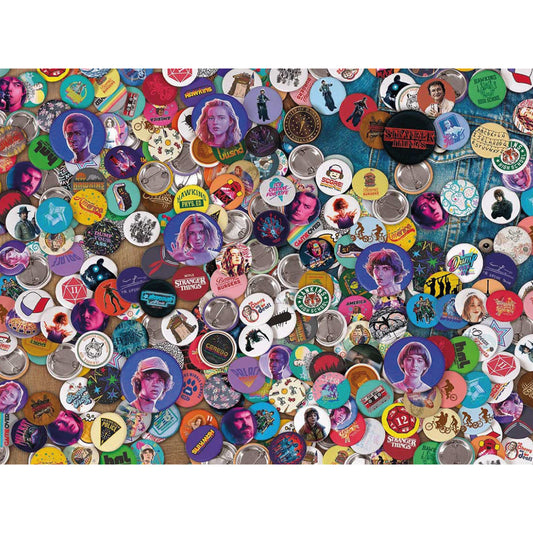


There's something irresistible about combining the comfort of a well-lit table with the dense mystery of Hawkins. A Stranger Things -inspired puzzle isn't just a picture to assemble or a riddle to solve. It's a relaxed way to enter a narrative where each piece promises a clue and every detail may hide a threat from the Upside Down.
The most interesting thing is that these puzzles work at various paces: they can be a silent solo ritual, a Sunday family activity, or a social challenge where conversations compete with 80s music and the imaginary sound of a walkie-talkie.
Why does Stranger Things work so well as a puzzle game?
The series has a visual and emotional grammar that's perfect for logic and puzzle games. There are repeated symbols, maps, laboratories, flashing lights, patterns, and a constant tension between what's visible and what's hidden.
Then there's the contrast that fuels any puzzle: the normal world and the distorted world. In terms of design, this translates into well-defined color palettes, recognizable textures (organic walls, neon, a humid forest), and scenarios full of micro-details. For the person assembling it, this creates very satisfying moments: suddenly, a chaotic zone begins to make sense when a letter, a Christmas light, or the silhouette of a creature appears.
In a good themed puzzle, nostalgia isn't just decoration. It's a structure. And when the structure is solid, the challenge becomes inviting, even when it's demanding.
Types of puzzles that captivate Hawkins
Stranger Things puzzles aren't limited to the classic 500 or 1000-piece cardboard jigsaw puzzle. The series' universe opens the door to very different formats, and each one provides a different kind of mental pleasure.
There are more visual experiences, where the reward is seeing the final poster take shape. And there are formats where the "ending" is an unlocked code, a deciphered message, a found sequence. Before choosing, it helps to think about what you want to feel: contemplation, urgency, cooperation, friendly competition.
After considering the type of experience, these elements often appear in the best-made puzzles:
- Hawkins Maps
- Letters in Christmas lights
- Doors and locks
- Laboratories and documents
- Creatures and shadows
The choice of format changes how the story unfolds. A picture puzzle tells the story through composition. A puzzle of riddles tells the story through rhythm.
From jigsaw puzzles to desktop "escape" devices.
The puzzle pieces are the most common entry point and remain a great way to immerse yourself in the atmosphere of the series. The challenge lies in balancing areas with repeating patterns (forest, fog, Upside Down walls) and zones with visual anchors (faces, lights, letters, signs).
Tabletop "escape room" type puzzles bring a different energy: there are clear objectives, rules, layered clues, and the pleasure of opening a box, revealing a letter, turning a page with an unexpected instruction. They are ideal for those who like to feel rapid progress and turning points.
Between these two extremes, increasingly common hybrids emerge: piece-by-piece puzzles that include a final riddle stage, or puzzles that require assembling visual components. The result can be very cinematic, especially when the game forces you to look twice at something that seemed like just scenery.
Formats and what to expect from each one.
Not all challenges need to be long to be intense. A good jigsaw puzzle can fit into an evening, and still leave you with that feeling of "one more clue and we're done." To help you choose, here's a comparison of popular formats.
| Format | Best for | Typical duration | Degree of immersion | Medium difficulty |
|---|---|---|---|---|
| Jigsaw puzzle with 500 to 2000 pieces. | Relax and get into the atmosphere. | 3 to 12 hours | High | Variable |
| Panoramic jigsaw puzzle or “poster” | Image enthusiasts and collectors | 2 to 8 hours | Medium to high | Average |
| Tabletop escape room | Group and narrative with objectives | 60 to 180 min | Very high | Medium to high |
| Ciphers and cryptograms | Those who like language and patterns | 30 to 120 min | Average | High |
| 3D puzzle (objects) | Construction and display | 2 to 6 hours | High | Average |
An important detail: "difficulty" isn't just about complexity. It's also about tolerance for visual chaos, patience for trial and error, and a willingness to return to the same problem the next day.
How to increase the challenge without losing the enjoyment.
The beauty of puzzles lies in being tough and gentle at the same time. They offer a challenge, but rarely punish. Still, when the subject is Stranger Things , many people want to take it a step further and feel a greater narrative tension: the feeling that there's something behind the obvious.
The healthiest way to increase the difficulty is to change the method, not the fun. Instead of always choosing more pieces, you can choose puzzles with fewer visual clues or with rules that force new strategies.
Once you have the puzzle on the table, these approaches help keep the challenge alive:
- Working by texture : separating "normal world" and "inverted world" by shadows and grain.
- Impose a rule of silence : 10 minutes in which each person only observes and tests the fit.
- Limit initial screening : don't separate everything, start with a sample and accept the uncertainty.
- Change zones : when frustration rises, move to an area with visual anchors.
- Defining landmarks : borders, then typography, then faces, then backgrounds.
There is an unexpected advantage to this type of discipline: it becomes easier to recognize patterns and less tempting to "force" pieces, which is the classic mistake in puzzles with many dark shades.
Ciphers, codes and hidden messages
If there's one thing that goes well with Stranger Things , it's the idea of a coded message. Puzzles based on ciphers bring a sense of investigation: one clue leads to another, and the game rewards attention to detail.
The most commonly used ciphers in commercial products tend to be accessible, but they can be combined creatively: simple substitutions, grids, recurring symbols, numerical codes linked to dates and locations. The trick is to make the cipher part of the environment, not a school exercise.
When a puzzle asks you to read a letter "from the lab," to identify a pattern in the lights, or to compare a "real" map with an "inverted" map, it is creating a very enjoyable type of reasoning: the mind alternates between imagination and verification.
And here the theme is very helpful. Because we already know the language of the world: we know that something banal can be a clue, and that an apparently decorative detail can be the key.
A night of jigsaw puzzles with an 80s flavor.
There are puzzles that require isolation and silence, and there are puzzles that require company. A theme like this fits very well in small gatherings, where the table becomes an "operating room" and each person assumes a natural role.
The preparation doesn't need to be elaborate. Good lighting, space to separate pieces or cards, a discreet playlist, and a visible clock are enough. The important thing is to create a rhythm that keeps the group engaged without rushing each other.
In a group, it's worthwhile to agree from the start on how clues are shared: saying everything aloud, or letting each person investigate before announcing. Interestingly, different collaboration styles completely change the experience. There are teams that like to discuss each hypothesis; there are teams that prefer silence and occasional revelations, as if each person brings a "report" to the rest of the group.
One single rule often makes all the difference: the person who finds an important clue explains their reasoning, not just the result. This increases collective enjoyment and reduces the feeling that someone "did it all."
What to look for before buying a themed jigsaw puzzle
Not all licensed products are created equal, and the theme alone doesn't guarantee a good experience. It's worth looking at the puzzle as an object: print quality, fit, legibility, and also as a game: clarity of rules, rhythm of clues, absence of unfair ambiguities.
The decision also involves space and time. A 2,000-piece jigsaw puzzle can be wonderful, but it requires a fixed table and a lot of patience. A tabletop escape room can be intense, but it depends on having a group available to wrap up the session.
Before choosing, this short checklist can help you avoid disappointment:
- Cut quality : firm pieces, clean fit, minimal cardboard dust.
- Image contrast : beautiful shadows without becoming an indistinct block.
- Repetition of patterns : forest and fog are beautiful, but can become tiresome without anchors.
- Replayability : whether it's meant to be repeated or if it's a one-time experience.
- Language and clarity : clear instructions, clues without confusing translations.
When the goal is to give a gift, there's an extra detail: the best gift isn't always the most difficult to find. It's the one that matches the style of the person who will be playing.
Small rituals to maintain motivation.
A puzzle with an Upside Down aesthetic features very dark areas and similar textures. This can be both its charm and its challenge. The motivation doesn't just come from "I want to finish it," but from constant micro-victories.
A simple strategy is to create visual reference points right from the start. In a jigsaw puzzle: typography, faces, objects with clear outlines. In a puzzle: organize materials, mark what has already been used, record hypotheses in a notebook. Recording gives a sense of progress even when the solution hasn't yet appeared.
It also helps to accept short, intentional pauses. Sometimes, the brain solves problems while you're doing something else. And when you return, a piece that seemed impossible falls into place in seconds, as if the image has become clearer.
There's a certain serenity to this kind of challenge: building a disturbing world, but doing so from a safe place, with time, method, and curiosity. It's precisely this well-balanced tension that makes the puzzles in Stranger Things so addictive and rewarding.