There is something deeply satisfying about picking up a box, spreading the pieces on the table, and watching an image gradually take shape. A jigsaw puzzle is a quiet pastime, but full of rhythm: it alternates moments of speed with pauses where the eye needs to adjust, search for patterns, and accept the challenge without haste.
Within this universe, Clementoni puzzles have become a benchmark for those seeking a consistent experience, with high-quality craftsmanship and a selection of images designed for different ages and skill levels.
Why do puzzles continue to capture our attention?
Puzzles resist fads because they meet very current needs: concentration, mental rest, and a sense of tangible progress. The activity has a simple entry point, but can scale to high levels of difficulty without losing its basic enjoyment.
And there's a curious aspect: while the mind is working, the body slows down. Breathing tends to stabilize, gestures become more refined, and time passes in a less fragmented way.
Some benefits that are often cited by those who do jigsaw puzzles regularly:
- sustained focus
- visual and spatial training
- Active break after work
- feeling of accomplishment
- social activity without pressure
What characterizes a Clementoni puzzle?
Clementoni is often associated with a balance between quality and affordability. This is noticeable in details that only become important when you spend hours looking at the same image: the consistency of the cut, the way the pieces "sit," the definition of the print, and the resistance to repeated handling.
A jigsaw puzzle is not just a cut-out photograph. It's an object that thrives on small industrial decisions: the thickness of the cardboard, the precision of the dies, color control, and a surface finish that avoids excessive glare and eye strain under artificial light.
The curation of the images also matters. Some prefer illustration, some seek classical art, some want "clean" landscapes, and some choose the exact opposite: dense patterns, crowds, and colors that jumble. The Clementoni selection tends to cover this spectrum coherently, without turning each box into a gamble.
Collections and styles: from casual to sophisticated
The variety of lines is one of the reasons why many people return to the brand. Instead of being limited to a "single format," there are options for quick sessions, long weekends, and even multi-day marathons.
Collections change over time, but some trends remain: series with panoramic images, editions focused on art, and ranges for children with more narrative themes and pieces adapted to smaller hands.
The following table helps guide choices without restricting the decision to a specific catalog.
| Puzzle line/type | Typical range of parts | Dominant aesthetic | For those who it usually works out best |
|---|---|---|---|
| Classic “High Quality” | 500 to 2000 | landscapes, cities, photography | for those who want variety and a good pace of assembly. |
| Art and museums | 500 to 1500 | painting, artistic illustration | for those who appreciate subtle color and visual detail. |
| Panoramic views | 500 to 1000 | wide horizons, skylines | for those who appreciate elongated composition and final impact. |
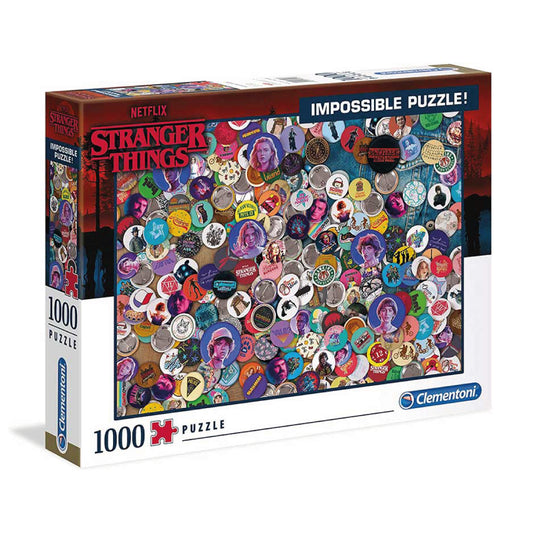
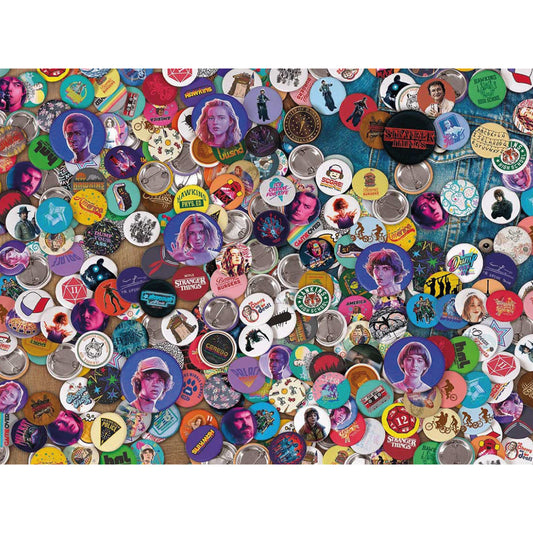
| "Impossible" and challenges | 1000+ | dense patterns, lots of repetition | those who seek real challenge and persistence. |
| Children and youth | 30 to 300 (or more) | Characters, stories, bright colors | children and families riding together |
How to choose: difficulty, image, and context.
Choosing a puzzle is, in part, choosing the kind of afternoon you want to have. A beautiful image can become frustrating if you have large areas of uniform sky and your energy level is low. A chaotic image can be perfect when you really want to be challenged.
Before buying, it helps to do a little mental screening: how long has it been around, how many people will be assembling it, and how tolerant are you of "block days" when nothing seems to fit.
Some practical criteria often yield good results:
- Number of pieces: 500 is comfortable for many people; 1000 requires more space and persistence; 2000 becomes a project.
- Image texture: repeated patterns increase the difficulty; well-defined elements make the process more fluid.
- Color palette: very similar shades require better lighting and extra patience.
- Format: Panoramic formats require a long table; traditional formats adapt to larger spaces.
- Who will assemble it: children benefit from larger pieces and images with distinct characters and areas.
One detail that is often overlooked is lighting. The same camera may seem "easy" in daylight and considerably more demanding at night, especially in images with shadows and subtle gradations.
A time-saving assembly method (without sacrificing enjoyment)
Some people like to improvise, while others prefer a methodical approach. A good puzzle can handle both, but a simpler process tends to reduce frustration and increase the feeling of progress.
You almost always start by separating board pieces. Then, it's worth creating "islands" by color or by recognizable elements: a building, a tree, a text zone, a figure. After a while, the table looks like a small archipelago, and the work becomes connecting blocks instead of searching for piece by piece.
A habit that improves comfort is rotating the box or reference image instead of constantly turning your neck. It may seem like a small detail, but it makes a difference in long sessions.
And there's a simple gesture that many people adopt when the puzzle is more difficult: photographing the progress. It's not to "prove" anything; it's to keep a record of the advancement and return with motivation when you resume the next day.
Puzzles as objects: when the last piece isn't the end.
For some people, the assembly is the essential part, and the puzzle goes back into the box. For others, the final image deserves to be displayed, like a poster that has gone through a process of conquest.
This is where aesthetic choices come in. An urban panorama might work well in a hallway. A nature scene, in a bedroom or reading room. A work of art, in a more formal space. The interesting thing is that the jigsaw puzzle has its own texture: it's not a smooth print, it has the subtle relief of the pieces, and that gives it character.
If the intention is to frame it, it's worth thinking beforehand about the final size and location. A 2,000-piece puzzle can be spectacular, but it also requires a wall, a frame, and logistics. Sometimes, a well-chosen 1,000-piece puzzle has more impact because it integrates better with the space.
There are also those who use jigsaw puzzles as a "seasonal project": you assemble them in winter, frame them for a few months, then take them apart and replace them with another. The repetition itself becomes a ritual, almost like changing the decor without constantly buying things.
With family, friends, or alone: the jigsaw puzzle as a way of being.
The jigsaw puzzle has a rare quality: it allows for companionship without requiring constant conversation. As a family, you can create a neutral zone where each person contributes at their own pace. Among friends, it works as a side activity while chatting, listening to music, and sharing stories.
Solo work has a different value. It's a space for focus that doesn't demand performance or immediate results. It's patient work with tangible rewards.
In educational contexts, puzzles can subtly support skills such as persistence, pattern recognition, and the concept of parts and the whole. Even for adults, there is something educational in the way the brain reorganizes itself to see "clues" where it previously saw only confusion.
And there's a little-discussed social benefit: easy negotiation. When two people are looking for the same part, you learn to wait, to share space, to compromise. All this without drama, just with the calm of a shared goal.
Care, organization, and little maintenance tricks
A well-cared-for jigsaw puzzle lasts for many years, even with repeated assemblies. The main enemies are usually simple: humidity, direct sunlight, and surfaces where pieces are easily lost.
You might want a stable base, ideally on a table that can be "reserved" for a few days. When that's not possible, there are practical solutions: trays, portable bases, and carrying bags. Even without accessories, a rigid sheet larger than the puzzle helps to move the work safely.
Here are some useful practices, especially for those who like to repeat or exchange jigsaw puzzles:
- small bags for separating colors or zones
- photograph of the final image saved on the cell phone.
- Lightly clean the table before each session.
- box always closed when not in use.
For those who exchange jigsaw puzzles with friends, it's worth developing a habit of checking: counting pieces isn't realistic, but observing if there's any damage, if the box closes properly, and if the reference image is present prevents disappointment later.
How to give a jigsaw puzzle as a gift and still get it right.
Giving a jigsaw puzzle can be a very thoughtful gesture, as long as you think less about "what I would choose" and more about the person's style. It's a gift that invites quality time, and that counts.
The secret is to balance difficulty and visual pleasure. A beloved image, even one that presents some challenge, tends to get created. An indifferent image, even one that's easy, tends to remain unfinished.
Here are some combinations that usually work well:
- For those who enjoy travel: cities, maps, skylines
- For art lovers: reproductions of paintings, classic illustrations.
- For those who need to disconnect: landscapes with well-defined areas and light colors.
- For those who love a challenge: bold prints, "impossible" series, lots of pieces.
One last observation: "time" is part of the present. A puzzle can come with a simple invitation, "whenever you want, I'll help you put it together," and that transforms the box into a promise of a pleasant afternoon.