

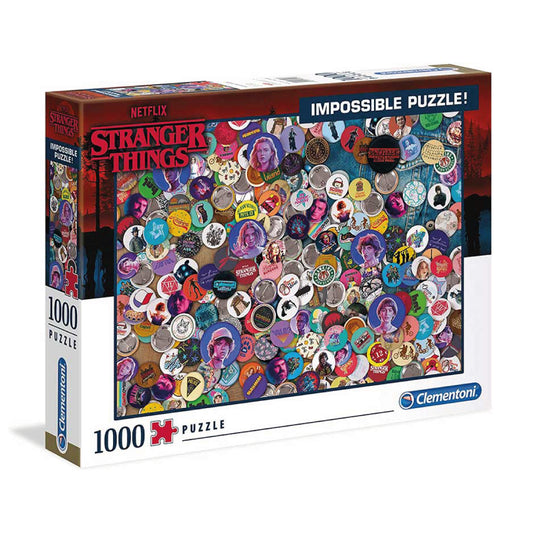
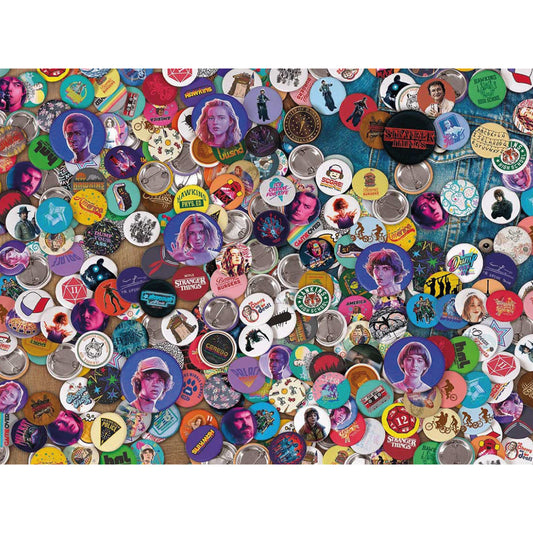


There are objects that, without asking permission, cross the border between entertainment and memory. A Stranger Things puzzle can be that: a calm ritual, piece by piece, that ends in an item worthy of being displayed, with the retro aesthetic, the mystery, and the characters that marked a decade.
For collectors, the interest goes far beyond simply "liking the series." The edition, the artwork, the rarity, the condition of the box, the tactile experience, and even the story of how that particular piece was found all come into play. A jigsaw puzzle also becomes a cultural document, with the visual language of its time.
Why Stranger Things works so well in puzzle format.
The series thrives on layers. There's the main plot, the references to the 80s, the hidden clues, the symbols, and the alternation between light and shadow. A puzzle translates this naturally, because it forces you to observe and reread the image carefully.
The best designs take advantage of this richness: posters with cinematic composition, collages of characters, stylized maps of Hawkins, patterns with icons from the Upside Down, or scenes that seem "frozen" at just the right moment. The result is often visually striking even when hung on the wall.
And there's an important detail for collectors: Stranger Things has a consistent graphic identity, but allows for variations. This opens up space for themed puzzle series, where each box is part of a coherent and, at the same time, distinct set.
Types of jigsaw puzzles that attract collectors.
Not all jigsaw puzzles are created equal, and choosing the right type changes both the assembly experience and the perceived value of the collection. Some collectors favor the challenge; others want a final piece with decorative impact; still others seek less common shapes.
A single theme can exist in multiple versions: a promotional artwork in 500 pieces for quick assembly, the same image in 1000 pieces for balance, and a "wall" edition in 2000 pieces for physical presence and detail.
After understanding what motivates you, it helps to have a simple mind map of the most collectible formats:
- Panoramic views
- Special editions with a large count
- Wooden jigsaw puzzles with irregular cuts
- 3D and themed miniatures
- "Impossible" jigsaw puzzles with dark colors and gradients.
A panoramic jigsaw puzzle, for example, is great for images with extended cast and scenery. Wooden puzzles, on the other hand, tend to have a different relationship with the object: sound, fit, texture, durability, and a more "handmade" feel.
What defines a "collector's" puzzle?
The "collector's item" label doesn't depend solely on the theme. There are Stranger Things puzzles that are great to assemble once and keep; and there are others that deserve to be cataloged, protected, and even duplicated, with one copy to assemble and another to keep sealed.
The safest way to look at this is through practical criteria, confirmed by hands-on experience and not just advertising. After an initial screening, these points usually separate an ordinary item from a more attractive piece for a collection:
- Licensing and origin : recognized manufacturer, clear rights, consistent printing.
- Art and composition : an image that works well outside the box, with good contrast and readability.
- Production : precise cut, firm fit, absence of excessive dust, quality cardboard.
- Edition : limited print runs, discontinued versions, alternative packaging
- Box condition : corners intact, colors not faded, no signs of moisture.
Rarity can matter, but rarity without visual quality rarely sustains long-term interest. A piece that "begs to be hung on a wall" retains emotional and aesthetic value even when it ceases to be trendy.
How to assess and preserve the condition without complicating it.
Collecting jigsaw puzzles has a clear advantage: it's a relatively manageable hobby. A jigsaw puzzle lives in a box, takes up less space than many bulky figures or editions, and can be stored methodically. The secret lies in consistency.
For those who buy secondhand, there are three silent enemies: humidity, odors (tobacco, mold, cooking), and loss of parts. For those who buy new, the biggest risk is usually a dent in the box and improper storage.
A simple record helps a lot: purchase date, location, status, item count, and notes. If the collection grows, this care saves time and avoids duplicate purchases.
The following table serves as a quick checklist, both for purchases and maintenance:
| Aspect to be verified | What to look for | Good practices |
|---|---|---|
| Box | Firm corners, without deep creases, without stains. | Store upright, without excessive weight on top. |
| Sealing | Film intact or with clear signs of having been opened. | If opened, use a sealed inner bag for the parts. |
| Smell | Neutral, mold-free | Gentle ventilation; avoid damp closets. |
| Parts | Clean cut, without delamination. | Assemble on a clean surface, wash your hands before use. |
| Printing | Consistent colors, without deviation. | Avoid direct sunlight when exposed. |
If you're mounting it for an exhibition, it's worth choosing a reversible method. Permanent glues work, but they also reduce flexibility. There are alternatives such as specific adhesive sheets and pressure-fit frames, which allow for easy disassembly later.
Exhibition: when the puzzle ceases to be a "project" and becomes a piece.
A well-chosen jigsaw puzzle can function as a textured poster.
For a cohesive collection, think of the wall as a gallery: compatible sizes, frames with a common style, and a palette that complements the series' aesthetic. Blacks, deep reds, and neon tones often work well with Stranger Things , but a light frame can create an elegant contrast, especially with very dark artwork.
It also helps to respect breathing space. A panoramic puzzle needs a margin; a 1000-piece square puzzle gains presence in pairs; a 500-piece puzzle can be the "centerpiece" in a smaller corner. If the light is intense, use UV-protected glass to reduce fading.
The search for the right editions with strategy.
Collecting is all about patience and discernment. If you buy on impulse, you end up with duplicate boxes, weak artwork, and formats that don't interest you. If you have a plan, each acquisition strengthens your collection.
It works well to treat the purchase as a small, short, and repeatable process:
- Define the objective: theme (season, characters, poster), format, and piece count.
- Confirm details: final dimensions, box language, images of the back and inside.
- Assess condition: real photos, corners, seal, signs of improper storage.
- Compare the market: average price, shipping costs, return policy.
- Record: date, origin, notes on condition and intention (assemble or save)
For discontinued editions, the price can vary greatly. A good practice is to set a personal price limit and not exceed it. The market is volatile, and often the same box reappears in better condition weeks later.
Community and exchange: the social side of a quiet hobby
Even though it's a relaxing activity, assembling and collecting jigsaw puzzles takes on a different energy when there's a community involved. There are forums, groups, and informal gatherings where manufacturers are discussed, photos of completed puzzles are shared, and examples are exchanged.
Trading can be particularly interesting for Stranger Things : someone is looking for a specific piece of art from a season; another person wants to reduce duplicates; another collects only panoramic shots. With clear rules, everyone wins.
Before exchanging items, always consider simple criteria: confirmation of complete parts, condition of the box, shipping method, and internal protection. A sealed bag for the parts, rigid cardboard for reinforcement, and plastic for moisture protection make a real difference.
Building a collection with identity.
A memorable collection rarely arises by chance. Some collect seasonally, creating a visual "arc" over the years. Some collect for aesthetic reasons, preferring poster-type art and avoiding collages. Some seek out only large jigsaw puzzles, with 1500 or 2000 pieces, for the challenge and the final impression.
If you're just starting out, it's worth choosing a simple rule and sticking to it for a while. As the collection grows, you can make exceptions, but a guideline prevents dispersion.
One detail that many underestimate is the consistency of size. Having several jigsaw puzzles with similar final dimensions makes framing, storing, and displaying them easier. This gives the set a more "curated," almost museum-like appearance.
Ideas for gifts (and for you to give as gifts)
Puzzles are a rare gift: they hold time within them. For Stranger Things fans, a puzzle can be an invitation to disconnect from the noise and immerse themselves in a task with a clear purpose and a beautiful result.
To give a gift with intention, you think about the recipient's profile. A casual fan might love 500 or 750 pieces. An experienced assembler will want 1000 or more, or a dark design with intricate gradients. A collector will likely value an intact box and a less common edition.
If you want to make the gift more complete, add a simple detail: a mounting base, a roll-up mat, or a frame of the right size. Small accessories enhance the experience without stealing the spotlight from the puzzle.
Where to search in Portugal and online
Between physical stores, marketplaces, and specialized websites, there are many possible routes. In Portugal, larger toy stores and bookstores usually have the latest releases, while stores specializing in collectibles and pop culture may have themed editions.
When buying online, the main thing to check is the actual images and shipping conditions. Large boxes suffer during transport; it's worth paying a little extra for reinforced packaging. When buying secondhand, always ask for confirmation that the items are complete and photos of the corners of the box, preferably in good lighting.
Fairs, pop culture events, and garage sales can also yield unexpected finds, especially when someone is clearing out space and doesn't keep track of the market value of a discontinued edition. In these situations, your best ally is your own judgment: strong artwork, good condition, and a clear place in your collection.