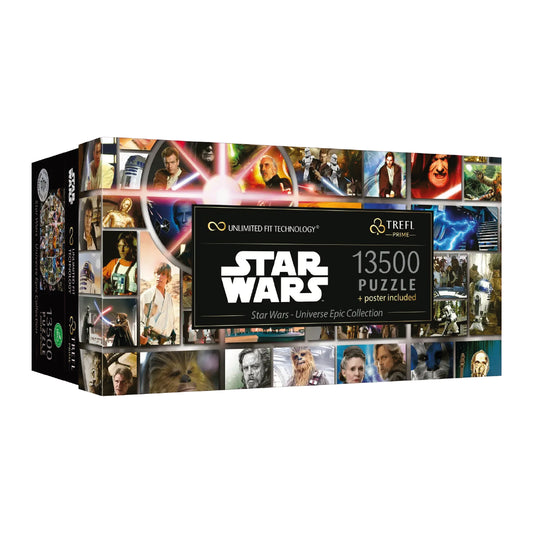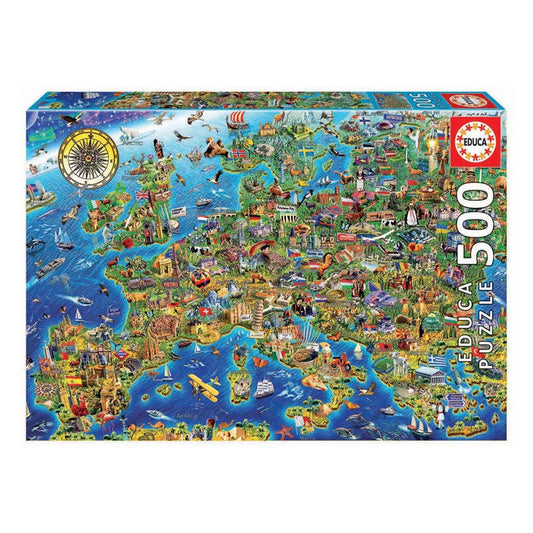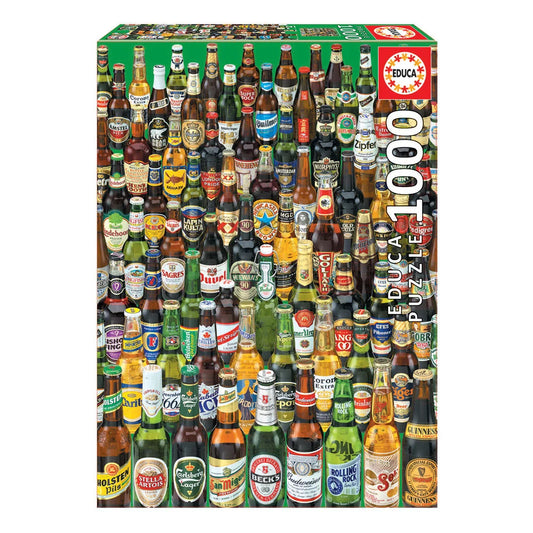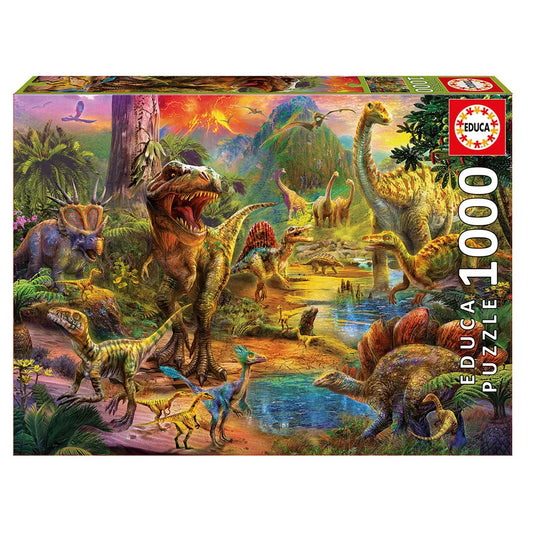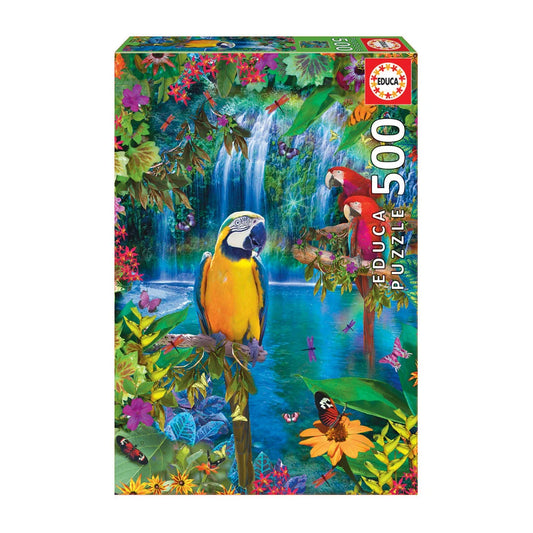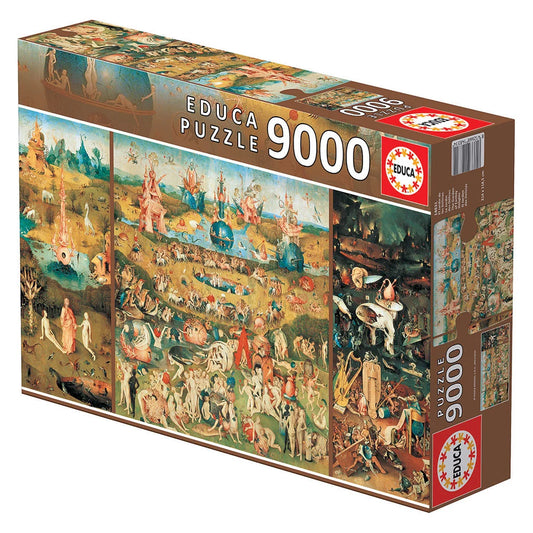


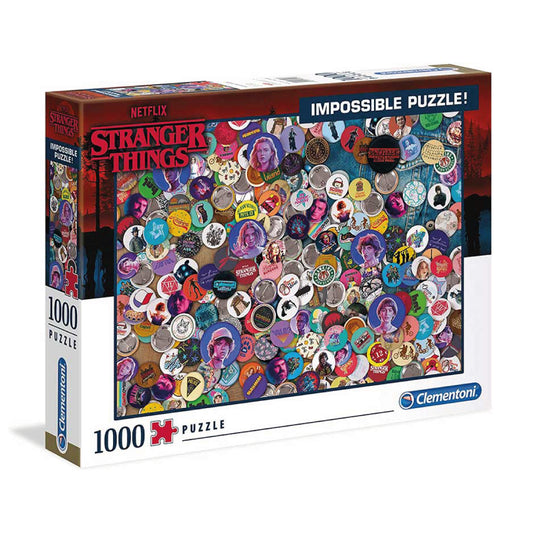
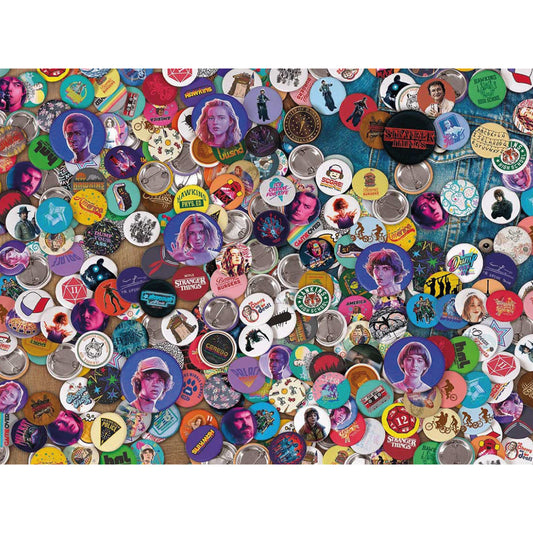


There's something irresistible about taking a universe we already know and disassembling it into hundreds, or thousands, of small pieces. Pop culture functions like a common language: series that marked us, album covers that defined a phase, video games that taught us patterns, and stories we quote without thinking. When this is transformed into a puzzle, the result is an object to experience slowly.
And yes, it's a very specific pleasure: that of recognizing a detail in the middle of the assembly and feeling that, suddenly, chaos has order.
Why does pop culture work so well as a puzzle?
Puzzles demand time and attention; pop culture offers memories and familiarity. Combining these two things creates a type of entertainment that doesn't depend on you constantly seeking new stimuli. The final image already has value even before you begin, because there's an emotional connection to the theme.
There's also a curious side to it: a puzzle transforms a "quick" image into a prolonged challenge. A poster viewed in two seconds becomes a project spanning several sessions. This changes the relationship with the artwork, because it forces you to perceive compositions, textures, shadows, typography, and small hidden symbols.
A pop culture puzzle is rarely just decorative. It serves as a conversation starter, a source of nostalgia, a collector's item, and in many cases, a design piece that can be proudly framed.
Types of pop culture puzzles worth seeking out
Pop culture is vast, so it pays to think about "families" of images that translate well into pieces. Ideally, look for themes with a variety of colors and recognizable elements, so that the assembly is fluid and satisfying, without losing its challenge.
There are styles that fit the puzzle format especially well, whether due to their visual composition or their immediate recognizability. After choosing a "territory," the choice becomes simpler: it will be more fun to assemble something you want to review, line by line.
Some categories that tend to work very well are:
- Album covers and concert posters
- Movie posters and promotional art
- Retro video game illustrations
- Maps and fictional “universes”
- Collages with references and "easter eggs"
Within these categories, there are two typical paths. Either you choose a clean, iconic, and centered image (great for those who like constant progress), or you opt for a collage full of micro-details (perfect for those who want a long-term project and want to feel small victories with each piece added).
How to choose the right level (without losing the charm)
The number of elements remains the most obvious filter, but it's not the only one. An image with large areas of a single color can be more demanding than an image "busy" with many elements. In a pop culture image, the presence of text also changes the game: typography gives clues, but it can create false clues if the design repeats patterns.
It's also worth considering the context: will it be a puzzle for a quiet afternoon, for several weeks, to do with children, or for a group of friends? The answer changes the choice of size, the cut of the pieces, and even the finish.
The following table helps to bring expectations closer to reality, without making impossible promises:
| Parts range | Typical time (approx.) | Perceived difficulty | Recommended for | Practical tip |
|---|---|---|---|---|
| 300 to 500 | 2 to 6 hours | Low average | Beginners, families | Choose images with well-defined characters. |
| 750 to 1000 | 6 to 15 hours | Average | Most adults | If there is a lot of text, separate letters and borders early. |
| 1500 | 15 to 35 hours | Medium to high | Those who like long-term projects | Organize by dominant colors and by "zones" |
| 2000+ | 30+ hours | High | Collectors, groups | Reserve a fixed table and a large tray. |
If the topic is very important to you, it's worth raising the bar a little. The extra motivation helps when the inevitable slow phases appear, in which it seems like nothing is falling into place.
Materials, printing, and details that make all the difference.
A jigsaw puzzle can have an excellent image and still disappoint because of its physical quality. In pop culture, where many details count, printing is crucial: contrast, sharpness, and color fidelity change the experience from the first to the last day.
The way the pieces fit together also matters. Pieces with very similar shapes can make a puzzle artificially difficult, not because of a visual challenge, but because of a lack of "signature" in each piece. Conversely, a good cut provides enough variety to allow for consistent progress, without turning the assembly into a game of trial and error.
There's also the matter of touch: very thin pieces bend, very shiny pieces reflect light and tire the eyes, and pieces with a matte finish are usually more comfortable under normal home lighting.
And there's a detail that many people only appreciate too late: the box. A good box isn't a luxury; it's part of the experience. A large reference image, decent internal organization, and a card that doesn't fall apart after two openings make a difference when the puzzle is meant to be repeated or kept as a collection.
Moments of assembly: solo, with family, with friends
Some puzzles require silence and persistence; others call for conversation and background music. Pop culture naturally pushes towards social interaction, because every detail triggers a memory: "Remember this scene?", "Is this from that cover?", "Look at the hidden reference."
When group assembly goes well, it has an almost choreographed dynamic: someone does borders, another person separates colors, someone becomes obsessed with typography, someone finds an impossible piece and becomes a hero for ten seconds.
To maintain a light and productive environment, some simple habits work well:
- Division by zones: each person gets an area of the board and swaps pieces when it makes sense.
- Short breaks: 5 minutes away from the table gives you fresh eyes.
- The rule of not forcing: if the piece doesn't go in smoothly, move on.
- Small goals: finish a character, a logo, a corner.
When an image is heavily laden with references, it's worth accepting one fact: part of the pleasure is stopping to comment. Productivity may decrease, but the value of the moment increases.
Where to find and how to care for your jigsaw puzzle.
One advantage of pop culture jigsaw puzzles is the variety of licenses and styles. Between official editions, original illustrations inspired by genres, and collaborations with artists, there's an offering that goes far beyond the obvious. Still, it's good to maintain some criteria, especially when the goal is to have a good puzzle-solving experience and not just "own" the puzzle.
When buying a puzzle, you think about the balance between image and execution. Amazing artwork loses its impact if the printing is poor. And a technically perfect puzzle can be boring if the image means nothing to you.
Once chosen, taking care of it is simple, but consistency pays off:
- Store the parts in a sealed bag inside the box.
- Avoid moisture and prolonged direct sunlight.
- Using a rigid base to move the ongoing puzzle.
- Separate any missing parts immediately (a small container helps a lot).
Those who assemble frequently end up creating a small ritual: opening the box, spreading out the pieces, separating the edges, and letting the rest happen at the pace of the day. It's a peaceful habit and, at the same time, surprisingly addictive.
Display and reuse ideas
There are pop culture puzzles that deserve to be on display, even if only for a while. Framing is the classic option, but it's not the only one. If the image has a strong composition and consistent colors, it can work as a graphic piece in an office, hallway, or living room without looking like an out-of-place "toy."
It's also possible to rotate jigsaw puzzles like posters: assemble them, enjoy them for a few weeks, carefully disassemble them, and put them back in the box. This cycle is especially enjoyable with images full of detail, because on the second assembly you find patterns that you missed.
And when pop culture changes, the puzzle remains. What is your favorite series today may be a fond memory tomorrow. Assembling it piece by piece is an elegant way to preserve phases of life, with time, focus, and tactile pleasure, without rushing to reach the end.