

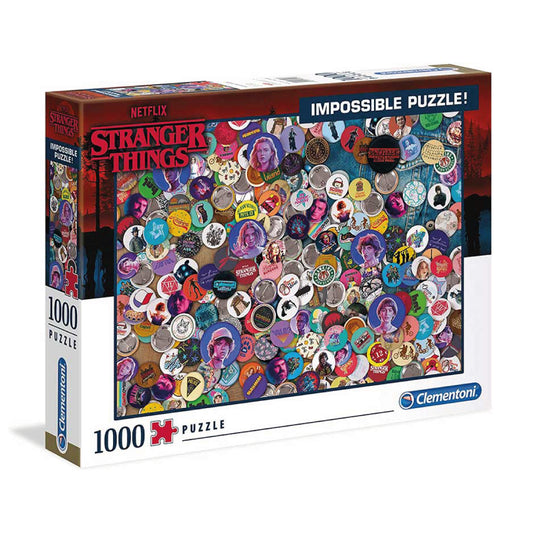


There are objects that manage to be two things at once: a calm ritual for the end of the day and a direct portal to a story that has marked us. A jigsaw puzzle has this subtle talent. When you combine the imagery of Stranger Things with the meticulous craftsmanship associated with Clementoni, the result demands time, attention, and a certain willingness to "enter the enigma" piece by piece.
The most curious thing is that the enigma isn't just in the final image. It's in how the brain reorganizes itself to look for patterns, in how the hands learn to remember the right pieces, and in the small joy of each correct fit.
Why does a Stranger Things puzzle work so well?
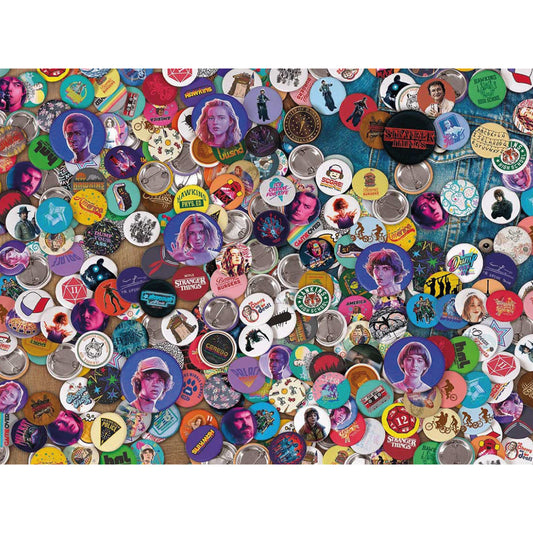
The series thrives on powerful symbols: lights, shadows, posters, tense faces, saturated colors, dramatic contrasts. This translates into an interesting visual challenge, because the image is rarely "flat." There are very defined areas and others that are intentionally confusing, as if the composition also wanted to play with the Upside Down.
A puzzle with this theme usually delivers three things at once: nostalgia, challenge, and a clear sense of progression. What begins as a jumbled mess of pieces transforms into a map.
In a sense, it's a domestic version of the mystery: there are no jump scares, only clues.
What typically distinguishes a Clementoni puzzle?
There are brands that are recognizable by touch. In jigsaw puzzles, this counts. Clementoni is often associated with consistent cuts, careful printing, and an experience that avoids unnecessary frustrations, such as pieces that seem to fit "almost" but don't, after all.
The choice of materials and quality control are usually reflected in practical aspects: less dust on the board, pieces that can withstand several work sessions, and colors that don't lose intensity when viewed from the side under artificial light.
Before buying, it's worth thinking about what you appreciate most in a jigsaw puzzle: the sheer difficulty, the beauty of the image, the tactile sensation, or the idea of framing it at the end.
After that, the decision becomes much simpler.
Choosing the right puzzle: size, pace, and expectations.
Not everyone is looking for the same thing. Some want a long challenge, lasting weeks, while others prefer something that can be completed in a weekend. The Stranger Things theme tends to have dark areas and gradients, which increases the actual difficulty compared to images of blue skies or repeating patterns.
A practical way to decide is to cross-reference the number of pieces, final dimensions, and "visual density" of the image (many distinct faces and objects make it easier; large shadow areas slow it down).
| Number of pieces (range) | Typical rhythm | For whom | Note about dark images |
|---|---|---|---|
| 500 | 1 to 3 sessions | beginners, families | It might still be surprising if there are many blacks and reds. |
| 1000 | several sessions | who likes method | A good balance between challenge and visible progress. |
| 1500 to 2000+ | long project | fans of puzzles and details | It requires a fixed space and consistent light. |
The chosen image also matters. Posters with a lot of text and strong outlines provide anchor points; compositions full of neon and shadows require more patience.
To make this choice with confidence, there are three simple criteria that usually work:
- Available space: dedicated table or tray that can be moved.
- Realistic timing: short sessions during the week or long blocks on the weekend.
- Tolerance for ambiguity: a liking for "difficult" areas where many pieces appear the same.
Preparation: Halfway to success
The way you begin sets the tone for everything else. And that's no exaggeration. Good preparation reduces friction and transforms the editing process into something almost meditative.
First, the light. A neutral white lamp, placed to the side to avoid hand shadows, makes a difference in dark areas. Then, the surface: rigid, flat, and with space to organize items without piling them up.
Next, a simple gesture that changes the game: immediately separate the edges and create a "park" for pieces by color and print texture. You don't even need to buy special trays, just use shallow boxes, lids, or even sheets of thick paper.
Small habits save a lot of time when the puzzle has many deep blacks, browns, and reds.
The “enigma” piece by piece: a method that adapts to the theme.
With images in the style of Stranger Things , there are two common temptations: to start with the characters' faces or to start with the areas of most intense color. Which is better? It depends on the image's framing. In many posters, the faces are surrounded by shadows and smoke effects, which can make this beginning less straightforward than it seems.
A robust method is to work with visual anchors, those areas that have their own identity and clear boundaries. Then, connect these anchors to each other as if you were building bridges.
A good, flexible, and practical sequence usually follows this logic:
- Edges first: they create the "map" and prevent the assembly from spreading.
- Unique elements: letters, lights, objects, sharply defined outlines.
- Color blocks: reds, blues, neons, always paying attention to the print grain.
- Shadows and transitions: the slow work that completes the puzzle without haste.
There's a curious detail in the dark areas: many pieces "look" the same, but they rarely are. The secret lies in the direction of the print's brightness and the extremely fine color pattern. Turning the piece around and looking at it from a low angle helps to spot these differences.
When frustration arises, the best response is to change zones. The puzzle rewards alternation.
The pleasure of rhythm: short sessions, real progress.
Not all projects require long marathons. With a 1,000-piece puzzle, 30- to 45-minute sessions may be enough to maintain enthusiasm without overwhelming your attention. The important thing is to finish each session with something "tidy": a completed block or a cleaner sorting than the previous one.
Some people like to leave a small challenge for the next session, such as a transition area, so they come back with renewed enthusiasm. Others always prefer to finish with a clear victory, like completing a letter or an object.
The puzzle accommodates both styles. And, in the case of Stranger Things , the final image often has enough impact to warrant another viewing, even when fatigue calls for a couch session.
Making the social experience happen without losing the thread.
A jigsaw puzzle can be a solo activity, but it can also be a meeting point. With pop culture themes, this happens easily: someone comments on a scene, another notices a detail on the poster, and the conversation flows naturally.
The only practical rule in a group is to reduce friction: define work zones for each person or agree that each person will take a specific "type" of piece. When there are children, puzzles with fewer pieces and more color contrast make participation more rewarding.
And there's a subtle advantage to assembling with multiple hands: more eyes mean more patterns detected. The puzzle becomes less lonely.
What to do when finished: save, glue, frame.
Finishing a jigsaw puzzle with a striking image makes you want to keep it. There are simple options, from storing it in a box to framing it. If the intention is to preserve it, it's worth thinking about this before you start, because the work surface and how you move the puzzle matter.
Some people prefer to glue, others prefer to use special adhesive sheets for puzzles, and still others choose not to attach them and to disassemble them as part of the process. There is no "right" choice; it's about finding what suits the space and the sentimental value of the theme.
And if the idea is to decorate, it's worth measuring the wall beforehand and choosing a suitable frame. Good framing gives the poster the look of a graphic piece, without seeming improvised.
A gift with personality (and time inside)
A Stranger Things jigsaw puzzle can work very well as a gift because it includes an experience, not just an object. It offers hours of quiet attention and a visual reward at the end.
It's also an elegant way of saying, "you deserve some time for yourself," without long speeches.
And in a world where almost everything is immediate, there is something inspiring about offering a puzzle that demands calm, method, and curiosity, until the last piece finds its place.