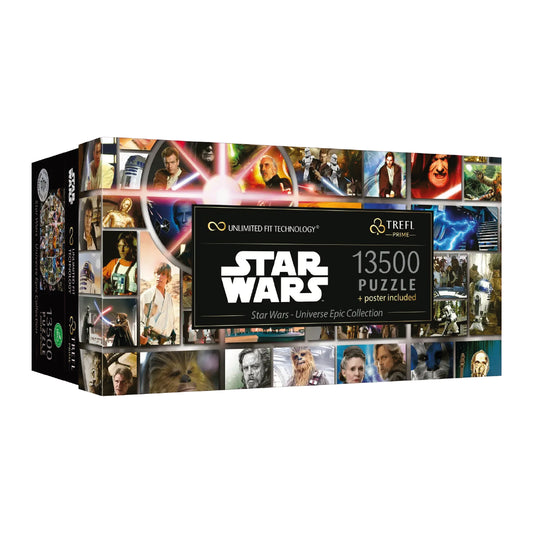


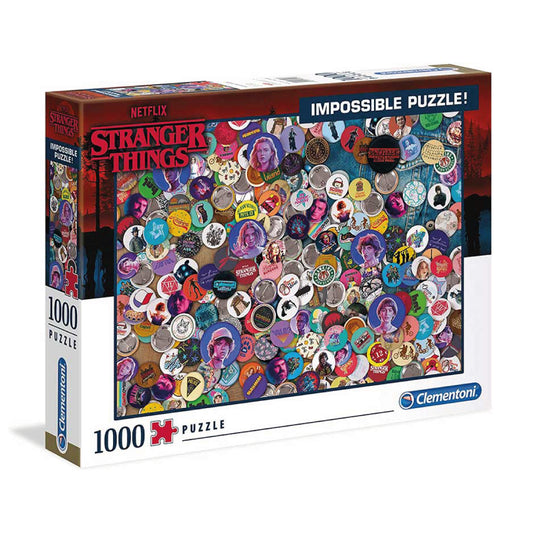
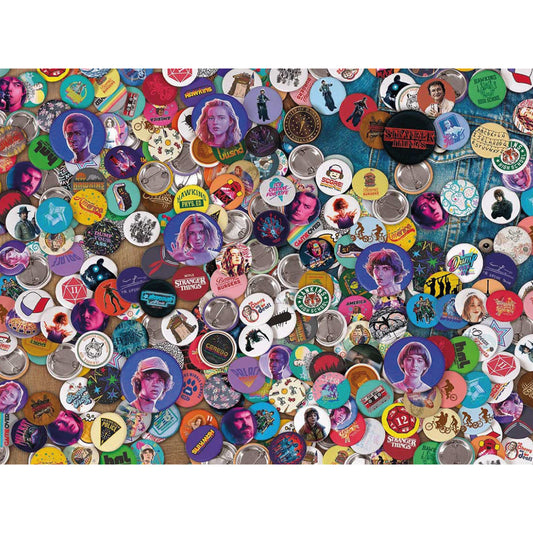


There's a particular pleasure in watching a series and feeling that the script is asking us to participate: noticing a detail, connecting the dots, questioning an overly simplistic answer. For many fans, this impulse doesn't end when the episode finishes. It continues in theories, attentive rewatches, and increasingly, in puzzles designed to prolong the sense of mystery.
Puzzles for series fans are not just "pastimes." When well thought out, they function as an extension of the narrative universe: they test memory, logic, observation skills, and even empathy with the characters. And they do something rare: they transform the wait for the next episode into a mental game that keeps the enthusiasm alive.
Why do TV series require puzzles?
A series creates intimacy over time. After several seasons, we become familiar with mannerisms, routines, recurring phrases, and even the way the camera lingers on certain objects. This repetition is fertile ground for challenges, because it gives the fan an arsenal of references that a puzzle can use without asking for explanation.
There is also the fragmented nature of the format. A story told in episodes accepts incomplete clues, omissions, and ambiguities. This opens up space for enigmas that mimic the very rhythm of the series: small revelations, false leads, shifts in perspective.
And there's an interesting balance point: a puzzle can be difficult without being unfair. The fan feels they deserve to solve it because "it's all there." The secret is to give clues that reward attention, not just encyclopedic knowledge.
Types of puzzles that work well with marathons
When inspiration comes from TV series, the most challenging puzzle is usually the one that respects the logic of the universe. If the series is about research, the challenge might require deduction. If it's about politics or relationships, it might require reading intentions and analyzing contradictions.
It also helps to vary the pace. Not everything needs to be a two-hour mega-enigma. A marathon session pairs well with short challenges between episodes, almost like "active breaks" that reinforce the memory of what just happened.
Here are some formats that work very well, with varying levels of commitment:
- Hunting for detail in frames
- Simple codes and ciphers
- Logic of suspects and alibis
- Maps, routes and rooms
- Recurring sequences and patterns
- "Who said that?" with elegant traps
The goal is not to complicate things; it's to create that moment when the answer seems obvious after it's discovered.
Puzzles inspired by TV series genres
Not all series "demand" the same type of challenge. A comedy might yield light and quick puzzles; a psychological thriller can handle layers and ambiguities; a historical series requires context, chronologies, and power dynamics. Choosing mechanics that match the genre avoids the effect of a puzzle "glued on top."
The following table suggests useful combinations, whether for those who buy themed puzzles or for those who like to invent challenges for friends.
| Series genre | Puzzle mechanics that fit together | What the fan feels | Typical difficulty |
|---|---|---|---|
| Mystery / crime | Deduction with clues and exclusions | "I knew!" | Medium to high |
| Sci-fi | Codes, languages, patterns | Fascination with the system | Average |
| Fantasy | Maps, genealogies, symbols | Immersion in the world | Average |
| Drama | Contradictions, chronologies, motivations | Emotional reading | Low average |
| Terror | Subtle clues, limited choices. | Controlled voltage | Average |
| Comedy | Quick associations, references, puns | Lightness and surprise | Low |
This type of adjustment can be as simple as changing the "type of clue" and the way the information is presented: a thriller tolerates ambiguity; a comedy benefits from clear answers and short pacing.
How to organize a puzzle night for TV series fans
A puzzle-solving session can be just as powerful a social event as watching an episode together. The difference is that everyone participates at the same time, and the conversations cease to be just comments; they become tools for solving problems.
Creating a theme works well, even if it's light: a specific season, a narrative arc, or simply "investigative series." The important thing is that participants know what to expect and feel comfortable taking chances.
A simple and effective format can follow these steps:
- Choose the duration and tone (30 minutes intense or 2 hours relaxed).
- Prepare 6 to 10 short challenges instead of one gigantic puzzle.
- Intersperse "clues" with short video clips, images, or quotes.
- Set clear rules for helping: each clue costs time, points, or a fun penalty.
- End with a final challenge that brings together previous answers, like a "special episode".
A good night of puzzles doesn't require technical perfection. It requires rhythm, clarity, and the feeling that each answer opens a door.
Tools and materials: from paper to cell phone
The best jigsaw puzzles for series fans are often the simplest to produce. A well-designed sheet and a strong idea easily overcome the need for a heavy app. Still, having a basic kit helps to add variety and texture to the experience, with tactile elements and small "props" that seem to have come straight out of the screen.
A practical set might include:
- Clue cards : phrases, quotes, times, small maps or fictional "cutouts"
- Frozen images : frames with details to find and compare.
- Clock or timer : friendly pressure, without spoiling your train of thought.
- Bookmarks and sticky notes : links, relationship trees, quick lists
- Mobile phone (with rules) : limited search, stopwatch, QR code reading, shared notes
The mobile phone rule deserves a decision before it begins. In certain groups, "no internet" increases satisfaction; in others, allowing controlled research makes the game more fluid and inclusive.
When the puzzle becomes part of the narrative.
Some series inspire puzzles that are not just "about" the story, but "how" the story unfolds. Think of challenges that mimic the script's structure: time jumps, unreliable narrators, episodes told in reverse order, clues hidden in seemingly mundane dialogue.
Here, the puzzle gains an extra layer: the fan is not just solving a problem, they are reproducing the mental gesture that the series asks to be appreciated.
One example of an approach is the "perspective puzzle": you present the same event from three different sources (a report, a message, and a dialogue), and the solution requires deciding who is omitting something, and why.
And there's a very specific kind of joy when the group reaches the point where the theories start to sound like forum theories, but with immediate results.
Quick ideas for training your "episode eye"
There are short exercises that sharpen attention and make any puzzle more enjoyable, even when done alone. One of them is to review a scene and note three prominent objects without pausing the video; then compare it with a second viewing and understand what you missed.
Another method is to choose a character and, throughout an episode, record only verbs: what they do, when they react, when they avoid acting. Then, try to infer the character's objective without using adjectives, only actions. The clarity that emerges is surprising.
A mini-dialogue challenge also works well: take five memorable phrases from a season, scramble them, and try to reconstruct the correct order. It's not pure memory; it's about perceiving the emotional progression of the narrative arc.
Designing "fair" puzzles: difficulty with elegance.
A puzzle for series fans can fall into two extremes: too easy, seeming like trivia; or so opaque that it becomes a test of patience. The right approach stems from a simple rule: the clue must be visible, even when it is not yet interpretable.
A reliable method is the "dual clue." The answer can be reached in two ways: one for those who remember the series, and another for those who are strong in logic. This way, the group stays together, with different contributions.
The same logic helps to avoid unintentional elitism. Not everyone has seen the series three times. A well-written puzzle allows someone new to the universe to participate, even if only in the areas of patterns, exclusions, or information organization.
There is also an aesthetic of clarity: short text, consistent symbols, and formatting that doesn't hide relevant data. A good puzzle demands reasoning, not reading comprehension.
Puzzles that fuel conversations, not just answers.
The most interesting aspect of these challenges is what happens between questions and solutions. A complex puzzle leads the group to discuss the moral choices of characters, the coherence of the world, the screenwriter's intentions, and subtle ironies hidden in the dialogue.
This conversation is part of the prize. And this is where puzzles for series fans gain an advantage over many generic pastimes: they have characters, atmospheres, and themes that already mean something to the player.
When the answer appears, it's not just about "getting it right." It's about recognizing a pattern, recalling an emotion, confirming an old suspicion, or changing your mind with good arguments.
If your next binge-watching session is already scheduled, it's worth setting aside some time for one or two challenges between episodes. The result is usually simple: more attention, more memories, and that rare feeling of actively participating in the narrative, even while sitting on the couch.