


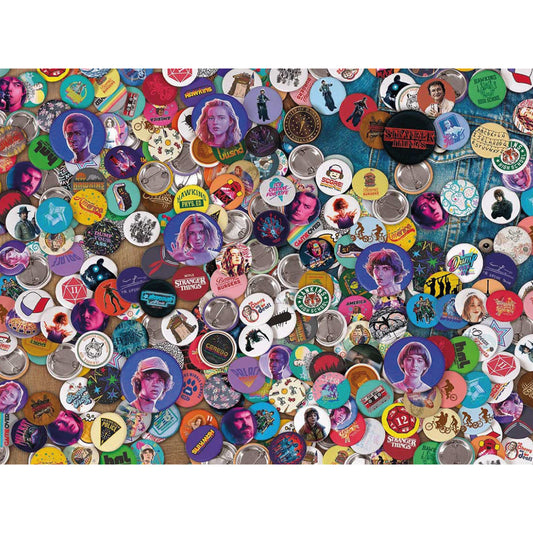


There are series that you watch and forget. And there are series that linger, like a song that returns when you least expect it. Stranger Things clearly belongs to the second group: a pop culture object that blends nostalgia, suspense, and emotion with rare discipline in commercial television.
The anticipation surrounding the next season doesn't stem solely from a "I want more." It arises from a long-standing relationship with characters who have grown up before our eyes, from unanswered questions, and from a universe that, without losing its identity, has become increasingly ambitious.
What makes Stranger Things so hard to put down?
The series has a recurring trick: it takes recognizable references (80s cinema, horror, teen adventure) and treats them with emotional seriousness. The nostalgia is there, but it's not a collection of winks to the viewer. It serves as a language to talk about fear, loss, friendship, and courage.
There is also a very consistent technical balance. The direction knows when to accelerate and when to stay still; the soundtrack knows when to make its presence felt and when to let the silence work; the visual effects have scale, but they don't replace human interaction. The result is a sense of "event" that doesn't depend solely on marketing.
And then there's Hawkins: a small town that, season after season, transforms into a sort of moral testing ground, where normalcy is constantly put to the test.
Where did the story leave off (without giving away any major spoilers)?
Each season added layers to the central conflict and increased the emotional cost for the group. While initially the mystery was almost local, with terror "right next door," the confrontation later took on broader consequences, both inside and outside the city.
The last season aired made it clear that the game has changed. Danger is no longer an abstract shadow or an isolated accident. It is a force with intention, with memory, and with a direct link to what the characters have learned about themselves.
Let's put it bluntly: those who join us in the next season will find less "innocent adventure" and more difficult decisions.
Before watching the new season, what's worth refreshing?
Reviewing everything can be a pleasure, but there isn't always time. Still, there are some narrative and emotional threads worth remembering to better appreciate the pace and details as the story progresses.
After a paragraph of context, here's a quick, straightforward mini-guide:
- The origin and rules of the Upside Down.
- Relationships within the group, especially fractures and reconciliations.
- Hopper's role and the evolution of his sense of mission.
- Eleven's arc, exploring power, identity, and belonging.
- The way Hawkins reacted to collective fear.
A good review isn't just about "remembering facts." It's about reliving the choices and understanding what each character has sacrificed to get to where they are.
The characters at the eye of the storm
The series has always been generous in its number of protagonists, and this has advantages and risks. The advantage is obvious: there are multiple entry points, various sensibilities, various forms of heroism. The risk is that it can disperse attention. Even so, Stranger Things has managed to concentrate the essential elements on its emotional anchors.
The characters' growth is one of the driving forces behind the interest in the new season. They not only aged, but also gained narrative scars. And that changes everything: it changes how they trust each other, how they deal with fear, and how they interpret what happens to them.
To look at this "emotional center" more clearly, it's worth organizing the pieces with simple names:
- Eleven : Power as responsibility, not as a trick.
- Mike and the gang : friendship put to the test when reality stops giving a break.
- Max : vulnerability as a turning point, not as a weakness.
- Will : Sensitivity and intuition as a compass in a world that distorts signals.
- Hopper and Joyce : care as a mature form of courage.
When a series gets it right, it gets it right here: the characters doing the best they can with limited emotional resources.
The "80s effect" is more than just aesthetics.
Some see the 80s as simply wardrobes, bicycles, and synthesizers. The series goes beyond that. The decade functions as a cultural code: a time when fear was often conveyed through monsters, and when coming-of-age stories were wrapped in adventure.
This allows for tonal freedom. Stranger Things can be tender and cruel, funny and dark, without seeming incoherent. The viewer accepts the mix because it's inscribed in the DNA of these references, but with a modern finish.
And there's an interesting detail: nostalgia, here, is not a promise of comfort. It is, often, a trap. The past seems familiar, but danger respects no memories.
A quick map of the seasons (to give you an idea of the scale)
The evolution of the series is also seen in how each season adjusts its "dominant genre." The following chart is not intended to be an official truth, only a useful map to guide expectations.
| Season | Dominant tone | Emotional core | Scale of the conflict |
|---|---|---|---|
| 1 | Mystery and terror contained | friendship and loyalty | local, intimate |
| 2 | Terror and mourning | belonging and trauma | local, with expansion |
| 3 | An adventure with dark humor. | trust and risk | more public |
| 4 | More explicit horror | Guilt and survival | wide, interconnected |
What does this suggest for the next phase? Less room for "going back to the beginning" and more focus on closing cycles without making things too easy.
What to expect from the next season (with caution and enthusiasm)
When it comes to a new season of such a popular series, it's easy to make overly optimistic promises. It's best to exercise informed caution: there are clues and trends, but the narrative may surprise you.
Still, it's possible to anticipate some likely directions. History has pointed towards a more direct, less episodic confrontation, with a sense of urgency that doesn't allow for major deviations. The mythology of the Upside Down tends to become clearer, not through "long explanations," but through visible consequences.
It's also likely that the series will seek to balance showmanship and farewell. Not in a sentimental sense, but in a structural sense: closing arcs requires choices, and choices require painful scenes.
One detail that often goes unnoticed: Stranger Things works best when you trust in silence and waiting. If the next season knows how to breathe, even on a large scale, the impact could be even greater.
How to view in order to get more out of the experience
This series rewards attentive viewers, but it doesn't require an intensive course. Small habits change how you experience suspense and how you grasp connections between scenes, music, and symbolism.
After a paragraph to provide context, here are three simple suggestions:
- Watch with decent sound (or headphones) to appreciate the subtle work of the soundtrack.
- Avoid multitasking, because many key moments are discrete.
- Take breaks between more intense episodes to allow the impact to settle.
And yes, it's worth talking to someone afterwards. Stranger Things is very much about community, and that extends to this side of the screen.
Why this season could be memorable
Some stories have difficulty ending. They drag on, repeat themselves, lose their edge. Stranger Things showed a different intention: each season changes enough to not just be a repetition, but preserves its identity.
If the next season lives up to its implicit promise, it won't just be "more episodes." It will be an emotional response to what has been built from the beginning: a group of boys learning that courage isn't the absence of fear, it's action despite it.
And that, even in a universe of monsters and parallel worlds, is a very real idea.