There are objects that resist trends because they fulfill an age-old need: to focus the mind, occupy the hands, and gain, piece by piece, the satisfaction of seeing something take shape. A collection of jigsaw puzzles can be just that, a small territory of calm and challenge that grows with time.
Within this universe, Clementoni has become a benchmark for those seeking variety, high-quality printing, precise cuts, and themes ranging from children's items to collectibles. The idea of "collecting" here is not just about accumulating boxes; it's about choosing experiences.
Because puzzles continue to captivate us.
Putting together a jigsaw puzzle is an exercise in attention with a visible reward. With each piece fitted, the brain confirms hypotheses, corrects trajectories, and reinforces patterns. It's a silent exercise in patience, useful for children and surprisingly transformative for adults who spend their days on fragmented tasks.
There is also a very physical pleasure in the puzzle: the texture of the card, the sound of the pieces fitting together, the table filled with colors. In a time when almost everything happens on a screen, the tactile experience returns a kind of presence that rarely appears in notifications.
And then there's the social aspect. A jigsaw puzzle can be a shared project, with side conversations, informal turns, and that fun negotiation about who "gets" the blue sky or the area with the trees.
What distinguishes Clementoni in a collection?
A collection demands consistency. When you buy the same brand repeatedly, you quickly notice if the cut is even, if the pieces deform easily, if the image loses definition, or if there is excessive glare that tires the eyes. In the case of Clementoni, the appeal usually lies in the combination of good print quality, a firm fit, and a wide range of styles.
Variety is part of the charm: illustration, photography, art, film, landscapes, urban motifs, patterns. This allows you to create a collection with "personality," rather than a pile of random boxes.
Before choosing your next box, it's worth defining what kind of collector you want to be. Some always look for the same format to frame; some alternate between different styles; some collect themed series to create a cohesive look on their shelf.
After considering this guiding principle, it helps to keep a few simple criteria in mind:
- Favorite topic
- Number of pieces
- Format (classic, panorama, vertical)
- Image finish (more matte, more glossy)
- Space available for assembly
How to choose the right piece: age, difficulty and space
The question "how many pieces?" seems obvious, but it's not. A 1000-piece puzzle can be relaxing for someone who already has a method, and intimidating for someone who has only assembled 500 pieces spaced out over a long period of time. The best choice is one that challenges without blocking.
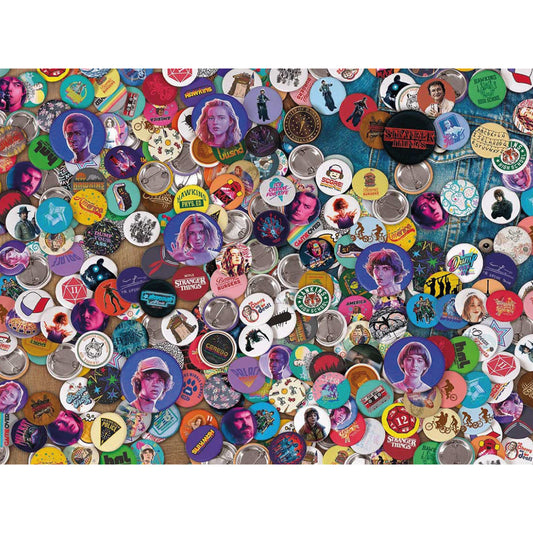
The subject matter decisively changes the difficulty. Smooth skies, sea, snow, and brick walls are common pitfalls; portraits and scenes with many objects are more "generous" in visual clues, even when they have the same number of elements.
Space is also important. A large jigsaw puzzle needs a free table for days, sometimes weeks. If the house is very busy, it's worth considering a roll-up mat, a dedicated tray, or more compact formats.
A practical way to decide is to cross-reference three variables: available time, tolerance for repetition, and willingness to try a new technique.
Lines and formats: from classic to collectible
Within Clementoni, the interest in collecting grows when one recognizes "families" of jigsaw puzzles. It's not just the number of pieces, it's the type of image, the format, the ambition of the challenge. There are sets for short sessions and sets that require commitment.
The table below usefully organizes some typical collection directions and how they play out in the daily life of someone who assembles regularly:
| Puzzle type | Number of pieces (usual) | For whom | What to expect |
|---|---|---|---|
| Children / junior | 24 to 180 | Beginners and children | High-contrast images and fast progress |
| Classic | 500 to 1500 | Weekly routine | Balance between challenge and fluidity. |
| Panorama | 1000 to 2000 | Wall collection | Long horizons require space and method. |
| Art and detailed photography | 1000 to 3000 | Patient rhythm | Areas with micro tracks, very rewarding. |
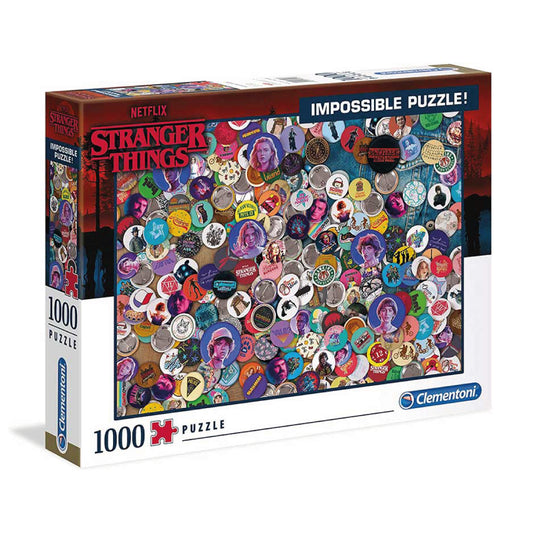
| Extreme challenge (standards, "impossible") | 1000+ | Those who like to test limits | Purposeful repetition, focus, and strategy. |
In many collections, alternation is the key: a long panorama when there's time, and a more "generous" option in details when visible progress is desired at the end of the day.
If you like visual coherence on the shelf, you can also opt for color schemes. It's a surprisingly effective criterion for creating unity: boxes that complement each other, even with different themes.
The ritual of mounting: techniques that work.
Some people open the box and start immediately. It works, but a consistent collection usually emerges when you learn a small system, adaptable to the type of image. The goal is not to turn the puzzle into work, but to reduce friction so that the experience is cleaner.
The classic sequence, edges first, then colors and patterns, is still solid. But when the image is complex, it pays to separate it into "narrative zones": characters, objects, architecture, sky, vegetation. The brain finds meaning faster when it organizes by stories and not just by tones.
One often overlooked aspect is lighting. Good, neutral side lighting reduces reflections and speeds up decision-making. For collectors, this makes a difference after dozens of sessions.
Some simple practices increase consistency without sacrificing enjoyment:
- Initial sorting: separate edges and pieces with unique patterns before starting assembly.
- Work zones: reserve areas for "probable parts" and "doubtful parts"
- Mindful rotation: rotate parts only when there is a reason, avoiding eye strain.
- Periodic review: go back two steps and look at the puzzle as a picture, not as pieces.
To keep, to frame, to exchange: to continue the collection.
Collecting jigsaw puzzles is also about deciding what happens next. Some people take them apart and keep them, ready to revisit them later. Others glue them together and frame them, transforming effort into decoration. Still others trade them with friends or family, keeping the puzzle flowing without taking up all the space in the house.
Framing requires some thought: do you want a piece to last for years or a lightweight, reversible solution? If it's for a wall, the choice of location matters. Direct light can fade colors over time, and kitchens or bathrooms are not card-friendly spaces.
Saving has its own rules. A puzzle that returns to its box in good condition deserves an inner bag, or a simple way to keep the pieces compact. And, if the collection grows, a basic inventory prevents repeat purchases and helps plan the "next challenge" according to your mood.
Swapping is an elegant option when the goal is experience rather than ownership. It adds rhythm to the collection, creates conversation, and helps to experiment with themes that I wouldn't initially choose.
Puzzles as a tool for well-being and learning.
A well-chosen jigsaw puzzle creates a kind of active rest. It's not sleep, it's not passivity; it's a gentle attention that calms without numbing. For many people, it's an antidote to distraction: for an hour, there is only the image, the pieces, and the repeated gesture of searching for matches.
In the field of learning, the value is equally clear. Children train fine motor coordination, persistence, and visual reading. Adults train planning, tolerance for errors, and the ability to maintain a long-term goal.
In a family setting, a jigsaw puzzle can be an activity that balances ages. Each person contributes their "talent": some are quick to find edges, others recognize patterns, others bridge different zones. The collection then becomes an archive of shared moments.
Ideas to start (or renew) your collection
If you're just starting out, you don't need to buy many at once. A good collection is about intention, not haste. A simple approach is to choose three boxes with different profiles to understand what captivates you: a comfortable theme, a new format, and a challenge that's a little above the usual.
If you already have several boxes, renewing them can mean editing: donating those that no longer mean anything to you, organizing by difficulty, or creating small "seasons" (this month, only panoramas; next month, only art; then, only urban photography). The collection gains energy when it ceases to be just storage.
A practical suggestion for maintaining enthusiasm without burnout is to alternate the type of reward: sometimes you want a quick win; other times you want a long-term project that will stay with you for weeks. Clementoni, through its diversity, facilitates this alternation.
And when a puzzle seems impossible, it's worth remembering the most useful rule of all: the next piece doesn't need to be brilliant, it just needs to exist. The image appears because the process is persistent, not because each session is perfect.