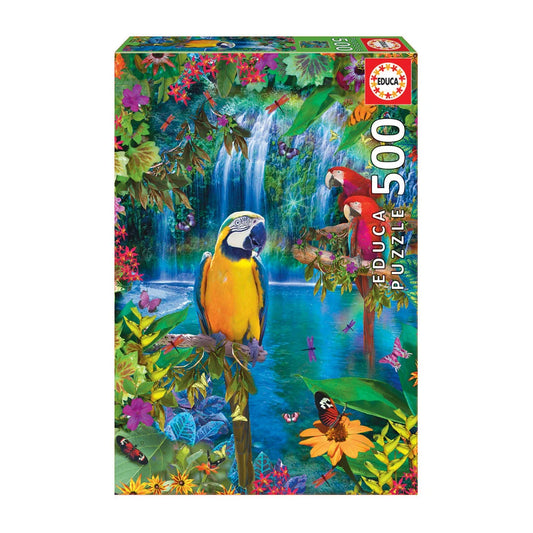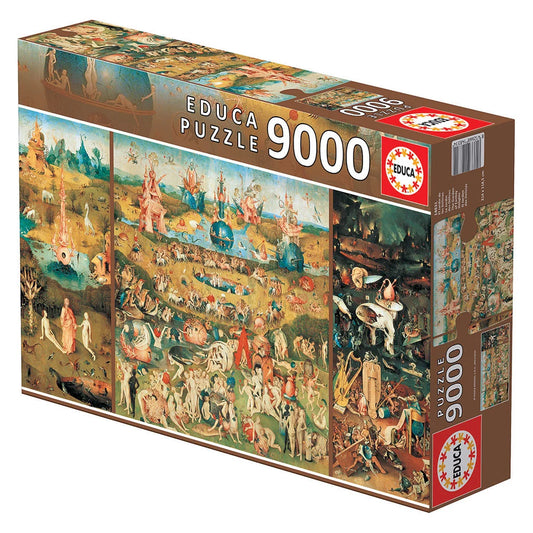


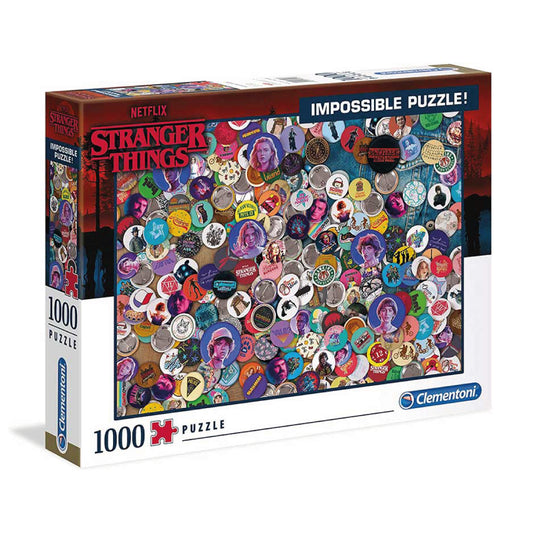



Puzzles challenge more than mere logic or manual dexterity. They're games where patience meets reasoning, stimulating the mind in ways few hobbies can match. Far from being just children's games, puzzles for adults have gained a foothold in homes, cafes, and even workplaces, becoming true brain exercises.
In this practice, a complex universe emerges, made up of pieces, strategies and methods, which captivates so many who seek not only entertainment, but also focus, gratification and, who knows, a moment of catharsis.
What sets adult puzzles apart?
The main difference between puzzles aimed at adults and those designed for children goes far beyond the number of pieces.
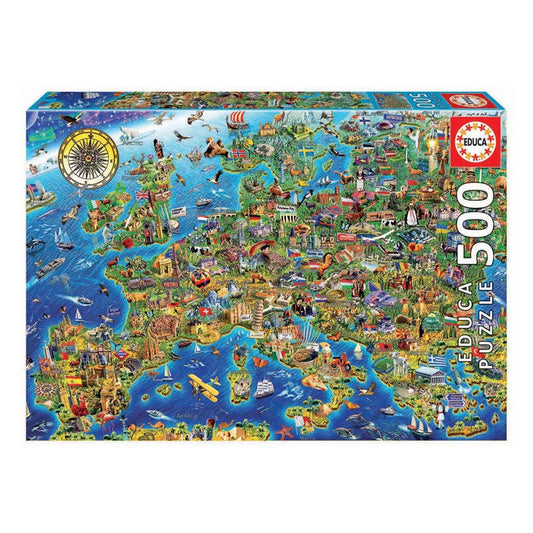
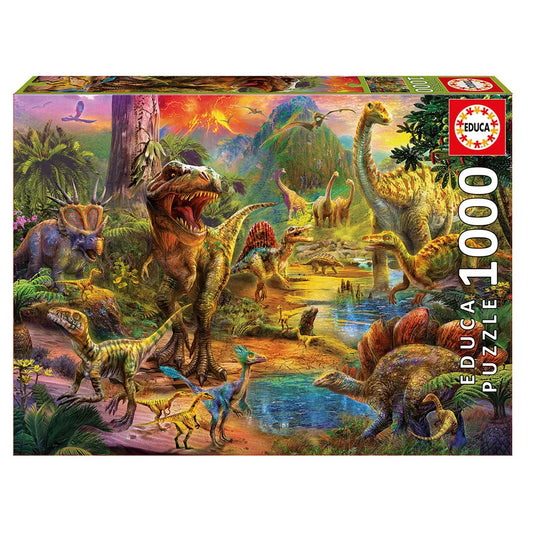
- Complexity in images: From reproductions of artistic masterpieces to abstract patterns, the challenge increases with the difficulty of the images and their tones.
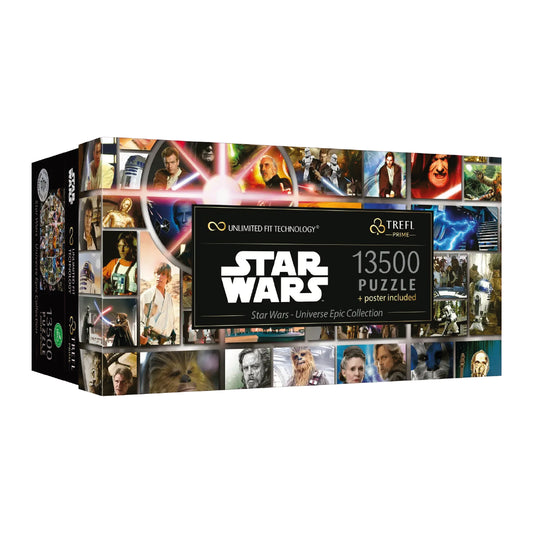
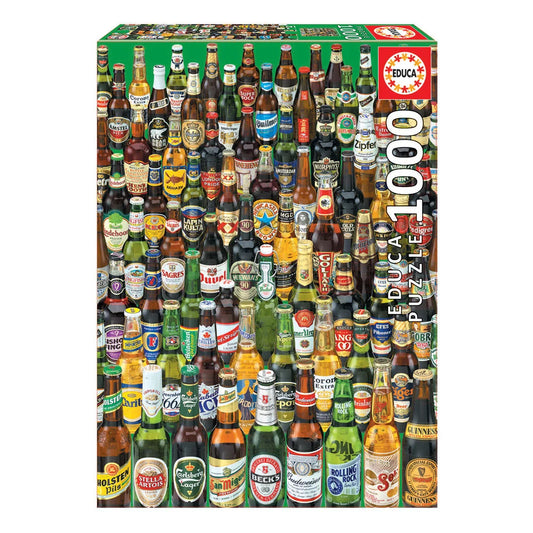
- Number of pieces: While 100 pieces are a good starting point for children, for adult puzzles the challenge easily exceeds 1000, and can reach 5000, 10000 or even more.
- Innovative formats: These aren't limited to traditional rectangles; there are circular puzzles, 3D puzzles, with unusually shaped pieces or even embossed pieces.
- Themes and concepts: Many are designed to provide sensory experiences, introduce the concept of mindfulness, active meditation, or even to celebrate historical and cultural events.
None of this would be relevant without a strong reason behind it.
Why do so many adults take on these challenges?
In a fast-paced world, puzzles offer something rare: quality time in silence, a break from the digital, a break from the automatic.
Studies indicate that solving highly complex puzzles can improve cognitive function, strengthen visual memory, and even delay typical symptoms of brain aging. The appeal goes beyond mental health; it's also a way to find satisfaction in progress, to experience small victories, piece by piece.
Many adults report feelings comparable to meditative practices when completing a jigsaw puzzle—the mindfulness of the present, the joy of seeing the picture take shape, and the simple pleasure of completing a seemingly impossible challenge.
Types of puzzles for adults
Everyone finds a puzzle that fits their profile. Whatever your motivation, there's a nearly infinite variety of options:
- Classic puzzles : Images of cities, natural landscapes, animals or art, available in variations that test any observation skills.
- 3D Puzzles : From historical monuments to futuristic structures, with hundreds or thousands of volumetric pieces.
- Wooden puzzles : These provide a distinctive texture and typically feature unique cuts, requiring new assembly approaches.
- Mechanical Puzzles : Mazes, trick boxes, and other challenges to stimulate ingenuity.
- Logic Puzzles : Mind-teasers, smart cubes, visual puzzles and math riddles for those who prefer pure logic.
Brief comparative table
| Puzzle Type | Degrees of Difficulty | Distinctive Feature | Typical example |
|---|---|---|---|
| Classic (2D) | Low to extreme | Complex images, fine parts | Landscapes of 3000 pieces |
| 3D | Medium to high | Mountable structures | Eiffel Tower in 3D |
| Wood | Average | Texture, innovative shapes | Carved animals |
| Mechanic | High | Moving elements, tricks | Mazes, secret boxes |
| Logical/Enigma | Variable | Puzzle/mathematical logic | Rubik's Cube, Sudoku, Hanayama |
The call of challenge
How many times have you looked at thousands of pieces in similar shades and felt the urge to give up? But it's this same feeling—the imbalance between frustration and daring—that keeps so many people persevering.
You solve puzzles like you win small internal battles: by making sense of chaos, people prove to themselves that they can tame the disorder of the outside world, one fragment at a time.
It may seem like a “free” effort, but several benefits become tangible over the months:
- Improved concentration and prolonged focus
- Memory exercise, especially visual and spatial memory
- Increased tolerance to frustration and development of creative strategies
- Development of planning and organizational skills
These are small personal victories, and sometimes shared as a group.
Group Puzzles: Collaboration and Socialization
Puzzle nights are replacing other entertainment activities in many homes. Putting together a puzzle with friends or family allows you to create collective memories.
This activity promotes:
- Dialogue and sharing of strategies
- Collaborative task distribution
- Strengthening ties through a common goal
Heated discussions can ensue about where that “damned” blue fragment fits, interspersed with moments of celebration at each difficult fit.
In a corporate context, companies are beginning to recognize the value of these exercises outside of traditional team building. Puzzles challenge natural leadership, foster collaboration, and, above all, test collective patience.
From hobby to art
Finishing a large puzzle is no longer the end of the process. Many hobbyists choose to frame and display their work, honoring the time invested and the final visual beauty.
The decorative possibilities are endless:
- Cityscape painting on a minimalist wall
- Chronological series of puzzles by different artists
- 3D puzzle collage in home centerpiece display
There's even a market dedicated to restoring old puzzles, exchanging lost pieces, and themed collections.
Tips for those who want to improve their game
Putting together an adult puzzle requires both strategy and perseverance. Some habits make it easier to progress through challenges involving thousands of pieces:
- Organizing parts — Separating edges, corners, colors, and patterns from the start speeds up assembly.
- Wide Space — Working on a wide surface allows you to better see the big picture and avoid unnecessary movement.
- Adequate lighting — Increases visual accuracy, reducing eye fatigue after hours of concentrating.
- Scheduled breaks — Short breaks help restore mental clarity and prevent fatigue.
- Solve small themed blocks — In complex puzzles, dividing them into sections or patterns makes the process more fun.
More than a solitary pastime
Despite the classic image of someone isolated, silent, surrounded by pieces, many adults report an almost therapeutic connection with the activity.
The process can serve as active meditation, a space for deep relaxation, post-work decompression, or simply to avoid excessive screen time. It's becoming common to find online clubs and in-person groups dedicated to sharing progress or collective resolutions. A sense of community, mutual encouragement, and even healthy competition are part of the experience.
At its core, adults' passion for puzzles reflects an ancient desire to create order from disorder, to transform scattered fragments into a coherent whole—a life lesson, piece by piece.